
Crafting a Dream Wooden Fence: Our Experience with James Ryan Stroud in Manvel, Texas
A pressure-treated pine dog-ear privacy fence, built for a property in Manvel. Here it is in photos, plus the SFPA treatment-category system and quality marks a Southern Pine fence like this is built to.
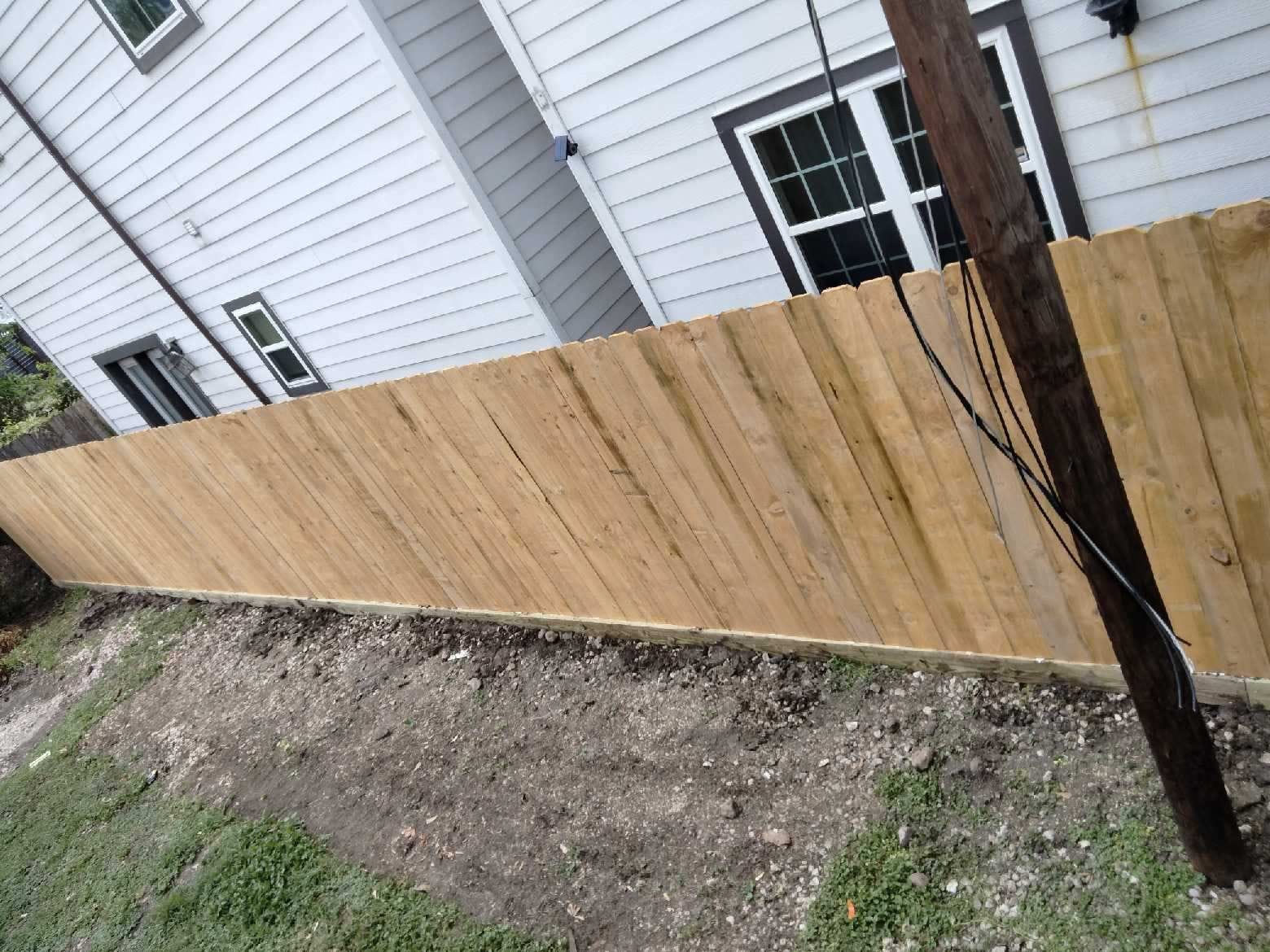
James Ryan Stroud’s Manvel property was fenced with a pressure-treated pine dog-ear privacy fence. Dog-ear pickets run edge-to-edge for privacy, with the top corners clipped at an angle. Industry standard (SFPA) treats a fence post set in the ground to a different, higher category than the pickets above it, and every treated board carries a mark showing which category it was treated for.
Source: Southern Forest Products Association, Pressure-Treated Southern Pine (2019), Table 3-1, p.3 and p.8.
The job: a pressure-treated pine privacy fence
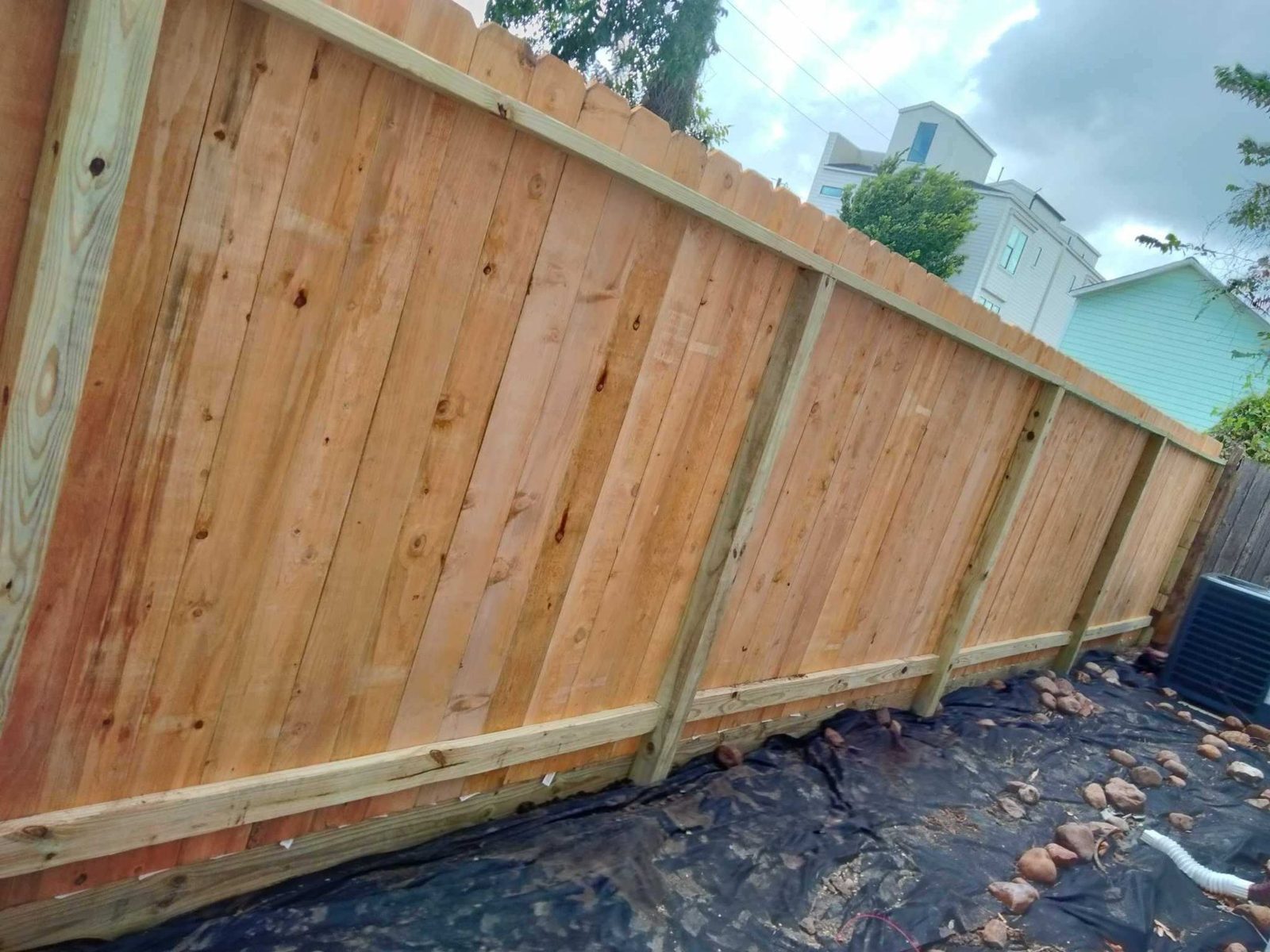
James Ryan Stroud’s property in Manvel was fenced with a pressure-treated pine dog-ear privacy fence. Dog-ear pickets are flat boards with the top two corners clipped at an angle, installed edge-to-edge along the property line for privacy.
The photos below are from that job.
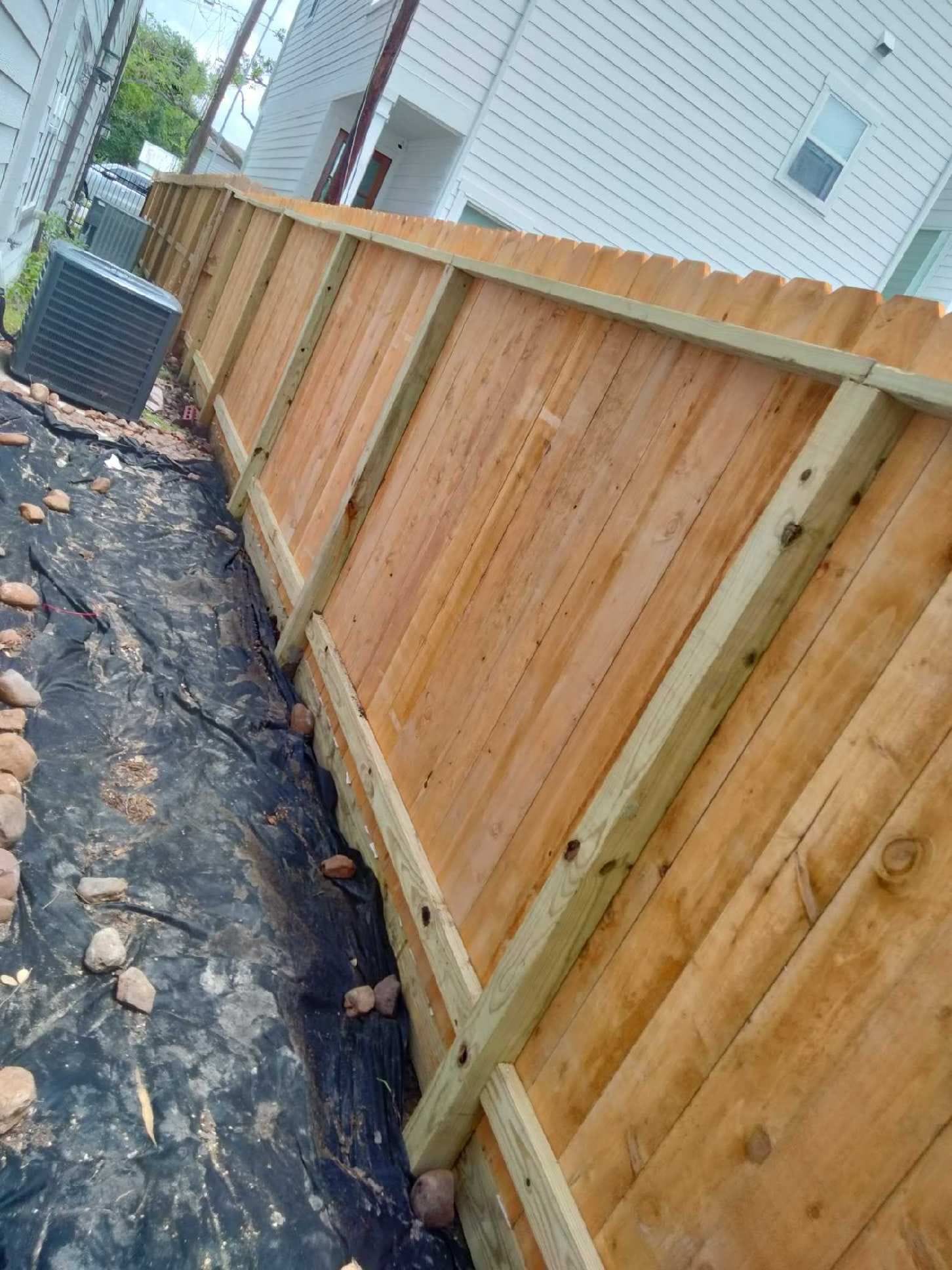
Why a post and a picket are treated differently
The Southern Forest Products Association (SFPA) publishes a Use Category system covering how pressure-treated Southern Pine is rated for different parts of a fence. Two categories apply directly to a fence like this one: the post, set in the ground, and the pickets, rails and trim that stay above grade.
A fence post in the ground is rated UC4A (Ground Contact, General Use). Pickets, rails, slats and trim that stay above the ground are a lighter category — UC3A if coated or sealed, UC3B if uncoated — because they never sit in contact with the soil the way the post does.
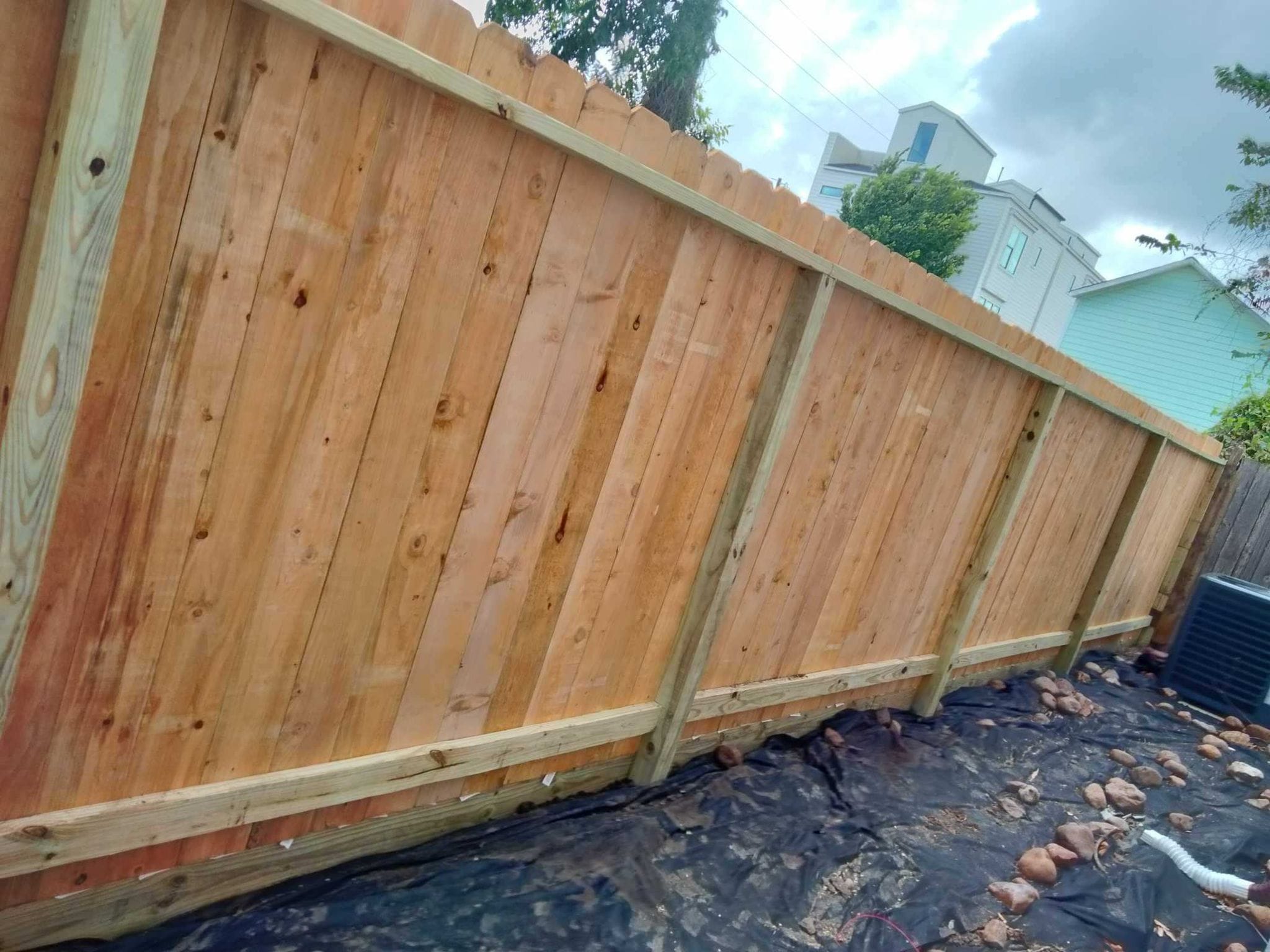
How treated lumber shows it was treated for this job
Pressure-treated Southern Pine doesn’t leave the yard unmarked. SFPA’s own field guidance says every piece must carry a plastic end tag or ink stamp naming the preservative system that was checked (an AWPA checkmark or an ICC-ES logo), the third-party inspection agency that monitored it (such as SPIB or TP), and the End-Use Application it was treated for — for example “UC4A Ground Contact” on a post, or “Vertical Use Fence Boards” on a picket.
Lumber without that mark, SFPA notes, does not meet building code requirements for the job it’s used on. It’s a small detail, but it’s the difference between a post that’s actually rated for ground contact and one that only looks like it is.
What treatment category does each part need?
Pick a component of a pressure-treated Southern Pine fence. Based on SFPA’s Use Category table for fences, the same system behind the materials in these photos.
Source: SFPA, Pressure-Treated Southern Pine (2019), Table 3-1 “Fences” and p.3/p.8.
What customers say on Google
5.091 Google reviews · read them all on Google
Amazing work will go ahead and recommend everyone in friends and family We installed 8ft tall double sided stained cedar wood fence in our backyard, it’s really looks great, installed perfectly nice finishing and cost effective, thanks mustang fencing.
Installed Stained cedar wood fence yesterday by mustang fencing, thanks for the beautiful work.
I have hired Mustang fencing services to fix my backyard fencing. Good wood to used. I really like theirs work. Best of luck
Reviews shown word for word from the Mustang Fencing Services Google Business Profile (Galveston), captured 2026-11-07.
Questions we get about this
What kind of fence was installed for James Ryan Stroud’s property?
What is a dog-ear privacy fence?
Why does a fence post need a different treatment rating than the pickets?
How can I tell if treated lumber was rated for the right use?
Where is this fence located?
Sources
Checked November 7, 2026. Rules change, so confirm with the City before you build.
- Southern Forest Products Association, Pressure-Treated Southern Pine (2019 edition) — Table 3-1 “Fences”: Use Category assignment for posts (UC4A, Ground Contact) versus pickets/rails/slats/trim (UC3A coated, UC3B uncoated, Above Ground); p.3 “Quality marks” and p.8 “On the job site”: the end tag/ink stamp every piece of treated lumber must carry, naming its inspection agency and End-Use Application.
Planning a wood privacy fence of your own?
We’ll walk the property line, talk through pine versus cedar, post spacing and lumber grade, and put it on a written quote.