
Creating a Stunning Cedar Fence for Matt Hudzicki in Galveston, TX
Matt Hudzicki wanted a cedar fence built to handle Galveston’s coastal air. Here is that 120-foot, two-rail fence in photos, plus why its rails and its posts do not carry the same decay-risk rating.
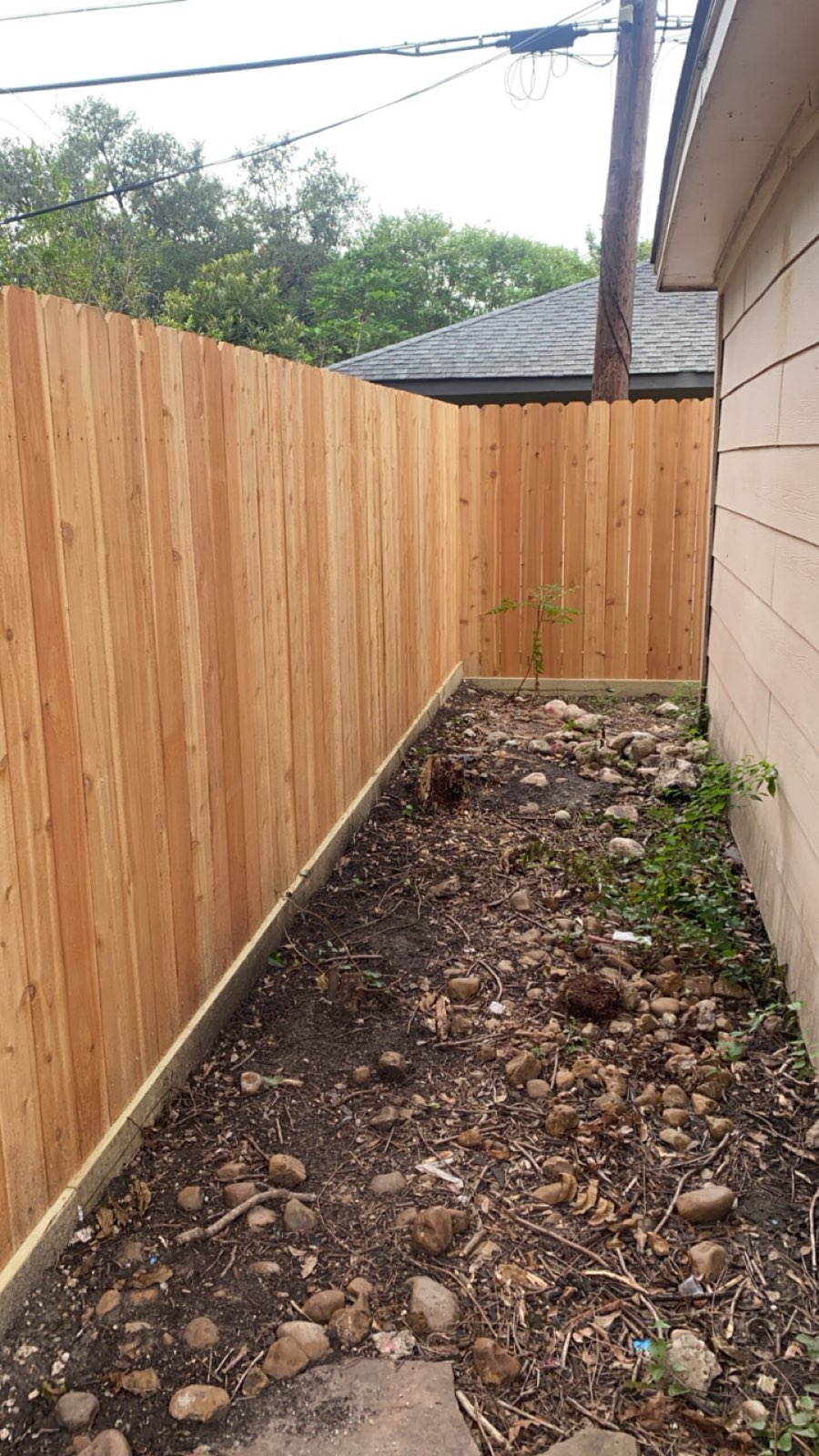
Matt Hudzicki’s cedar fence in Galveston is 120 feet long, built with two rails and a rot board at the base. The AWPA’s own wood-treatment Use Category table (Table 15-6) puts those parts in different categories: rails and pickets fall under UC3B (“general above-ground use, fully exposed to weather”), while the posts — and the rot board sitting in the same ground-contact band — fall under UC4A (“ground contact … structurally critical”).
Source: USDA Forest Products Laboratory, Wood Handbook FPL-GTR-282 (2021), Ch.15 (Wood Preservatives, Table 15-6, p.375).
The job: a 120-foot cedar fence with two rails and a rot board
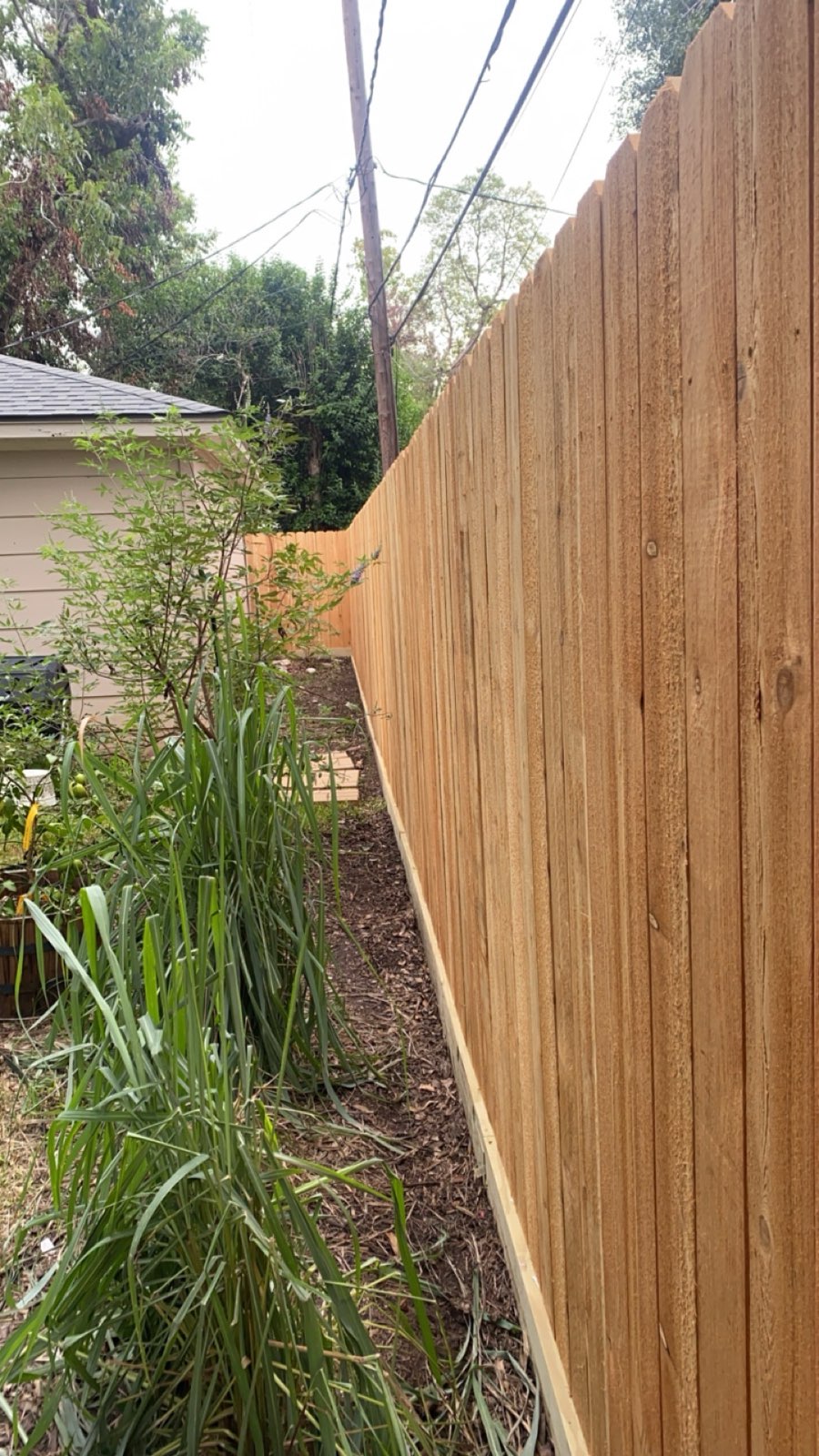
Matt Hudzicki, a homeowner in Galveston, Texas, wanted a fence that could hold up to the area’s salty, humid coastal air. The team built a 120-foot cedar fence, chosen for its natural resistance to rot and decay, framed with two rails for added stability and strength.
A rot board was installed along the base of the fence, which protects the fence from moisture and potential damage near the ground — the part of a wood fence that is most often exposed to wet conditions in a coastal climate like Galveston’s.
Why a fence’s rails and posts are not treated the same way
It is common to assume every board on a wood fence faces the same wear. The American Wood Protection Association’s Use Category system, reproduced in the USDA Forest Products Laboratory’s Wood Handbook (Table 15-6), says otherwise. It sorts treated-wood applications into tiers by exposure: “UC3 is for exterior wood used above ground; UC4 is for wood used in ground contact in exterior applications.” A fence has parts in both tiers at once.
Where Matt Hudzicki’s rails, rot board and posts fall
Per Table 15-6, UC3B covers “general above-ground use, fully exposed to weather,” with “decking, fence pickets and rails” listed as a named example. UC4A covers “general ground contact or freshwater use, or above-ground uses that are structurally critical,” and names “fence and deck posts” directly. On Matt’s fence, the two rails and the pickets they carry sit in the UC3B tier. The posts, set below grade, and the rot board running along the base in the same ground-contact band, sit in UC4A — a tier the table itself treats as higher-exposure.
Why the fence uses two rails instead of one
A rail is a horizontal framing member that the pickets are fastened to. With a single rail, each picket is held at one point along its height. With two rails — one near the top, one near the bottom — each picket is held at two points instead of one, which is the layout used on Matt’s fence for added stability and strength.
Fence-part Use Category checker
Pick a part of a wood fence and whether its species is naturally decay-resistant heartwood (like cedar or redwood). Based on the AWPA Use Category table in the USDA Forest Products Laboratory Wood Handbook. General guidance, not a spec for your project.
USDA Forest Products Laboratory, Wood Handbook FPL-GTR-282 (2021), Ch.15, Table 15-6: fence pickets and rails are UC3B (above-ground, fully exposed); fence posts are UC4A (ground contact, or structurally critical).
What Galveston customers say on Google
5.091 Google reviews · read them all on Google
I have hired Mustang fencing services to fix my backyard fencing. Good wood to used. I really like theirs work. Best of luck
My new fence looks fantastic and has added both privacy and style to my yard. Highly recommend their services for anyone in need of fencing!
Fenomenal job, really nice guy. Contacted them after hurricane knocked down my fence facing the street and got it done really quickly.
Reviews shown word for word from the Mustang Fencing Services Google Business Profile (Galveston), captured 2026-10-26.
Questions we get about this
How long is Matt Hudzicki’s cedar fence?
Why does the fence have two rails instead of one?
What is the rot board on Matt’s fence for?
Are a fence’s rails and its posts treated the same way?
Why was cedar chosen for this Galveston fence?
Sources
Checked October 29, 2026. Rules change, so confirm with the City before you build.
- USDA Forest Products Laboratory, Wood Handbook FPL-GTR-282 (2021), Chapter 15: Wood Preservatives (Table 15-6, Use Category System, p.375) — Classifies fence pickets and rails under UC3B (above-ground, fully exposed to weather) and fence posts under UC4A (ground contact, or structurally critical) — the basis for why a fence’s rails and its posts do not carry the same decay-risk rating.
Planning a wood fence or gate?
We’ll walk the property, talk through rail count, rot boards and post footings, and put it on a written quote.