
A New Wood Privacy Fence, Galveston, Texas
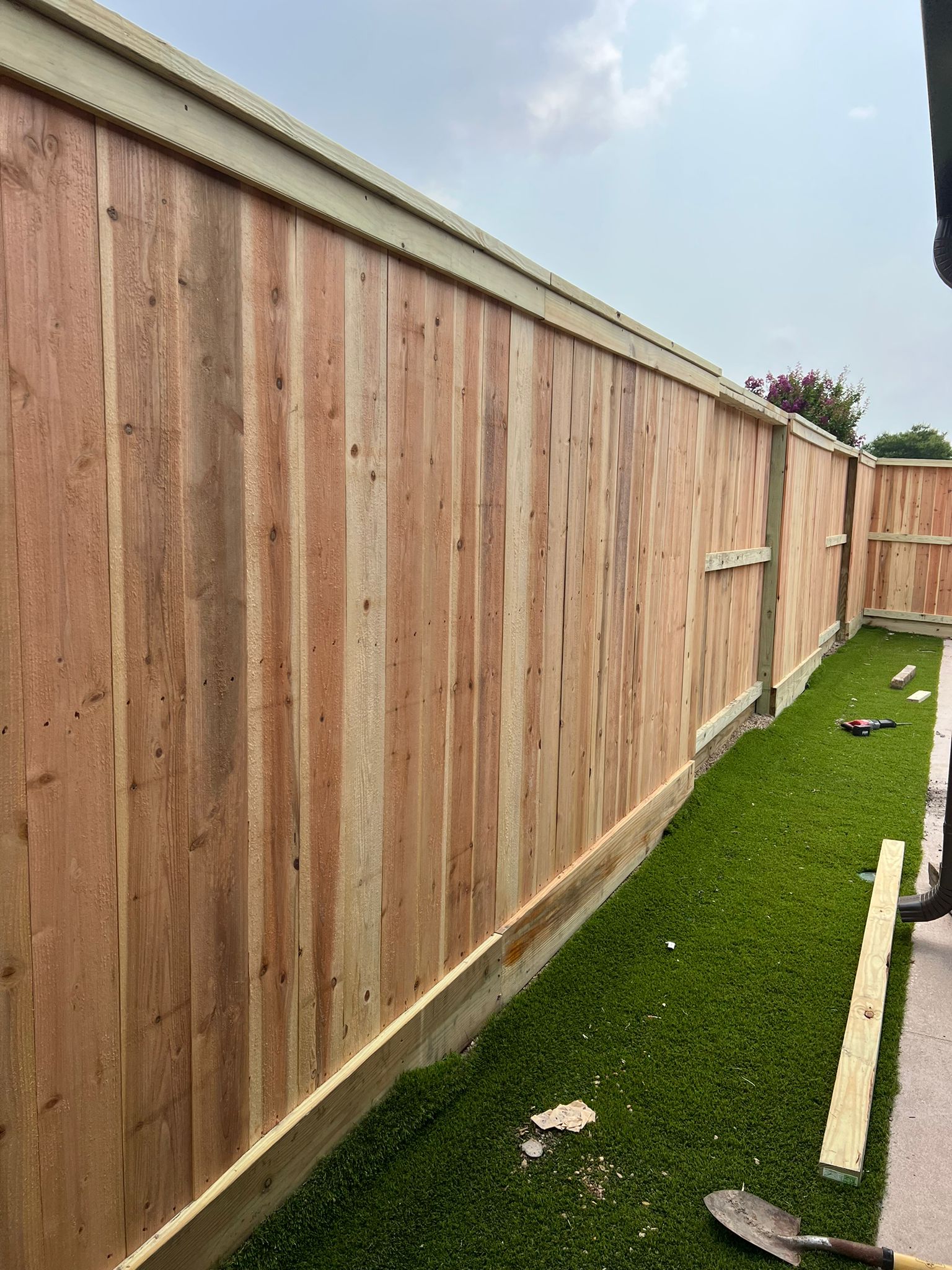
Two photos of a new wood privacy fence built along a narrow side passage at a Galveston home, taken while the crew was still on site. Here is what the photos actually show, how a fence like this goes together, and what pressure-treated lumber is rated for.
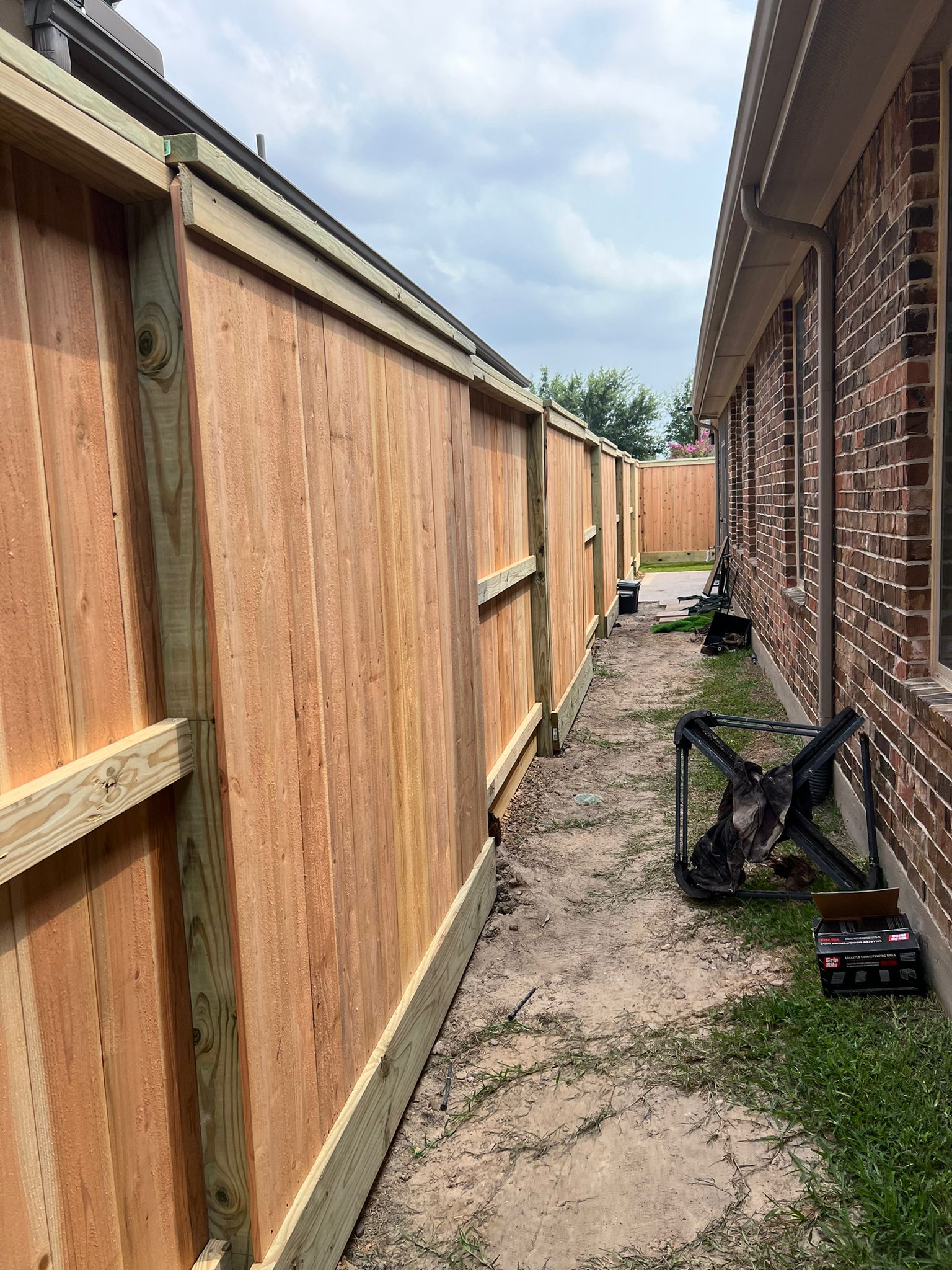
These two photos document a new wood privacy fence along a side passage at a Galveston home: vertical boards with flat, square-cut tops, a horizontal cap rail along the top edge and a lower board near the ground. Both photos were taken mid-job, with tools and offcuts still visible. The page doesn’t state a wood species, height, length, date or price, because none of them can be read from the photos. What it adds is general, sourced wood-fence information that applies to a fence like this.
Sources: Southern Forest Products Association, Pressure-Treated Southern Pine (2019 ed.), Table 3-1; Texas Utilities Code Ch. 251; Texas811 homeowner pages. Checked October 24, 2026.
What the photos show
Both photos show the same new wood privacy fence, running along a narrow side passage between a brick house and a neighboring boundary. The boards have flat, square-cut tops rather than a pointed dog-ear, with a horizontal cap rail along the top edge and a lower board near the ground. The crew was still on site when these were taken: a box of fencing nails, a cordless drill, a shovel and a spare board are visible in the passage.
The wood species and the fence’s height aren’t stated here, because they can’t be read from the photos. To compare materials, see wood fence installation and cedar vs. pressure-treated pine.
What “pressure-treated” actually means
A wood fence’s decay resistance comes mostly from the AWPA use category the lumber was pressure-treated to. The Southern Forest Products Association’s tables set a UC3A (coated) or UC3B (uncoated) minimum for exposed, above-ground fence boards and rails, and a higher UC4A minimum for posts in ground contact, which is a harsher decay exposure.
A stain or sealer adds a surface layer against moisture and sun on top of that treatment. It is a maintenance layer, not a substitute. Ask any builder which category each part is treated to, and get it in writing on the quote.
Where each AWPA category applies
| Fence part | Minimum AWPA use category | Why |
|---|---|---|
| Boards & rails (above ground) | UC3A (coated) or UC3B (uncoated) | Exposed to weather but not soil contact |
| Posts (in ground contact) | UC4A | Ground contact is a harsher decay exposure than open air |
Southern Forest Products Association, Pressure-Treated Southern Pine (2019 ed.), Table 3-1.
Wood privacy fence board & post estimator
This project’s footage wasn’t published, so enter your own run to see about how many boards and posts a solid privacy fence like this takes. It’s arithmetic, not a manufacturer spec.
Board count: linear feet × 12 ÷ board width, rounded up (edge to edge, no gap). Post count: one post per spacing interval, plus one. All arithmetic, not a manufacturer figure and not this project’s measured footage.
Planning a wood privacy fence
- Comparing materials? See wood fence installation and cedar vs. pressure-treated pine.
- Digging new post holes? See calling 811 before a fence goes in.
- In Galveston? See fence and gate installation on Galveston Island or every area we serve.
What customers say on Google
5.091 Google reviews · read them all on Google
Installed Stained cedar wood fence yesterday by mustang fencing, thanks for the beautiful work.
I am so pleased with the fence!! Your solution was exactly the right one and the team did a highly professional job. Frankly, I was amazed at how clean the job site was at the completion of the project. Feel free to list me as a reference and a very happy customer. Thanks again and please let the men know That I appreciate their hard work and quality craftsmanship.
Fenomenal job, really nice guy. Contacted them after hurricane knocked down my fence facing the street and got it done really quickly.
Reviews shown word for word from the Mustang Fencing Services Google Business Profile (Galveston), captured 2026-10-26.
Questions we get about this
What do the photos on this project page show?
What wood is this fence built from?
What is a cap rail for?
Does stain or sealer replace pressure treatment?
Do new fence post holes need an 811 call?
Sources
Checked October 28, 2026. Rules change, so confirm with the City before you build.
- Southern Forest Products Association, Pressure-Treated Southern Pine (2019 ed.) — Table 3-1, AWPA use categories: UC3A/UC3B for above-ground fence boards and rails vs. UC4A for posts in ground contact.
- Texas811, Homeowner / DIYer — Statewide one-call requirement: notify 811 at least 48 hours before digging, including new fence post holes.
- Texas Utilities Code, Chapter 251 (Underground Facility Damage Prevention) — 48-hour minimum, 14-day maximum advance notice before excavation (251.151); civil penalty for noncompliance (251.201).
Planning a wood privacy fence?
We’ll talk through material and treatment options and give you a written estimate. Free on-site estimates in Galveston.