
Repairing Wynn Kopriva’s 49-Foot Wood + Iron Fence in Danbury, Texas
Wynn Kopriva’s 49-foot wood-and-iron fence in Danbury had weather-related wood wear and rusted iron. Here’s that repair in photos, plus what the standards say about why iron rusts, why it gets worse once it starts, and the sequence that stops it.
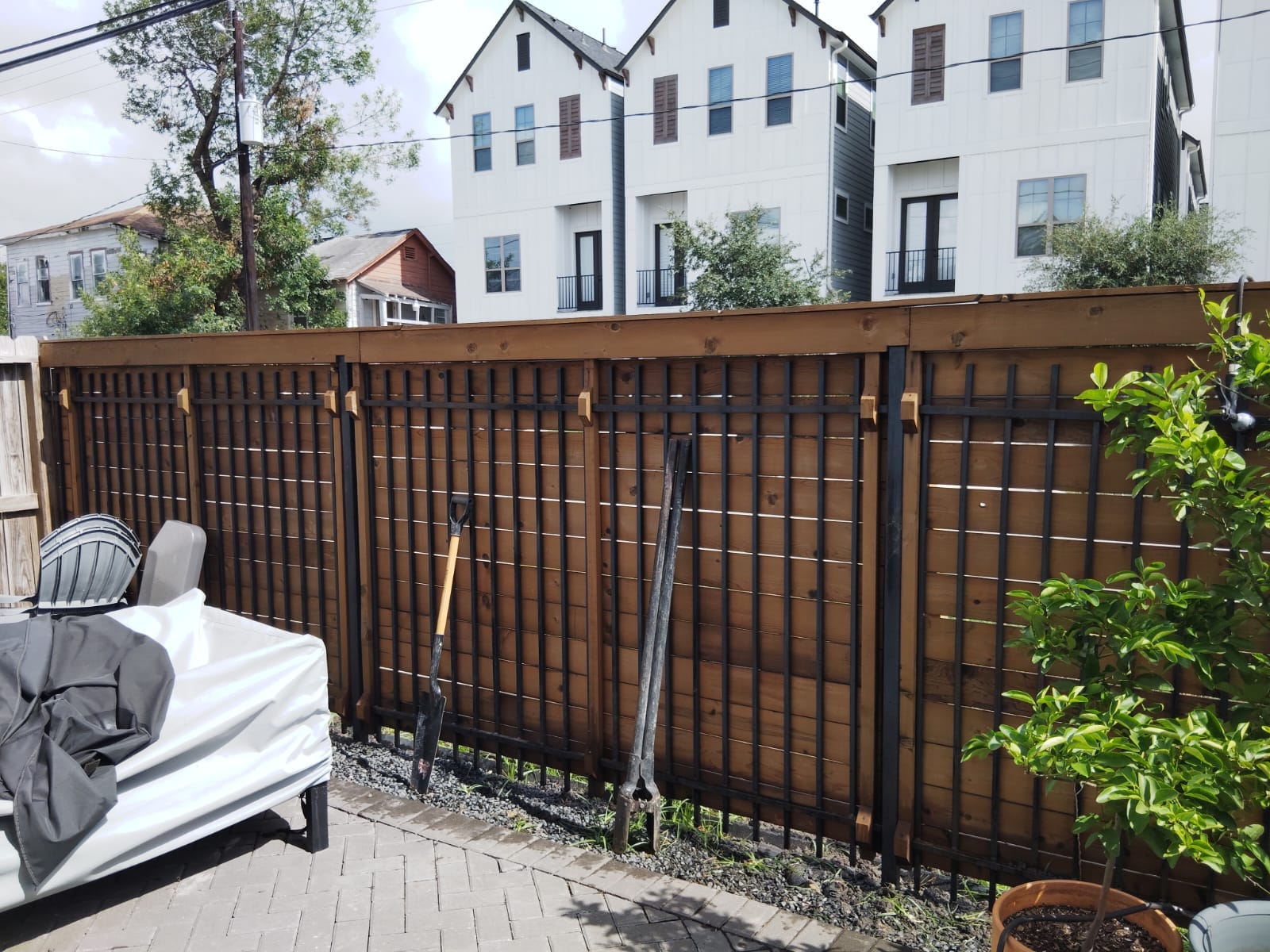
Wynn Kopriva’s 49-foot wood-and-iron fence in Danbury was restored section by section: worn wood panels replaced with matching treated wood (sanded, stained and sealed), and the iron rust-removed, reinforced and recoated. Iron needs only around 65% relative humidity to start rusting, and once a rust film forms it holds moisture against the metal and makes the corrosion worse — which is why catching it early and recoating properly matters.
Source: National Park Service Preservation Brief 27 (Maintenance and Repair of Architectural Cast Iron); USDA Forest Products Laboratory, Wood Handbook FPL-GTR-282 (2021).
The job: a 49-foot wood-and-iron fence repair
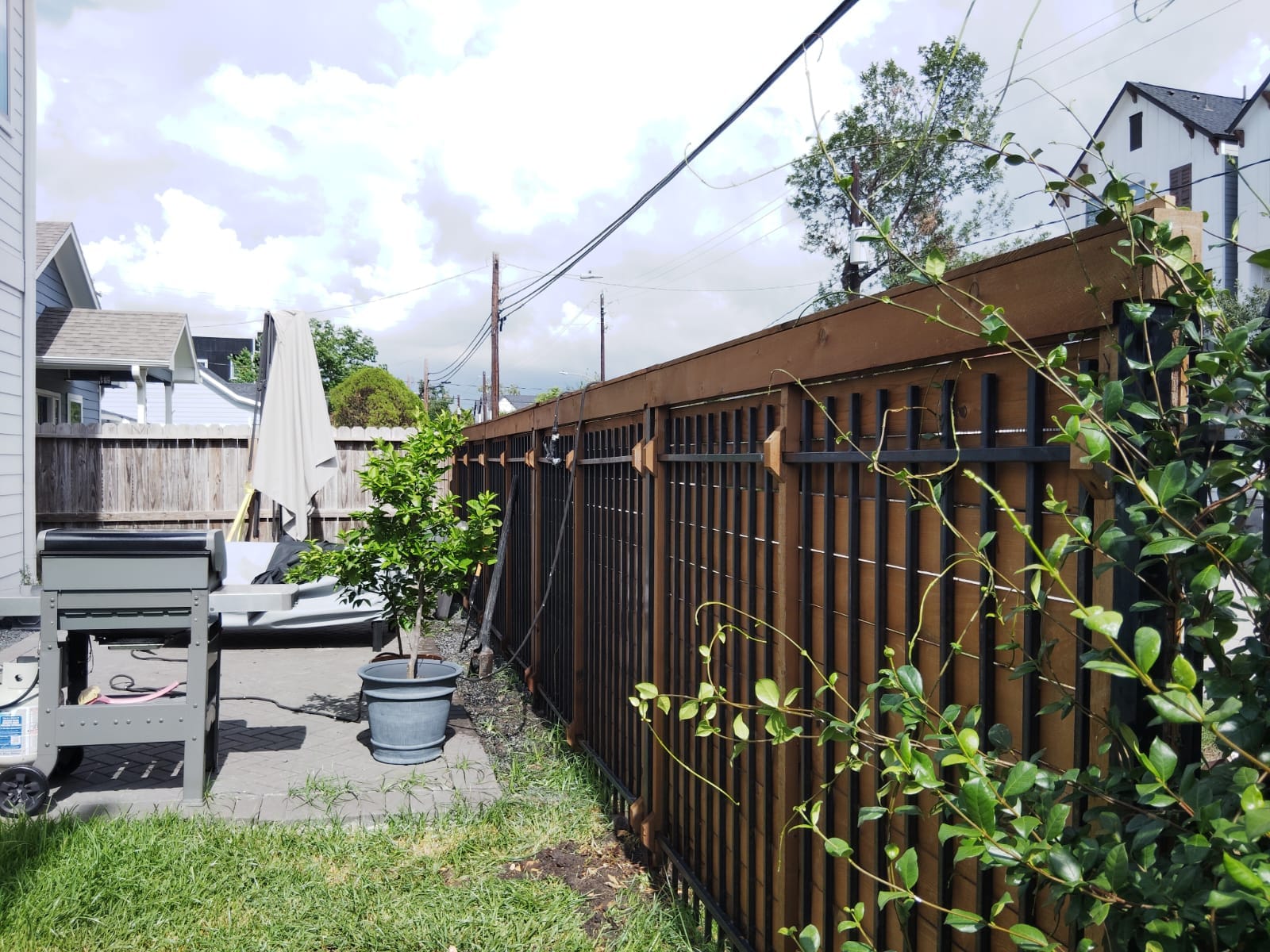
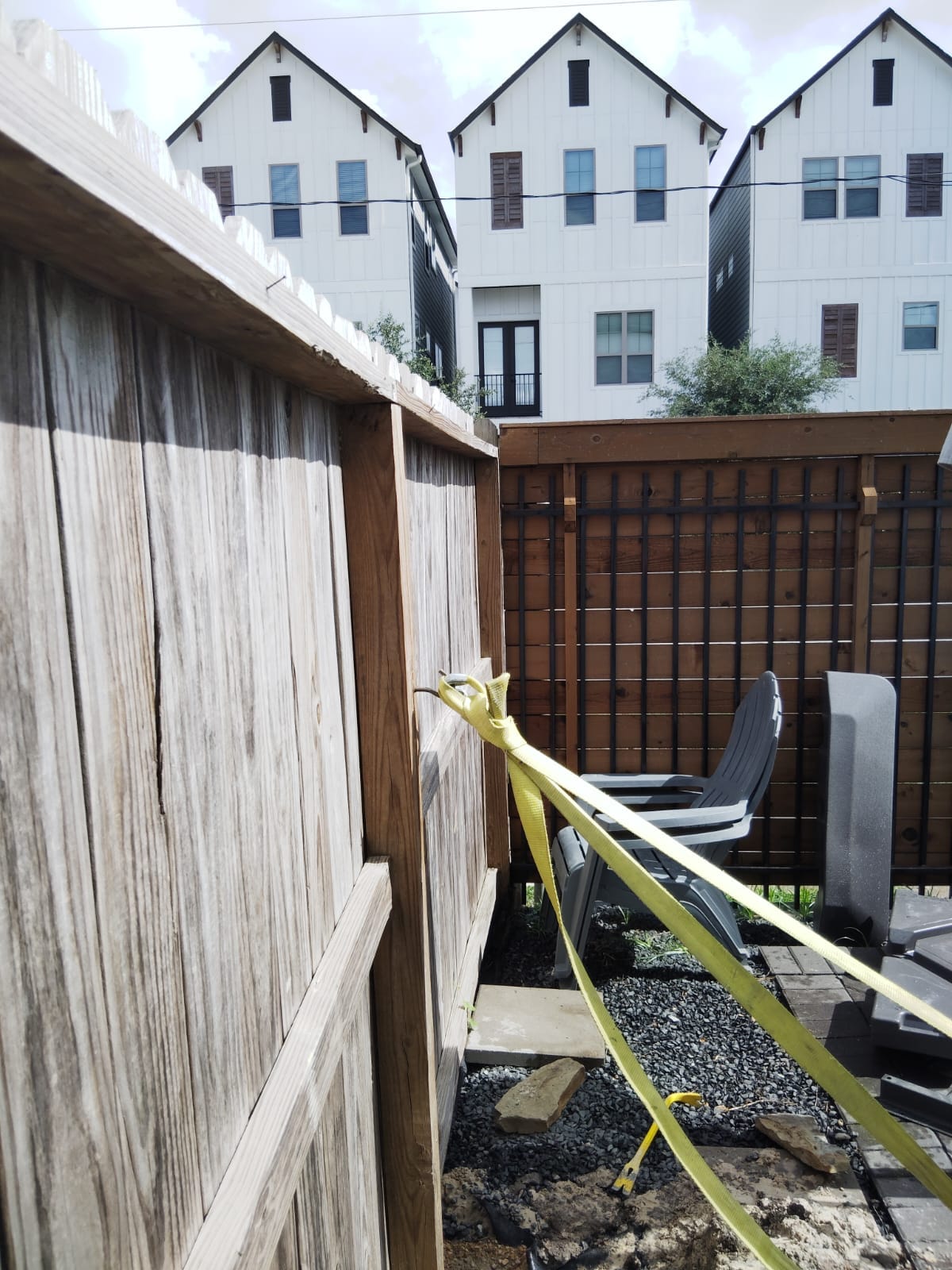
Wynn Kopriva’s property in Danbury — Brazoria County, where we also cover fence and gate work around Angleton — had a 49-foot wood-and-iron fence showing weather-related wear: rusted iron sections and weather-worn wood panels. The repair replaced the worn wood with matching treated wood, sanded, stained and sealed, and restored the iron with rust removal, reinforcement and a weather-resistant coating.
The photos below are from that job.
Why iron rusts — and why it gets worse if you wait
Iron doesn’t need much moisture to start corroding. The National Park Service’s own preservation guidance puts the minimum relative humidity needed to promote rusting at around 65 percent — and that figure drops further near corrosive agents like salt air or acids, which Danbury’s Gulf Coast humidity can supply. Once a rust film forms, its porous surface works against you: it holds liquid against the metal, which accelerates further corrosion. Left alone, that process doesn’t stop on its own.
The repair sequence that actually stops it
Preservation guidance for ironwork follows a consistent order once corrosion has set in: strip the failed coating and rust down to bare metal (wire brushing or grit blasting, with flame cleaning as an option for lightly to moderately corroded iron), clean and neutralize the surface, then apply a new protective coating before moisture reaches the bare metal again. Where the wood meets the iron, the same wood-science issue from a cedar gate applies — plain carbon steel in contact with tannin-rich wood commonly causes a black iron stain, which is one more reason the fastener and hardware materials matter during a repair like this one.
How much rust is too much?
Pick what you’re seeing on the iron. Based on the National Park Service’s own guidance for cleaning and repairing corroded ironwork.
Source: National Park Service Preservation Brief 27, Maintenance and Repair of Architectural Cast Iron.
What customers say on Google
5.091 Google reviews · read them all on Google
We took the services to replace our decade-old rotten fence with a modern one. The Services were Professional, completed the job on time, and the fence looked great, giving a new look to our house and they left the yard spotless. Highly recommend!
Mustang Fencing Services was dependable and honest from start to finish. They stuck to our timeline and budget, and the fence looks fantastic. I appreciate their hard work and would recommend them to anyone.
I chose Mustang Fencing for my backyard due to their reputation for quality and security. Their wood fencing exceeded my expectations, durable and visually appealing. The customer service was top-notch, and the installation was quick and efficient.
Reviews shown word for word from the Mustang Fencing Services Google Business Profile (Galveston), captured 2026-11-06.
Questions we get about this
What did the repair on Wynn Kopriva’s fence involve?
At what humidity does iron start to rust?
Why does rust get worse the longer you leave it?
Why did the wood where it meets the iron need attention too?
Is it better to repair old ironwork or replace it?
Sources
Checked November 6, 2026. Rules change, so confirm with the City before you build.
- National Park Service, Preservation Brief 27: The Maintenance and Repair of Architectural Cast Iron — Humidity threshold for rusting (≈ 65% RH, lower near corrosive agents); the self-accelerating rust-film mechanism; repair-over-replacement as the standard preservation approach; the strip-clean-recoat cleaning sequence and why wet sandblasting is avoided.
- USDA Forest Products Laboratory, Wood Handbook FPL-GTR-282 (2021), Chapter 16 — Iron stain on tannin-rich wood from plain carbon steel fasteners, and why stainless/hot-dip-galvanized hardware avoids it.
Got a wood or iron fence that needs repair?
We’ll assess the wood and the metal separately, tell you what’s a clean repair versus what needs replacing, and put it on a written quote.