
Our Experience with Howard Boudreaux Jr. in Galveston, Texas
Howard’s property got a 92-foot pine fence with a rot board along the base. Here is that fence, and how to read the stamp on treated lumber so the part nearest the ground is actually rated to be there.
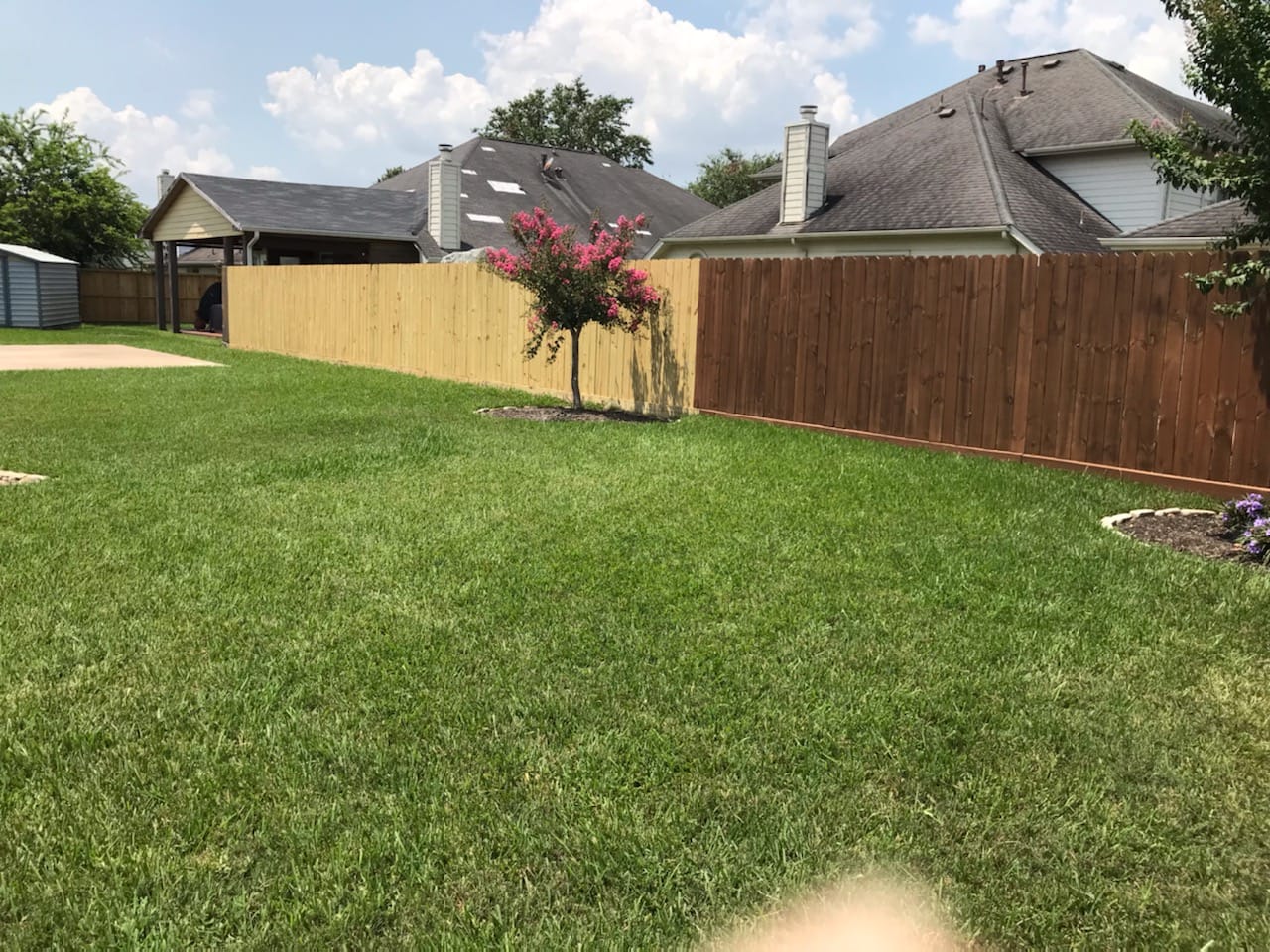
Howard’s Galveston property got a 92-foot pine fence with a regular rot board, built with vertical pine boards and a gate. The rot board runs along the base, where a fence sits closest to ground moisture — exactly the zone where a lumber quality mark matters most.
Source: Southern Forest Products Association, Pressure-Treated Southern Pine (2019).
The job: a 92-foot pine fence with a rot board
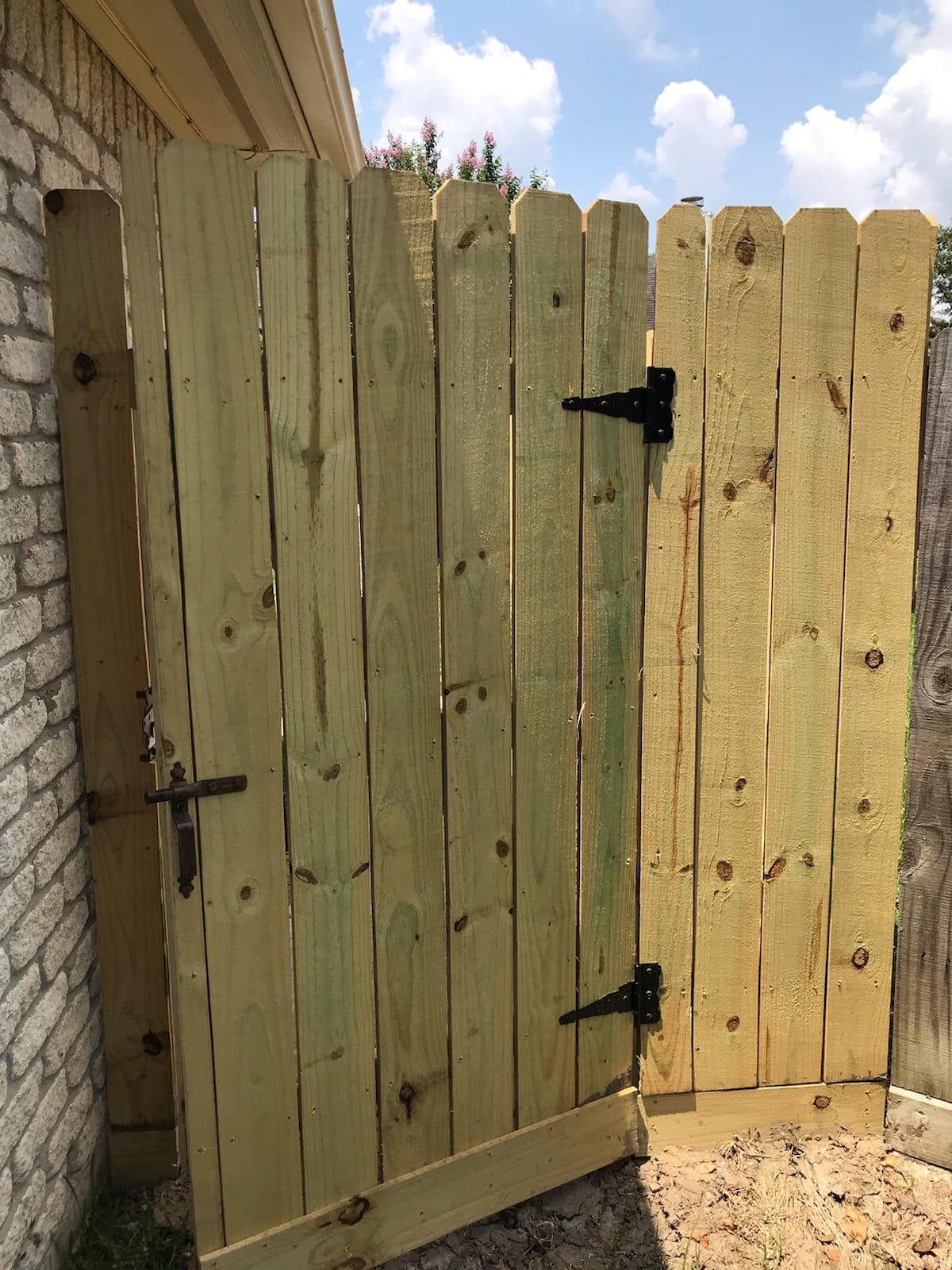
Howard’s Galveston property got a 92-foot pine fence with a regular rot board along the base and a gate. The new run meets an older, stained section of fence already on the property, and the gate was built with black strap hinges.
A rot board sits in the toughest spot on the whole fence: right at grade, where rain, sprinklers, and soil moisture hit the wood hardest. That is exactly the zone where treated lumber’s own quality mark is supposed to tell you something — if you know what you are looking at.
Reading the stamp on treated pine
Per the Southern Forest Products Association, every piece of treated Southern Pine has to carry a quality mark — a plastic end tag or ink stamp — identifying the treating company, the preservative standard, the retention level in pounds per cubic foot (pcf), and the Use Category the board is rated for.
The two categories that matter most on a fence are Above Ground, Exposed (UC3B) and Ground Contact, General Use (UC4A). SFPA is specific about why the difference matters: “higher retention levels are typically required for Ground Contact (UC4A) as compared to Above Ground (UC3B).” A board rated only for Above Ground use will not hold up the same way once it is actually touching soil.
SFPA calls out exactly this mistake as common: lumber treated for Above Ground use ending up somewhere that behaves like Ground Contact — anything “within 6 inches of the ground” or subject to frequent wetting. A rot board, by design, sits in that zone. The original post does not document which grade stamp is on Howard’s rot board, so this page is not claiming a rating for his fence specifically — it is the general check worth doing on any fence like it.
What does the stamp on your fence lumber actually mean?
General guidance from a Southern Forest Products Association guide to reading a treated-lumber quality mark. Not an inspection of any specific fence.
Southern Forest Products Association, Pressure-Treated Southern Pine (2019), p.3 (quality marks) and p.8 (“Use Ground Contact for Long-Term Performance”).
What customers say on Google
5.091 Google reviews · read them all on Google
Fenomenal job, really nice guy. Contacted them after hurricane knocked down my fence facing the street and got it done really quickly.
True professionalism is very rare in this day and age, these guys live upto their word and deliver on their service! Our fence was down in the July storm and these guys came and gave a reasonable quote, after confirming I received a time line and they delivered! Will recommend them to everyone I know who needs fencing done.
Excellent work. They came in handy after the hurricane hit our backyard. Friendly people too.
Reviews shown word for word from the Mustang Fencing Services Google Business Profile (Galveston), captured 2026-10-26.
Questions we get about this
What did Howard’s fence include?
What does the stamp on treated lumber actually tell you?
Does every board on a fence need to be rated for Ground Contact?
Does this page know what is printed on Howard’s own lumber?
Sources
Checked November 1, 2026. Rules change, so confirm with the City before you build.
- Southern Forest Products Association, Pressure-Treated Southern Pine (2019 edition) — p.3, quality mark / grade stamp anatomy (treating company, preservative standard, retention in pcf, Use Category); p.8, “Use Ground Contact for Long-Term Performance” — Above Ground (UC3B) vs Ground Contact (UC4A) and the common misapplication of Above Ground lumber within 6 inches of the ground.
Planning a pine fence with a rot board?
We’ll walk the property, talk through the rot board and lumber ratings, and put it on a written quote.