
An 80-Foot Cedar Fence for Victor Harris in La Porte, Texas
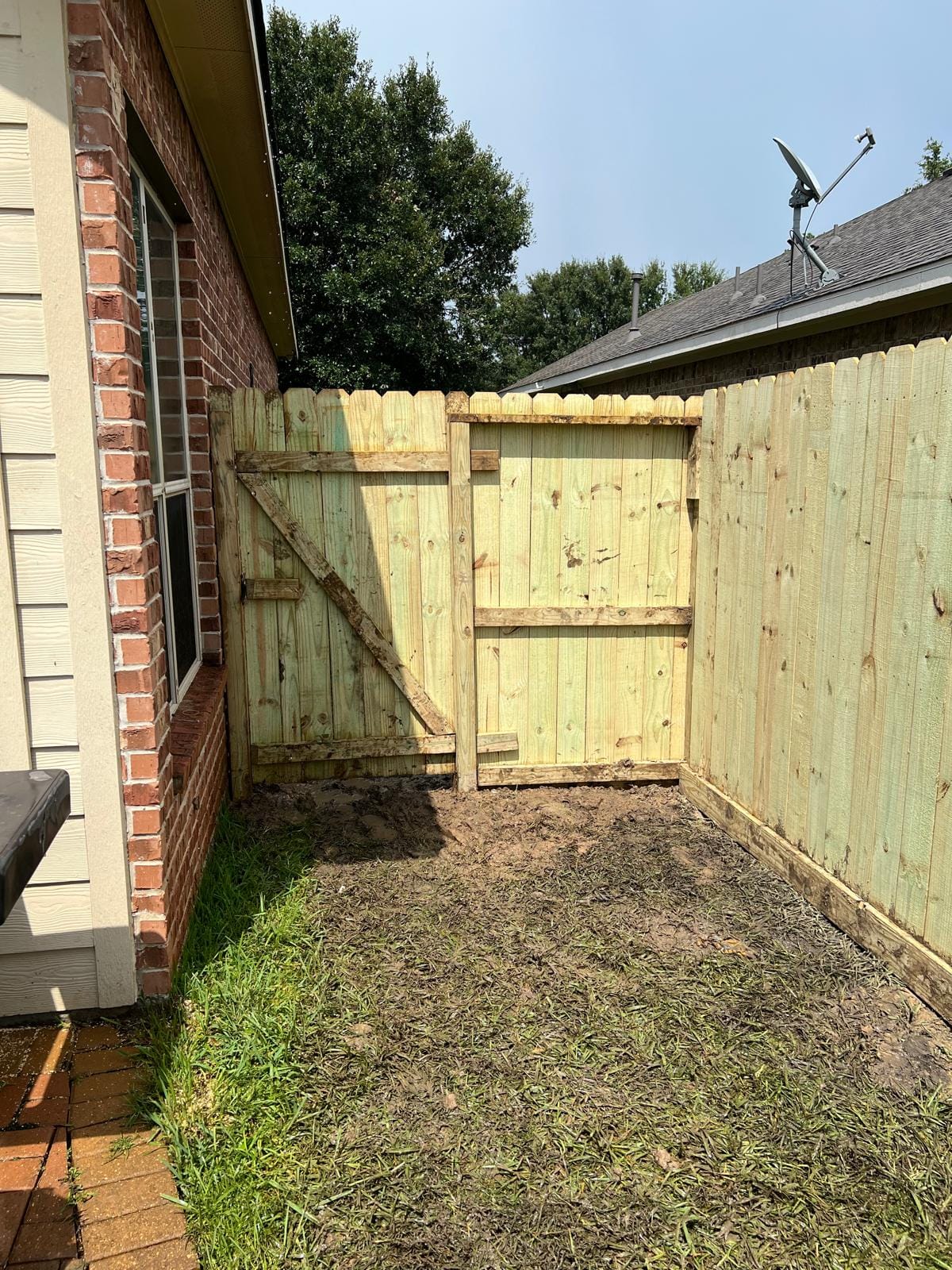
Victor Harris wanted an 80-foot cedar fence with a finished top-and-trim look and three rails for support. Here is that job in photos, plus the USDA Forest Products Laboratory numbers behind why cedar was the call, how much a board actually moves with the seasons, and why the timing of that first coat of finish matters more than most people think.
Cedar was the right call for an 80-foot fence that has to hold up outdoors: it sits in the USDA Forest Products Laboratory’s “very resistant” decay class, one of only a few domestic woods rated that high. It still moves with the weather, though, so boards need a gap, and it holds a finish best when that finish goes on soon after milling rather than months later.
Source: USDA Forest Products Laboratory, Wood Handbook: Wood as an Engineering Material, FPL-GTR-282 (2021).
The job: 80 feet of cedar with a top and trim
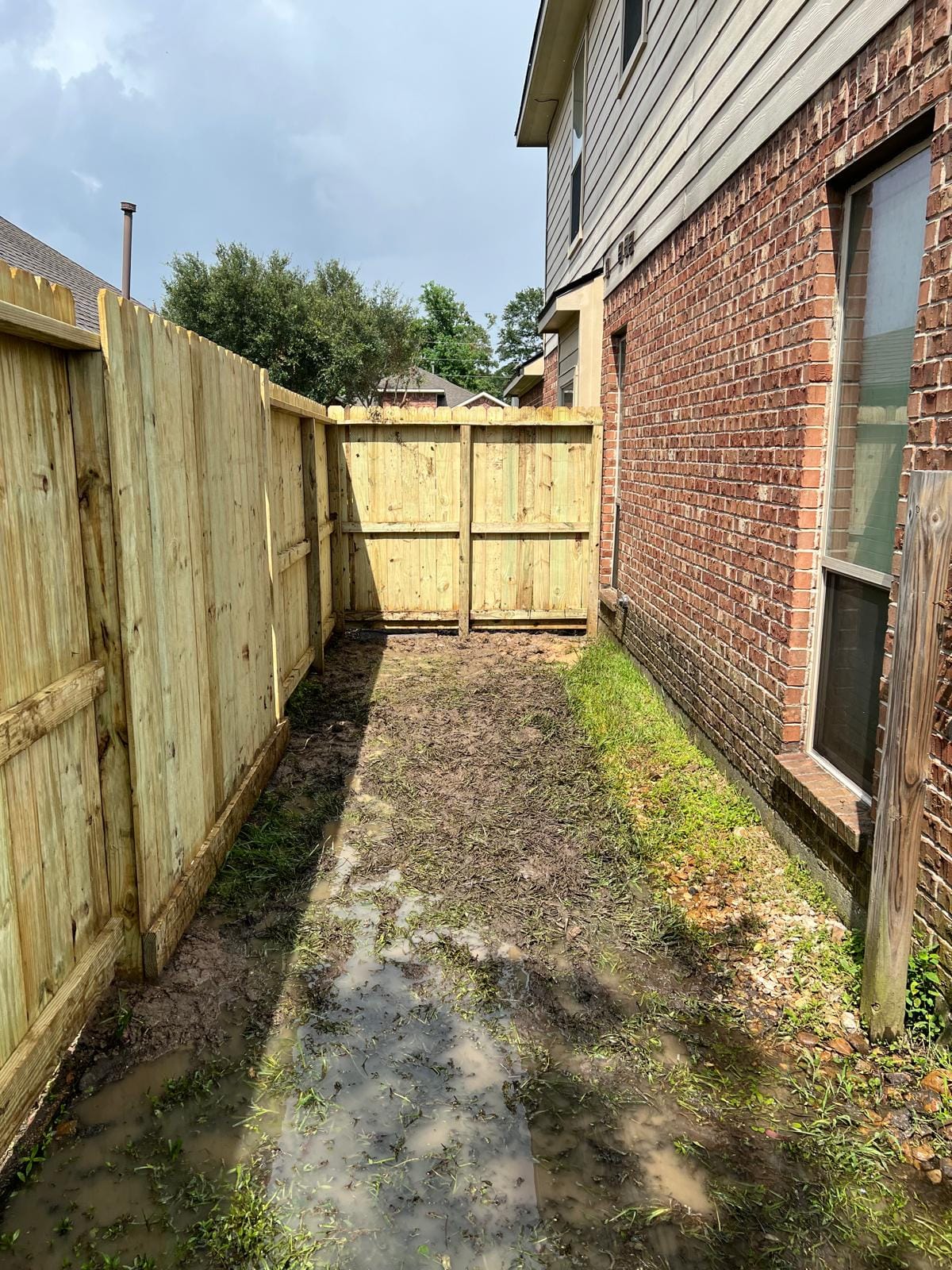
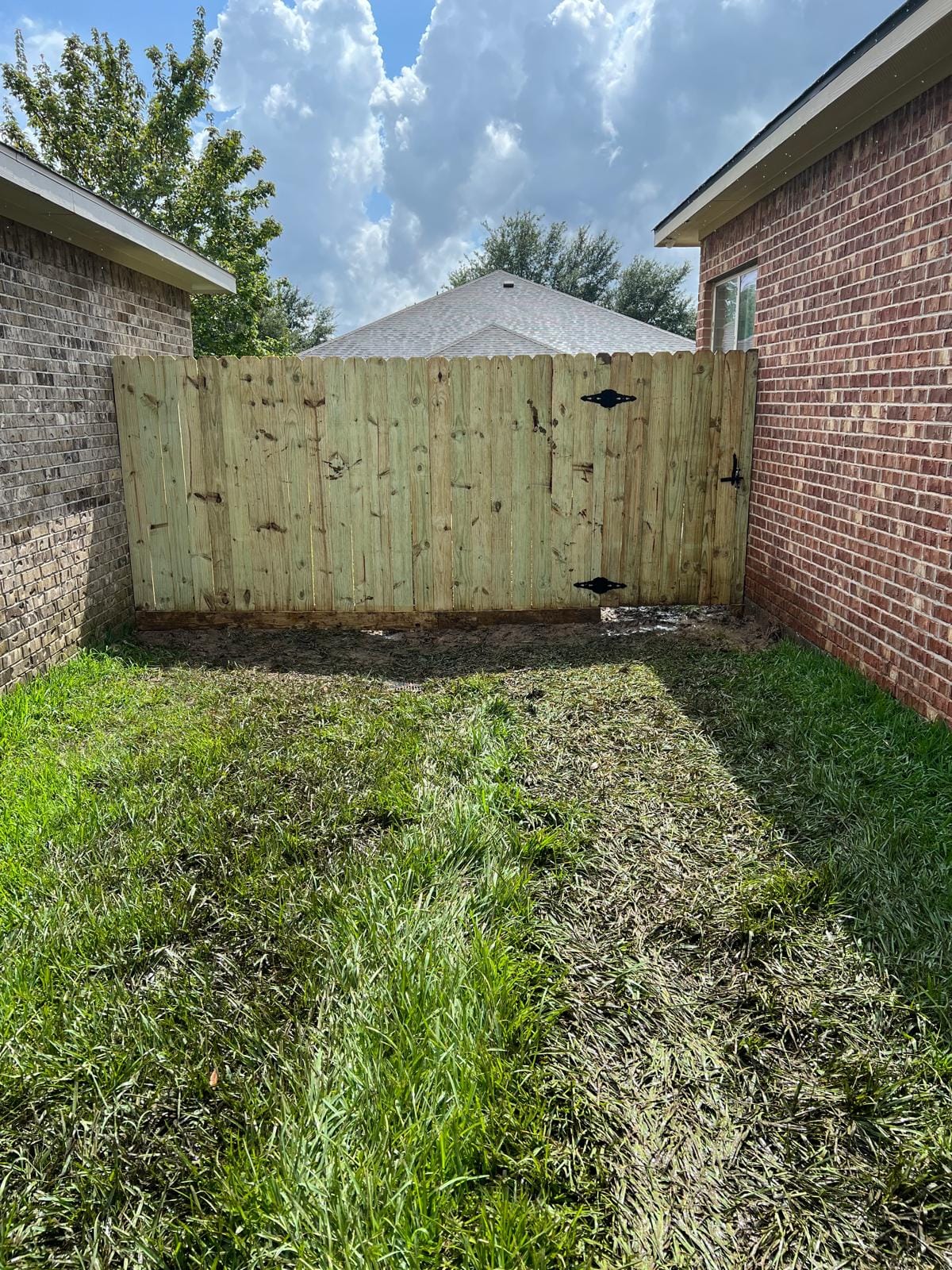
Victor Harris asked for an 80-foot cedar fence for his property in La Porte, Texas, built with a top rail and trim board rather than a plain picket top, and three rails for support. The crew fastened the boards with screws rather than nails — a choice the Forest Service’s own fastener research backs up: common smooth, round nails can lose as much as three-quarters of their grip once outdoor wood goes through repeated wetting and drying, while threaded fasteners (screws, and ring- or helically-threaded nails) keep roughly four times more of their original holding power under the same cycling.
The photos below are from that job.
Why cedar, specifically
The USDA Forest Products Laboratory’s Wood Handbook groups the heartwood of common native species by natural decay resistance. Eastern redcedar and Western redcedar both land in the top “Very resistant” class, alongside only a short list of other domestic species such as black locust and old-growth redwood. Species commonly used for framing and lower-grade fencing sit well below that: Douglas-fir is “Moderately resistant,” and most pines and spruces (outside a few old-growth exceptions) are “Slightly or nonresistant.”
One caveat straight from the Handbook: “Decay resistance may be less for members placed in contact with the ground and/or used in warm, humid climates.” La Porte’s Gulf Coast humidity is exactly that kind of climate, which is also why the fastening and finishing choices below matter as much as the species itself.
Decay-resistance class, by example species
| Class (USDA Wood Handbook Table 14-1) | Example woods |
|---|---|
| Very resistant | Cedar (Eastern redcedar, Western redcedar and others), black locust, old-growth redwood |
| Moderately resistant | Douglas-fir, old-growth longleaf and slash pine |
| Slightly or nonresistant | Pines (other than the old-growth exceptions), true firs, spruces |
USDA Forest Products Laboratory Wood Handbook, Table 14-1. Footnote: decay resistance may be lower in ground contact or in warm, humid climates.
How much different species move
Tangential dimensional-change coefficient, in thousandths of an inch per inch per 1% moisture change (USDA Wood Handbook Table 13-5).
Cedar fence board & gap planner
Pick a run length, board width, post spacing and the kind of humidity swing your site sees. The planner uses western redcedar’s own movement numbers from the USDA Wood Handbook. No prices.
Movement: USDA Forest Products Laboratory Wood Handbook, Table 13-5 (western redcedar tangential coefficient 0.00234 per 1% moisture change). Install moisture target: Table 13-2, exterior wood in a damp, warm coastal area, average 12%. A planning aid, not a lumber takeoff — order extra for cuts and waste.
Finishing: the timing matters more than the product
The Wood Handbook’s chapter on exterior finishes makes a point that runs against old advice to “let a new fence weather before painting it.” In a documented test on vertical-grain western redcedar, boards primed and painted within 1 week of milling were still in good condition after 20 years. Boards left bare for 16 weeks before that first coat went on began peeling within 3 years. A standard three-coat paint system (0.10 to 0.13 mm thick) is rated for about 20 years of service when applied to sound wood.
The other number that matters is moisture content at installation. For exterior wood in what the Handbook classifies as a damp, warm coastal area, the recommended average is about 12% moisture content, with individual pieces ranging 9% to 14%. That number, not a fixed gap size, is what the planner above uses to size the space between boards for your own run.
What customers say on Google
5.091 Google reviews · read them all on Google
Amazing work will go ahead and recommend everyone in friends and family We installed 8ft tall double sided stained cedar wood fence in our backyard, it’s really looks great, installed perfectly nice finishing and cost effective, thanks mustang fencing.
Installed Stained cedar wood fence yesterday by mustang fencing, thanks for the beautiful work.
I have hired Mustang fencing services to fix my backyard fencing. Good wood to used. I really like theirs work. Best of luck
Reviews shown word for word from the Mustang Fencing Services Google Business Profile (Galveston), captured 2026-10-26.
Questions we get about this
How decay-resistant is cedar compared to other fence woods?
Why does a cedar fence need gaps between the boards?
Are screws better than nails for an outdoor cedar fence?
How soon should a new cedar fence be painted or stained?
What moisture content should fence boards be at installation?
Sources
Checked October 28, 2026. Rules change, so confirm with the City before you build.
- USDA Forest Products Laboratory, Wood Handbook: Wood as an Engineering Material, FPL-GTR-282 (2021) — Decay-resistance groupings (Table 14-1); shrinkage and dimensional-change coefficients (Tables 4-3, 13-5); recommended installation moisture content (Table 13-2); fastener withdrawal resistance under moisture cycling (Ch. 8); finish service life and the redcedar priming-timing study (Ch. 16).
Planning a wood fence or gate?
We’ll walk the property, talk through wood choice, fastening and finishing, and put it on a written quote.