
Creating a Beautiful Wooden Fence for Logan in La Porte, Texas
Logan wanted a cedar privacy fence with a classic vertical-board look for his La Porte property. Here is that fence in photos, plus why the rocky soil the crew hit while digging the post holes actually matters for how well a fence post holds.
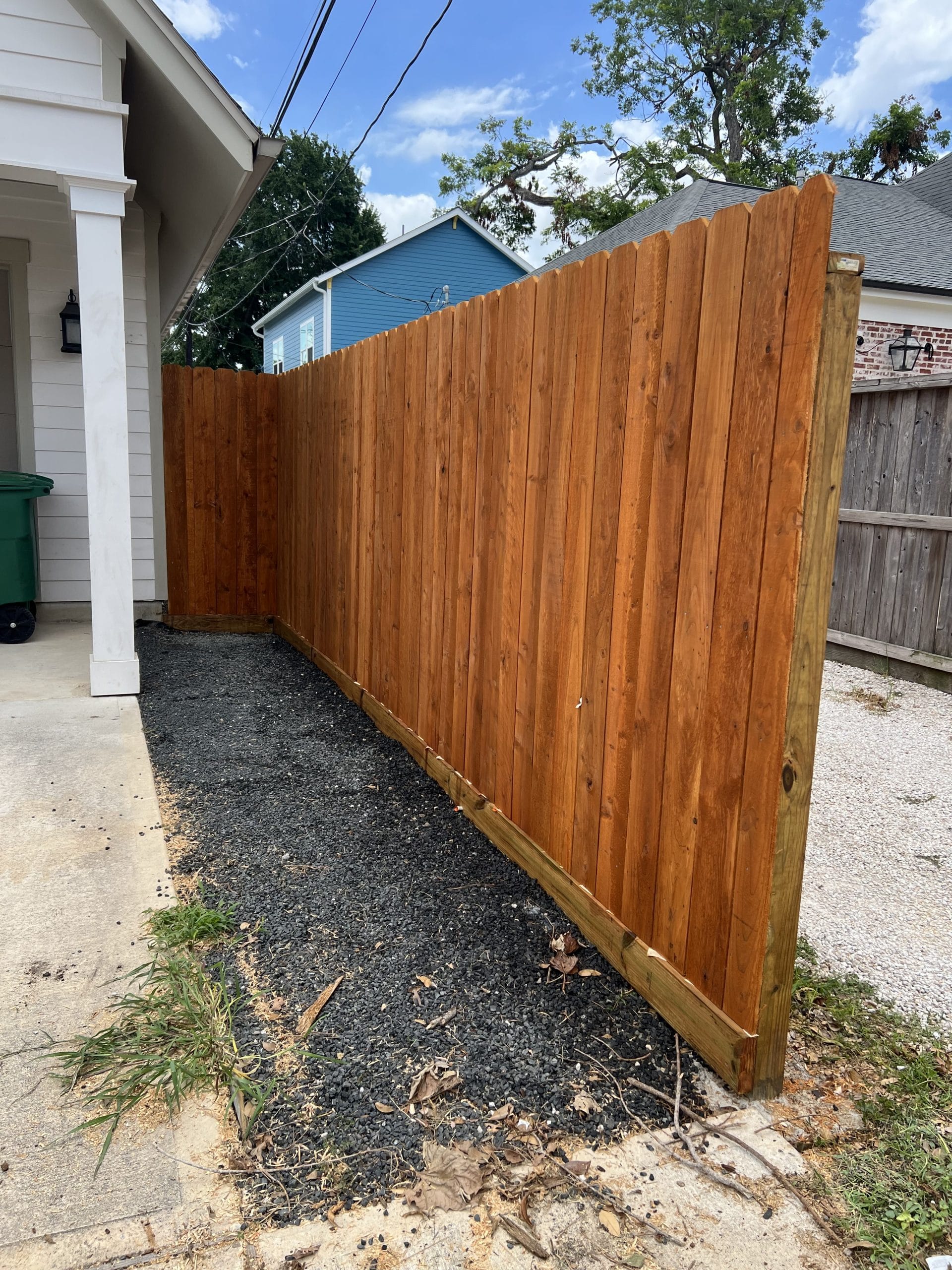
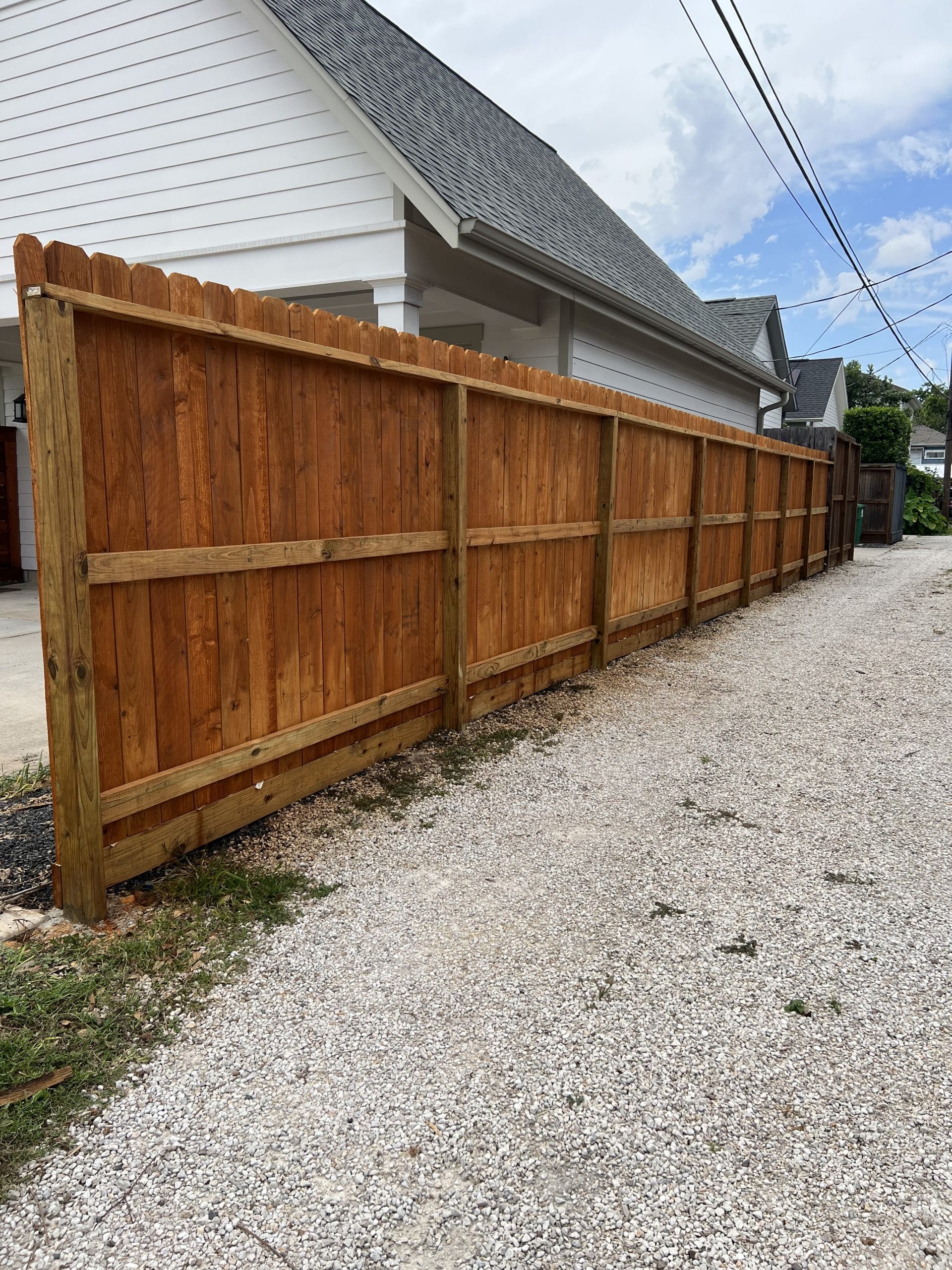
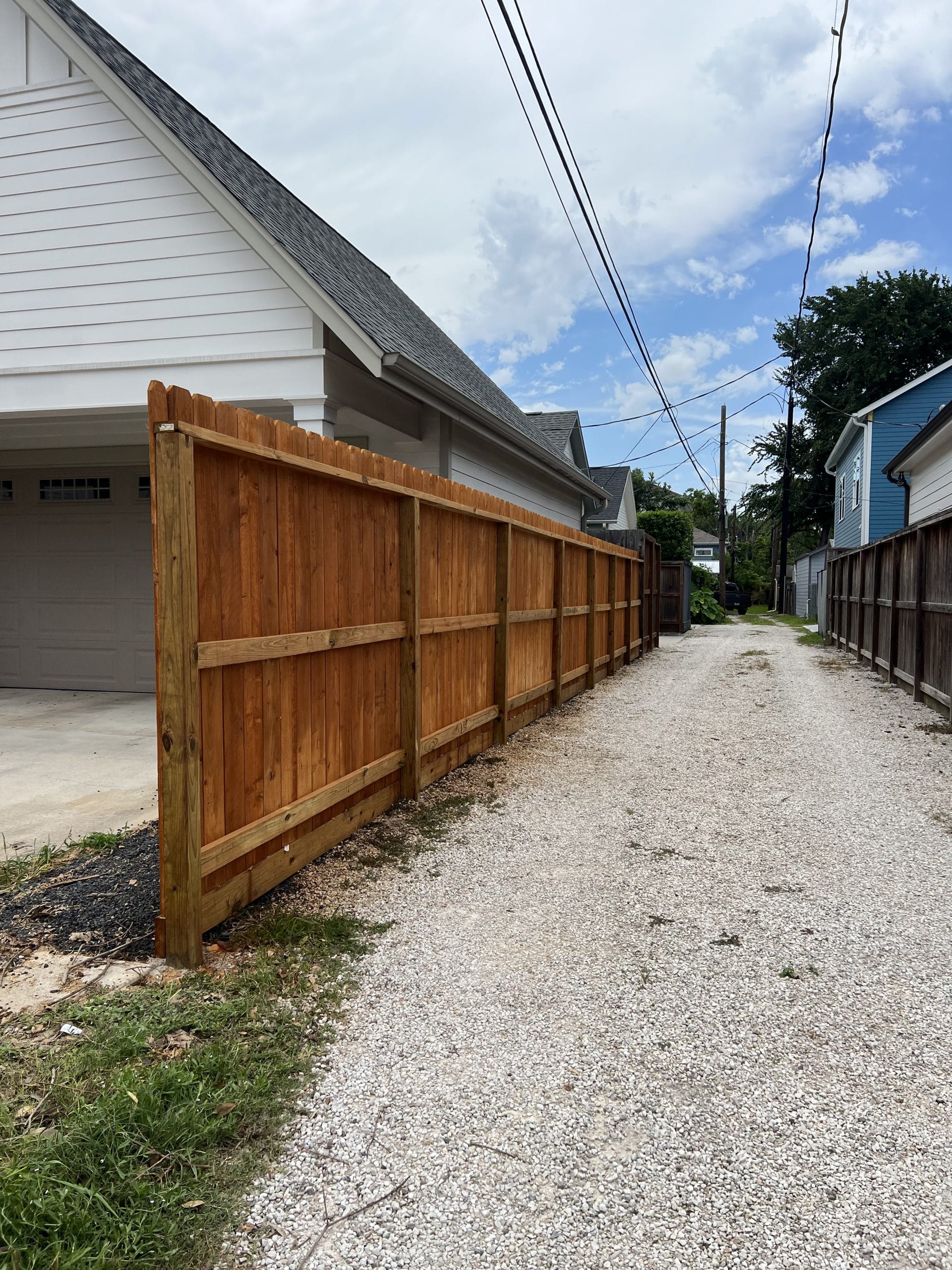
Logan’s cedar privacy fence in La Porte is 6 feet tall with a classic vertical-board design and a rich semi-transparent stain, and the crew hit rocky soil while digging the post holes. That mattered: per the fencing industry’s own wind/footing engineering guide, the soil at a fence site sets the allowable bearing pressure a post footing can rely on, so digging the holes properly in tougher ground — instead of shortcutting the depth — is what gives the posts their holding power.
Source: CLFMI Wind Load Guide WLG 2445-2018 (ASTM F567 minimum footing depth; soil-bearing-pressure footing sizing).
The job: a 6-foot cedar privacy fence with a vertical-board design
Logan wanted a wooden fence for his La Porte property that would hold up to the local climate while adding privacy and charm. The team settled on cedar for its natural decay resistance, and Logan chose a 6-foot-tall privacy fence after being shown both vertical and horizontal board layout options — he went with the classic vertical board design for a traditional look.
For the finish, Logan chose a rich, semi-transparent cedar stain that protects the wood while letting its natural grain show through.
Why the soil at the post holes matters for how a fence holds
While digging the post holes, the crew ran into rocky soil — more labor-intensive to dig through, but not a reason to cut the holes shorter. Per the fencing industry’s own Wind Load Guide: “The type of soil that will be encountered at the site of the fence installation will influence the post size and spacing by way of the passive soil pressures that can reasonably be expected to resist the tendency for the line posts to overturn and also to remain in an essentially plumb position.”
In other words, the ground itself is doing part of the job of holding the post upright — and how well it does that job depends on what kind of soil it is.
The baseline every footing starts from
Before soil conditions even enter the picture, there is a floor every footing has to clear. Per ASTM F567, as cited in the Wind Load Guide: “The minimum depth of footings in accordance with ASTM F567 is 24 inches plus an additional 3 inches for each one (1) foot of fence height over 4 feet.” For a 6-foot fence like Logan’s, that works out to a 30-inch minimum before any soil-specific adjustment. From there, the footing size is checked against the allowable lateral soil-bearing pressure for the actual soil at the site, referenced from the International Building Code’s presumptive soil load-bearing value table.
Footing-depth soil factor (general guide)
Pick the fence height and the soil the crew is digging into. Shows the ASTM F567 minimum-depth baseline and which direction soil conditions generally push it. Not a substitute for a site-specific footing design.
ASTM F567 minimum footing depth: 24in plus 3in for each 1ft of fence height over 4ft (CLFMI Wind Load Guide WLG 2445-2018). Allowable lateral soil-bearing pressure varies by soil type (2009 IBC Table 1806.2); a qualified geotechnical professional should confirm site-specific soil data.
What customers say on Google
5.091 Google reviews · read them all on Google
Amazing work will go ahead and recommend everyone in friends and family We installed 8ft tall double sided stained cedar wood fence in our backyard, it’s really looks great, installed perfectly nice finishing and cost effective, thanks mustang fencing.
Installed Stained cedar wood fence yesterday by mustang fencing, thanks for the beautiful work.
I have hired Mustang fencing services to fix my backyard fencing. Good wood to used. I really like theirs work. Best of luck
Reviews shown word for word from the Mustang Fencing Services Google Business Profile (Galveston), captured 2026-10-26.
Questions we get about this
Why did the rocky soil on Logan’s job matter?
How deep does a fence post footing need to be?
Why did Logan choose a vertical board design over horizontal?
What finish is on Logan’s fence?
Does this page apply La Porte building code to my fence?
Sources
Checked October 30, 2026. Rules change, so confirm with the City before you build.
- Chain Link Fence Manufacturers Institute (CLFMI), Wind Load Guide WLG 2445-2018 (fence post footing depth and soil-bearing-pressure sizing) — ASTM F567 sets a 24in + 3in-per-ft-over-4ft minimum footing depth; actual footing sizing is checked against the allowable lateral soil-bearing pressure for the soil at the site, referenced from the IBC presumptive soil load-bearing value table — denser soils generally carry a higher allowable bearing pressure than loose, sandy, or saturated soils.
Planning a cedar privacy fence?
We’ll walk the property, talk through board layout and finish options, and put it on a written quote.