
Creating a Beautiful Wooden Fence for Ralph Hodges in Manvel, Texas
A cedar privacy fence built for a property in Manvel. Here it is in photo, plus Manvel’s own published fence construction standard and the fastener choice cedar needs to avoid staining.
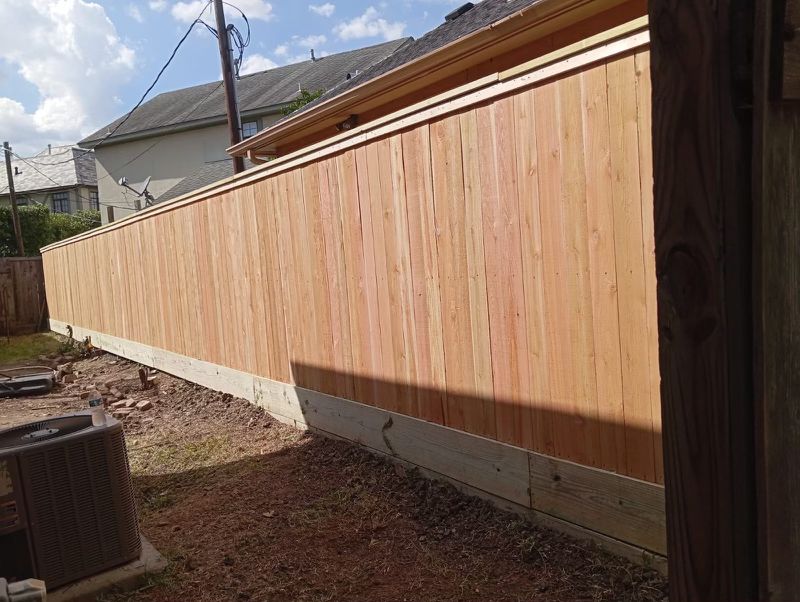
Ralph Hodges’ Manvel property was fenced with a cedar privacy fence — flat pickets set edge-to-edge, with a cap board along the top and a rot board at the base. The City of Manvel publishes its own construction standard for wood privacy fences (post spacing, footing, rot board, cap) and a height limit that varies by zoning context.
Sources: City of Manvel Code of Ordinances, Sec. 77-43; USDA Wood Handbook (FPL-GTR-282, 2021), Ch.16.
The job: a cedar privacy fence
Ralph Hodges’ property in Manvel was fenced with a cedar privacy fence: flat pickets installed edge-to-edge along the property line, with a cap board running the length of the top and a rot board along the base.
The photo below is from that job.
What Manvel’s own fence code specifies
Manvel’s Code of Ordinances (Ch. 77, Sec. 77-43, and its Exhibit A) publishes construction details for wood privacy fences: posts at least 4×4 inches, spaced no more than 7 feet apart, set in concrete-backfilled holes; a rot board 6 or 8 inches wide at the base; and an optional top cap up to 2 inches — neither the cap nor the rot board counts toward the fence’s measured height.
The fence in the photo above shows both of those details — a lighter base board and a cap along the top — named by the City’s own ordinance.
Manvel’s maximum fence height, by context
Single-family residential zoning (standard, and along a major thoroughfare) vs. other zoning contexts (77-43(d)(1)-(2)). Top cap and rot board height are excluded from this limit.
Why cedar needs the right fastener
Cedar, like redwood and oak, contains natural tannins. When a plain carbon-steel fastener sits in cedar that gets wet, those tannins react with the steel and leave a dark iron-stain streak below the nail or screw head — a cosmetic issue, not a structural one, but a visible one on a naturally finished fence.
The fix is the fastener, not the wood: stainless steel, or a high-quality hot-dip-galvanized fastener meeting ASTM A153/A, resists the reaction. Pine doesn’t have this issue — it lacks the tannins that cause it.
Manvel’s gate construction standard
Exhibit A also covers gates on a wood privacy fence: a diagonal support board to resist sag, a minimum 36-inch opening, and hardware made specifically for gates (not general-purpose hardware). No gate is shown in this job’s photo, but these are the standard details Manvel’s ordinance calls for on any wood privacy-fence gate in the city.
What’s the height limit for a fence in Manvel?
Pick the zoning context, per the City’s own published fence ordinance (Sec. 77-43(d)(1)-(2)).
Source: City of Manvel Code of Ordinances, Sec. 77-43(d)(1)-(2). Confirm with the City before you build — this tool doesn’t submit or approve a permit.
What customers say on Google
5.091 Google reviews · read them all on Google
Installed Stained cedar wood fence yesterday by mustang fencing, thanks for the beautiful work.
had an excellent experience with mustang fencing From the initial consultation to the final installation, the team was professional, punctual, and attentive to detail. They helped me choose the perfect fence style to match my property and ensured everything was installed with precision. The quality of materials is top-notch, and the fence has completely transformed the look and security of my home. I highly recommend mustang services to anyone looking for reliable and high-quality fencing services!
Fenomenal job, really nice guy. Contacted them after hurricane knocked down my fence facing the street and got it done really quickly.
Reviews shown word for word from the Mustang Fencing Services Google Business Profile (Galveston), captured 2026-11-07.
Questions we get about this
What kind of fence was installed for Ralph Hodges’ property?
What is a rot board, and why does Manvel’s code mention it?
How tall can a privacy fence be in Manvel?
Why do cedar fences sometimes get dark streaks near the nails?
Where is this project located?
Sources
Checked November 7, 2026. Rules change, so confirm with the City before you build.
- City of Manvel, TX Code of Ordinances, Ch. 77 Zoning, Sec. 77-43 Fences + Exhibit A — Fence height limits by zoning context (d)(1)-(2); wood fence construction standard — post size/spacing, concrete footing, rot board, top cap not counted toward height (d)(3), Exhibit A #1-9; gate diagonal brace, 36 in min. opening, gate hardware (Exhibit A #10-12).
- USDA Forest Products Laboratory, Wood Handbook: Wood as an Engineering Material (FPL-GTR-282, 2021) — Chapter 16 (Finishing): cedar, redwood and oak tannins react with plain carbon-steel fasteners to cause iron stain; stainless steel or hot-dip-galvanized fasteners (ASTM A153/A) avoid it; pine has no appreciable tannins.
Planning a cedar privacy fence of your own?
We’ll walk the property line, talk through height limits for your zoning context, post spacing and the right fastener for the wood, and put it on a written quote.