
What’s the Best Gate Style for a Rural Ranch Entrance in Brazoria County?
A ranch entrance gate has a different job than a driveway gate: it has to pass every truck and trailer that will ever use the property, and hold up to Gulf Coast humidity and salt air for years. Here is how wood, welded iron or steel, and aluminum compare for that job, with the extension, NRCS and manufacturer specs behind each one.
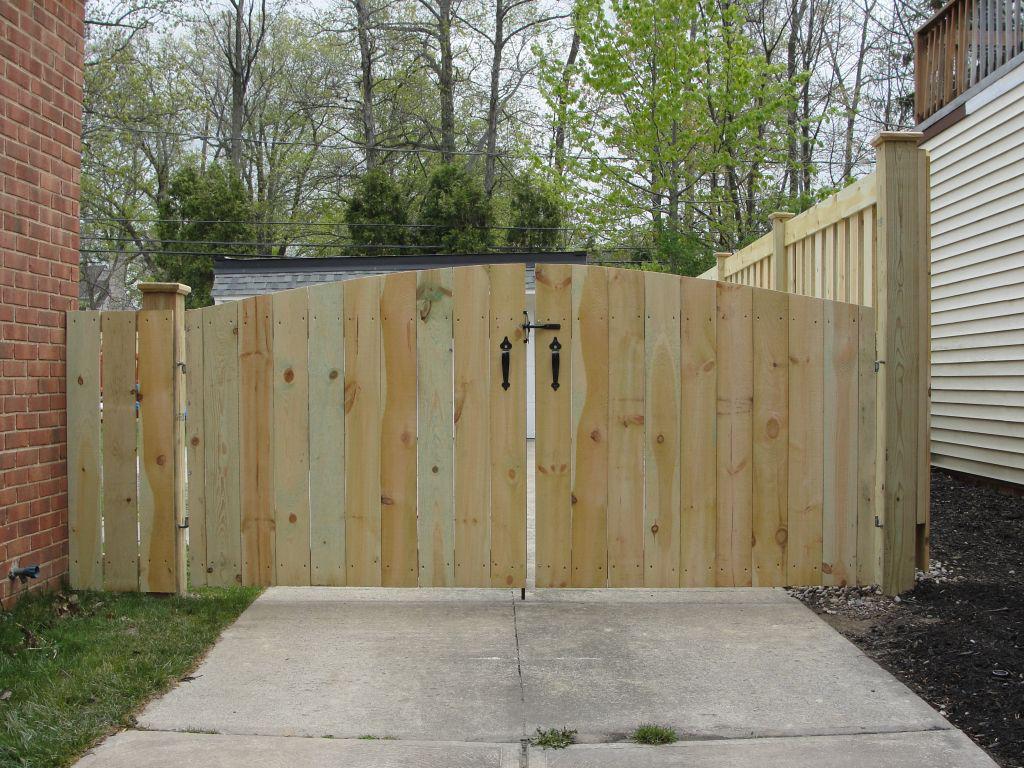
There is no single best material for every ranch entrance. Wood (cedar) is the classic look and sits in USDA’s top decay-resistance class, but needs finish upkeep. Welded iron or steel is strong and common, but the coating is what keeps it from rusting. Aluminum skips the rust problem, and at least one major maker backs its finish for life — with a coastal exclusion and a cleaning schedule attached. Whatever the material, the width and bracing rules are the same.
Sources: University of Georgia Extension Bulletin 1192; NRCS Texas Practice Specification Fence (Code 382), 2021; USDA Forest Products Laboratory Wood Handbook; Ultra Aluminum 3-part spec and its limited, lifetime-coverage guarantee.
Start with the opening, then pick the material
Before style, the entrance has to pass whatever will ever come through it: a feed truck, a stock trailer, a hay trailer, an RV. University of Georgia Extension’s horse-fencing bulletin puts a pasture gate that equipment will use at 14 to 16 feet minimum, and the NRCS Texas fence specification requires a brace assembly on both sides of every gate opening, regardless of what the gate itself is made of. The full sizing, arch and setback discussion lives on farm gate vs. ranch gate; this page is about what to build the entrance out of once the opening is sized.
Three materials cover most rural entrances on the Gulf Coast: wood, welded iron or steel, and aluminum. Each has a real tradeoff, backed by a published spec rather than a sales pitch.
Three entrance materials, compared
| Wood (cedar) | Welded iron / steel | Aluminum | |
|---|---|---|---|
| Decay/rust | USDA: redcedar heartwood is “Very resistant” to decay | Doesn’t decay, but bare steel rusts; needs a sound coating | Does not rust; finish is the main wear point |
| Finish upkeep | Prime/stain soon after milling — timing matters more than people think (see our cedar case study) | Galvanizing or powder coat must stay intact; touch up damage promptly | One maker’s lifetime finish guarantee excludes “coastal installations” and ties claims to a rinse schedule |
| Hardware note | Standard fasteners; no special isolation need between wood and metal hardware | Mixing dissimilar metals (e.g. stainless on galvanized) in salt air needs an isolating spacer (AGA) | Spec calls for stainless fasteners throughout (Ultra 3-part spec 2.02 B) |
| Posts (published spec) | Sized to the job; ask in writing | Sized to the job; ask in writing | 4 in or 6 in square extrusion, .125 in wall (Ultra 3-part spec 2.04 D) |
USDA Forest Products Laboratory Wood Handbook; American Galvanizers Association; Ultra Aluminum 3-part specification and its limited, lifetime-coverage guarantee. “Ask in writing” means no published post-size spec was on file for that material at review time.
Wood: the classic look, with a maintenance schedule
Cedar is the usual wood choice for an entrance gate, and for good reason: Eastern and Western redcedar heartwood both sit in the USDA Forest Products Laboratory’s top “Very resistant” decay-resistance class. The tradeoff is upkeep. Cedar also shrinks and swells with the seasons, and holds a finish best when that finish goes on soon after milling rather than months later. We worked through the actual numbers, a board-movement calculator and a finishing-timing study, on our 80-foot cedar fence case study rather than repeating them here.
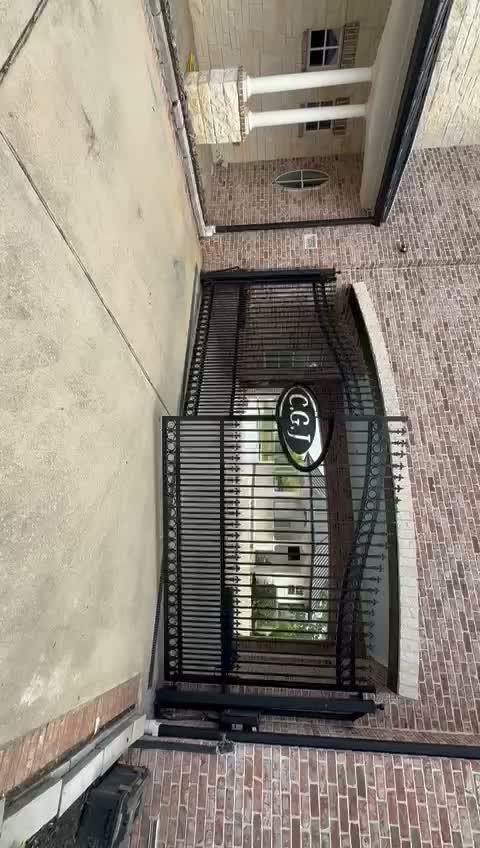
Welded iron or steel: strong, but the coating does the work
A welded tube frame, in an ornamental or a plain farm style, is a common and strong entrance build. Steel and iron don’t decay the way wood does, but bare steel rusts, so the finish (hot-dip galvanizing, powder coat, or both) is what actually protects it long-term, not the metal alone. Keep that coating sound and touch up any bare spots promptly, especially near the coast.
One detail gate builders sometimes miss: where different metals touch — a stainless hinge pin on a galvanized frame, for example — and a conductive liquid like rain, dew or sea spray can bridge them, the two metals can set up galvanic corrosion, where one metal corrodes faster to protect the other. The American Galvanizers Association’s fix is straightforward: isolate the metals with a non-conductive spacer (neoprene, nylon, Teflon, or a glass-reinforced-epoxy gasket) so they can’t form that circuit.
Aluminum: no rust, with a coastal catch in the warranty
Aluminum doesn’t rust, which is the whole appeal near salt water. One major maker’s spec calls for stainless steel fasteners throughout and square-drive screws connecting pickets to the rail, with gate posts as 4-inch or 6-inch square extrusions, 0.125-inch wall, and welded swing-gate frames built to support a 300-pound vertical load on the latch side without collapsing.
The same maker backs its Powercoat finish with a limited guarantee, good for the life of the product, against cracking, peeling or chipping — but read the fine print before assuming that covers a rural Gulf Coast entrance. The warranty explicitly excludes “extreme environmental conditions such as coastal installations,” and ties any claim to a cleaning record: rinse the finish every 3 months if the gate is within about 1,500 feet of salt water, every 6 months beyond that, and monthly if it’s ever exposed to ice-melting products. Ask to see those terms, and whether they apply the same way to a rural entrance as to a subdivision fence.
One maker’s cleaning schedule, by exposure
How often the finish must be rinsed to keep a warranty claim valid (Ultra Aluminum warranty terms).
Ranch entrance style picker
Answer four questions about the site and what matters most. The picker points to a material family and the sourced caveats that go with it. No prices.
Width: UGA Extension Bulletin 1192. Bracing: NRCS Texas Practice Specification 382. Aluminum: Ultra Aluminum 3-part spec and a limited, lifetime-coverage guarantee (coastal cleaning schedule). Wood: USDA Wood Handbook, detailed on our cedar fence case study. Dissimilar-metal corrosion: American Galvanizers Association. A starting point for a conversation with your installer, not a product recommendation.
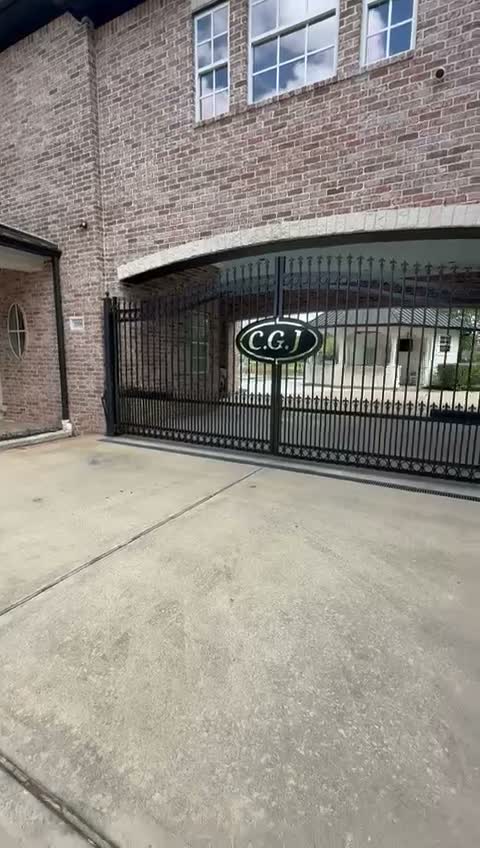
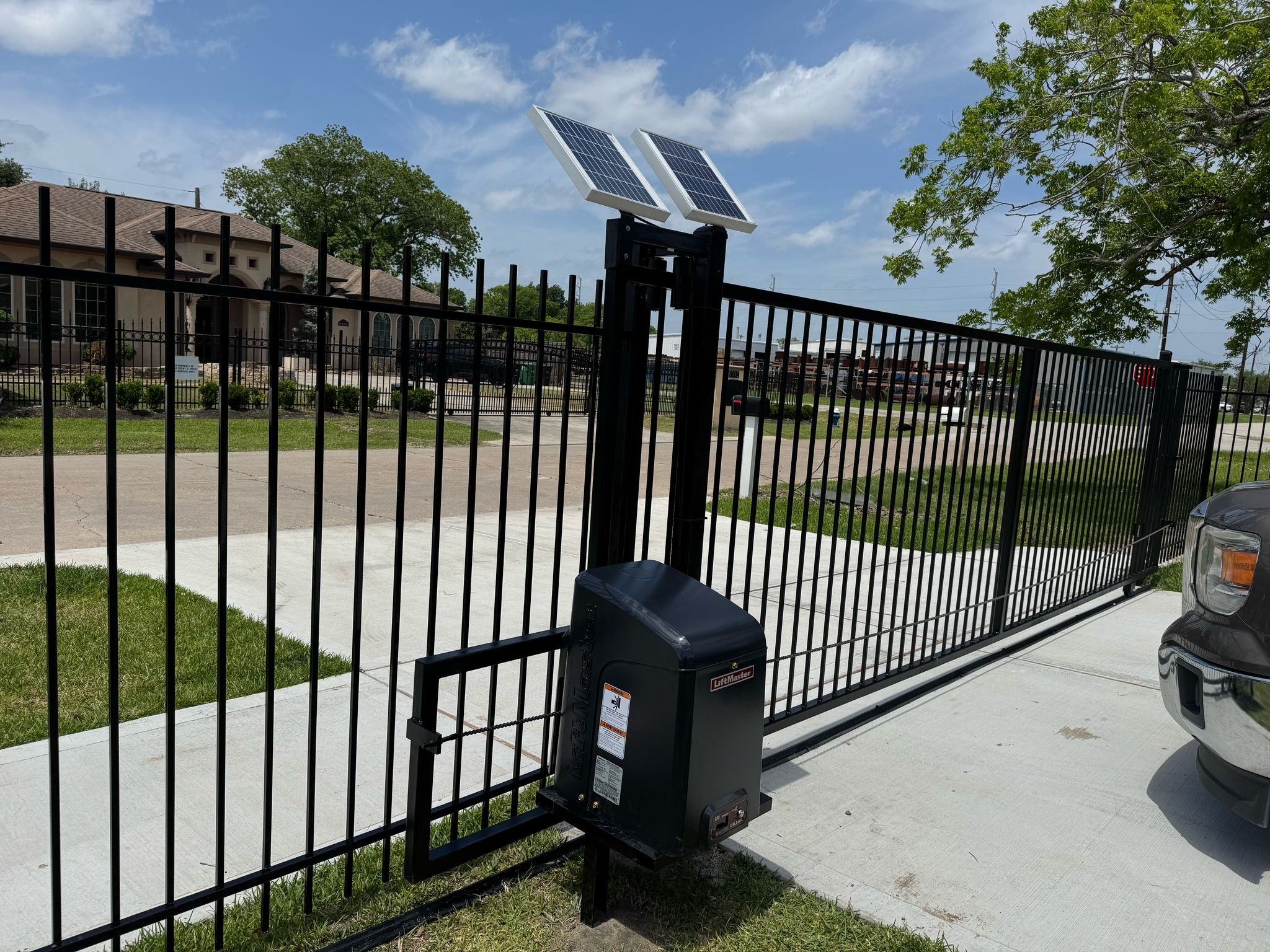
What customers say on Google
5.091 Google reviews · read them all on Google
We just installed iron gate and it looks amazing thank you very much mustang fencing .
Very professional and friendly. Gotten automatic gates done and they are done to perfection! Thank you
had an excellent experience with mustang fencing From the initial consultation to the final installation, the team was professional, punctual, and attentive to detail. They helped me choose the perfect fence style to match my property and ensured everything was installed with precision. The quality of materials is top-notch, and the fence has completely transformed the look and security of my home. I highly recommend mustang services to anyone looking for reliable and high-quality fencing services!
Reviews shown word for word from the Mustang Fencing Services Google Business Profile (Galveston), captured 2026-10-26.
Questions we get about this
What’s the best material for a ranch entrance gate?
How wide should a ranch entrance gate be?
Does an aluminum gate rust near the coast?
Can I mix metals on a gate, like stainless hinges on a galvanized frame?
Is cedar a good choice for an entrance gate?
How much weight does a gate hinge need to hold?
Sources
Checked October 28, 2026. Rules change, so confirm with the City before you build.
- University of Georgia Cooperative Extension Bulletin 1192, Fences for Horses — Minimum gate width for equipment (14–16 ft).
- USDA NRCS Texas, Practice Specification Fence (Code 382), March 2021 — Brace assemblies required on both sides of gate openings.
- USDA Forest Products Laboratory, Wood Handbook: Wood as an Engineering Material, FPL-GTR-282 (2021) — Decay-resistance class for cedar heartwood (Table 14-1).
- Ultra Aluminum Manufacturing, Inc., warranty terms (limited, lifetime coverage) and cleaning guidelines — Finish warranty, coastal-installation exclusion, and the 3/6-month salt-water cleaning schedule.
- American Galvanizers Association, Dissimilar Metal Corrosion with Zinc — Galvanic corrosion mechanism and isolation methods for mixed-metal hardware.
Planning a ranch or rural entrance gate?
We’ll size the opening to what actually needs to get through, talk through the material tradeoffs above, and put the gate, posts and bracing on a written quote.