
What Is the Best, Safest Fence for Horses and Cattle?
Horses injure themselves in fences more than other livestock, so the horse sets the standard. Here is the height extension specialists recommend, which fence types they steer horse owners toward and away from, how gates and corner braces are sized, and what Texas fence law expects.
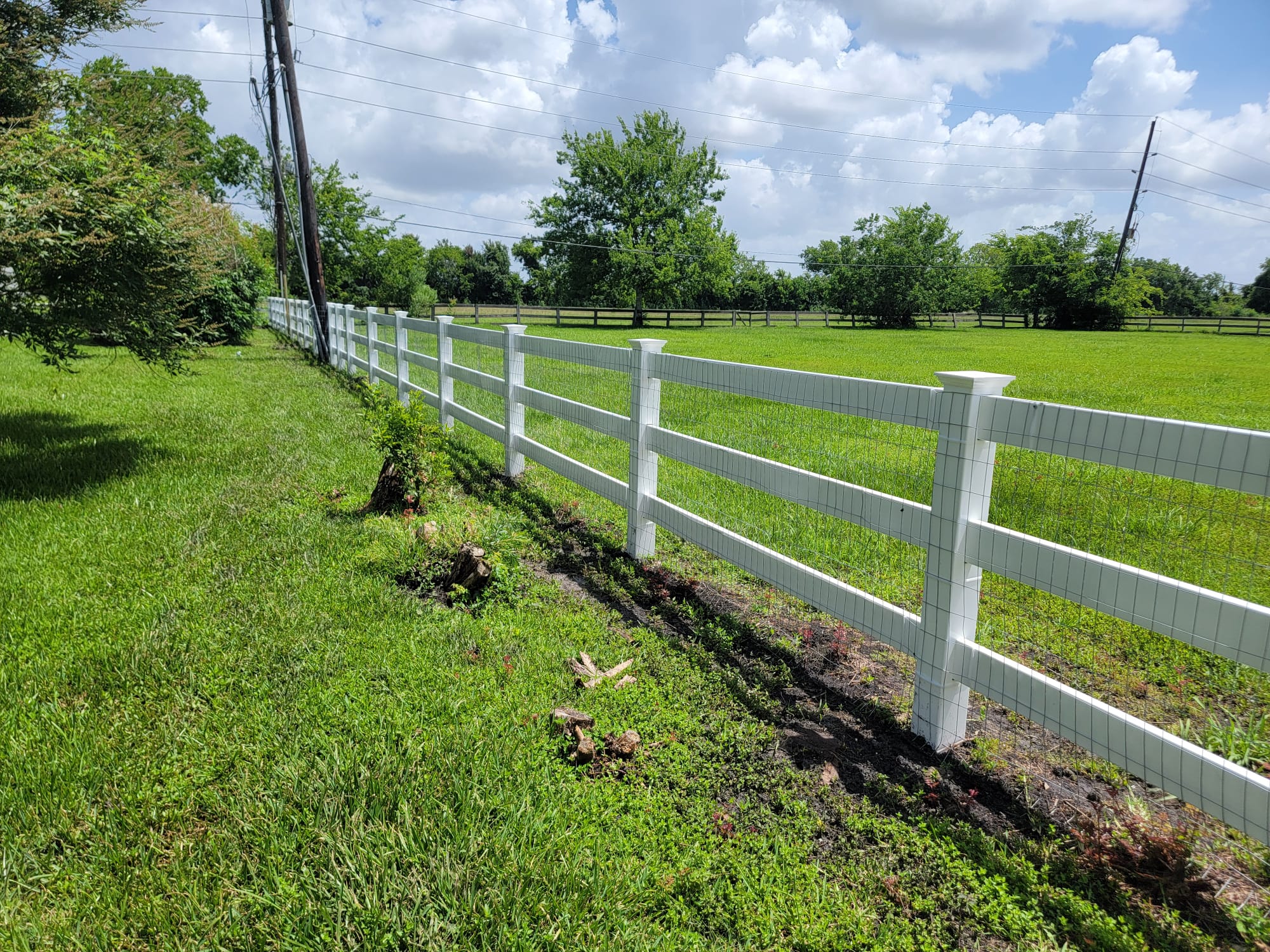
For horses, a highly visible board or rail fence at least 5 feet tall is the standard extension guidance. Avoid barbed wire. Cattle need less: the University of Tennessee puts perimeter cattle fence at 54 inches minimum. When horses and cattle share a pasture, the horse rules set the spec, which also satisfies the cattle number. Whatever the material, corner and gate assemblies carry the load, so they are where the money and the care should go.
Sources: University of Georgia Cooperative Extension Bulletin 1192, Fences for Horses; University of Tennessee Extension PB1541, Planning & Building Fences on the Farm. Checked September 26, 2026.
What makes a fence safe for horses
The University of Georgia’s horse-fencing bulletin starts with the reason: “Because of the natural flight response of horses, they tend to injure themselves in fences more than most other livestock.” A spooked horse runs, and it needs to see the fence before it gets there. UGA’s rule of thumb is that whatever the fence is made of, it must be highly visible, resistant to damage by horses, durable and safe for contact.
- Height. UGA’s minimum for perimeter pasture fences is 5 feet (60 inches). Horses are more likely to jump a fence than to go through or under it when spooked. Fences that divide pastures can be 4½ feet (54 inches) with the bottom 6 to 8 inches off the ground.
- Small paddocks. For paddocks under 2 acres, corrals and stallion pens, the top of the fence should be at eye level with the horse’s head in a natural upright position, usually 4 to 6 inches above the withers.
- Visibility. Painted rail fences look to a horse like a solid barrier. A horse that does hit a rail fence is less likely to get a hoof hung in it or cut itself on sharp wire ends than with many standard farm wire fences.
Those numbers are for a horse only. A fence that is right for cattle can be wrong for a horse, which is why the question “what’s the best fence” starts with “which animals?”
Fence types, as the extension guides rate them
Extension guides rate fence types by how they treat a horse that hits them. The table repeats what they say and nothing more.
Fence types and horses
| Fence type | What the extension guides say about horses |
|---|---|
| Board or rail | UT: “Board fences are ideal for horses.” UGA: popular on horse farms because they are attractive, highly visible and relatively safe. |
| Woven wire | UT: works well, “particularly with a single board at the top so the horses can easily see the fence.” |
| High-tensile wire | UT: poses a threat because horses may become entangled. Reduce the risk with closer posts or something hung from the wire. UGA: one strand should be a highly visible material, and use four to five strands on a perimeter. |
| Barbed wire | UT: “Barbed wire should be avoided because there are many opportunities for horses to tear their hide on the barbs.” |
| Welded wire, 2×4 openings | UGA: used for its low price, but the joints will not hold up under field conditions. Not recommended for horse fencing. |
University of Tennessee Extension PB1541 (2001 reprint); University of Georgia Cooperative Extension Bulletin 1192, Fences for Horses.
What cattle need
For cattle, the University of Tennessee’s planning bulletin gives a 54-inch minimum for perimeter fences and 60 inches for handling facilities, which have to be strong enough for heavy use and “clearly visible.” Standard barbed wire fences run three to five strands between posts 15 to 25 feet apart. Bulls need special attention: heavy posts with thick-gauge wire or cable, or electric fence.
The bulletins on file don’t rank cattle fence types against each other the way they do for horses, so this page doesn’t either. For a cattle-only pasture, material comes down to budget, the strength each section needs and what you already have.
Minimum fence height by use
Inches, from the extension bulletins.
Livestock fence spec checker
Pick the animals, where the fence goes and what it is made of. The checker applies the heights, wire guidance and brace rules from the extension bulletins cited below. No prices.
Heights: UGA Extension Bulletin 1192 (horses) and UT Extension PB1541 (cattle). Wire guidance: UT PB1541 and UGA B1192. Gates: UGA B1192 and UGA Elevated Equine (2022). Bracing: UGA B1192, which describes wire fences; board fences use equal-strength posts throughout. Where horses and cattle share a fence, the larger number applies. A planning aid, not an engineering design.
Horses and cattle in the same pasture
The bulletins don’t describe a mixed-species fence. The arithmetic does the work: the horse perimeter minimum (60 inches) is higher than the cattle minimum (54 inches), so a fence built to the horse spec clears both. In practice that means:
- Height at 60 inches or more on the perimeter.
- No barbed wire anywhere horses can reach it, which also rules out a barbed top strand.
- High visibility: rails, or wire with a board on top, rather than wire alone.
- Posts and bracing sized for cattle. They lean and push on fence lines. UT’s advice on bulls and heavy use applies to the corners and gates.
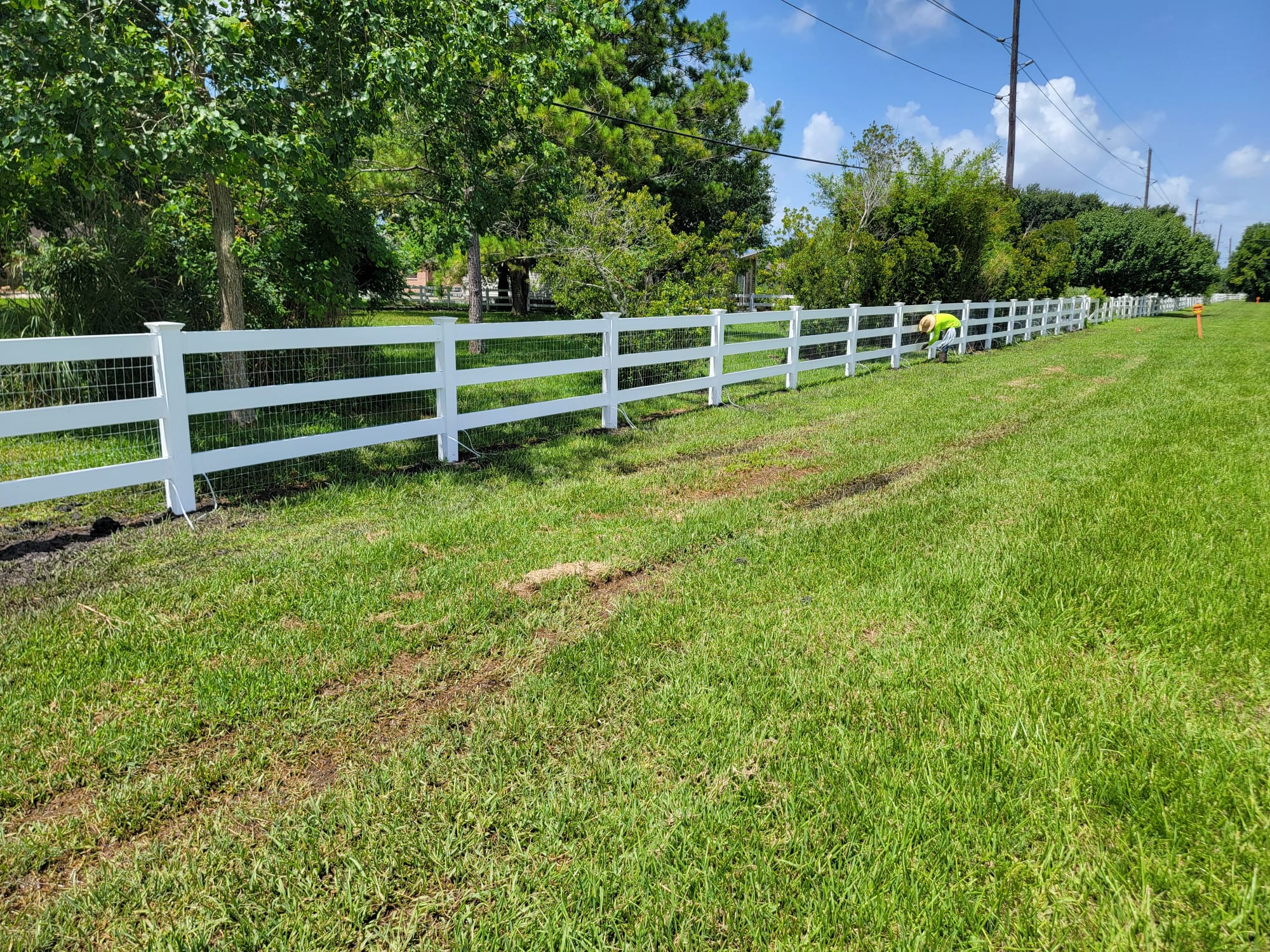
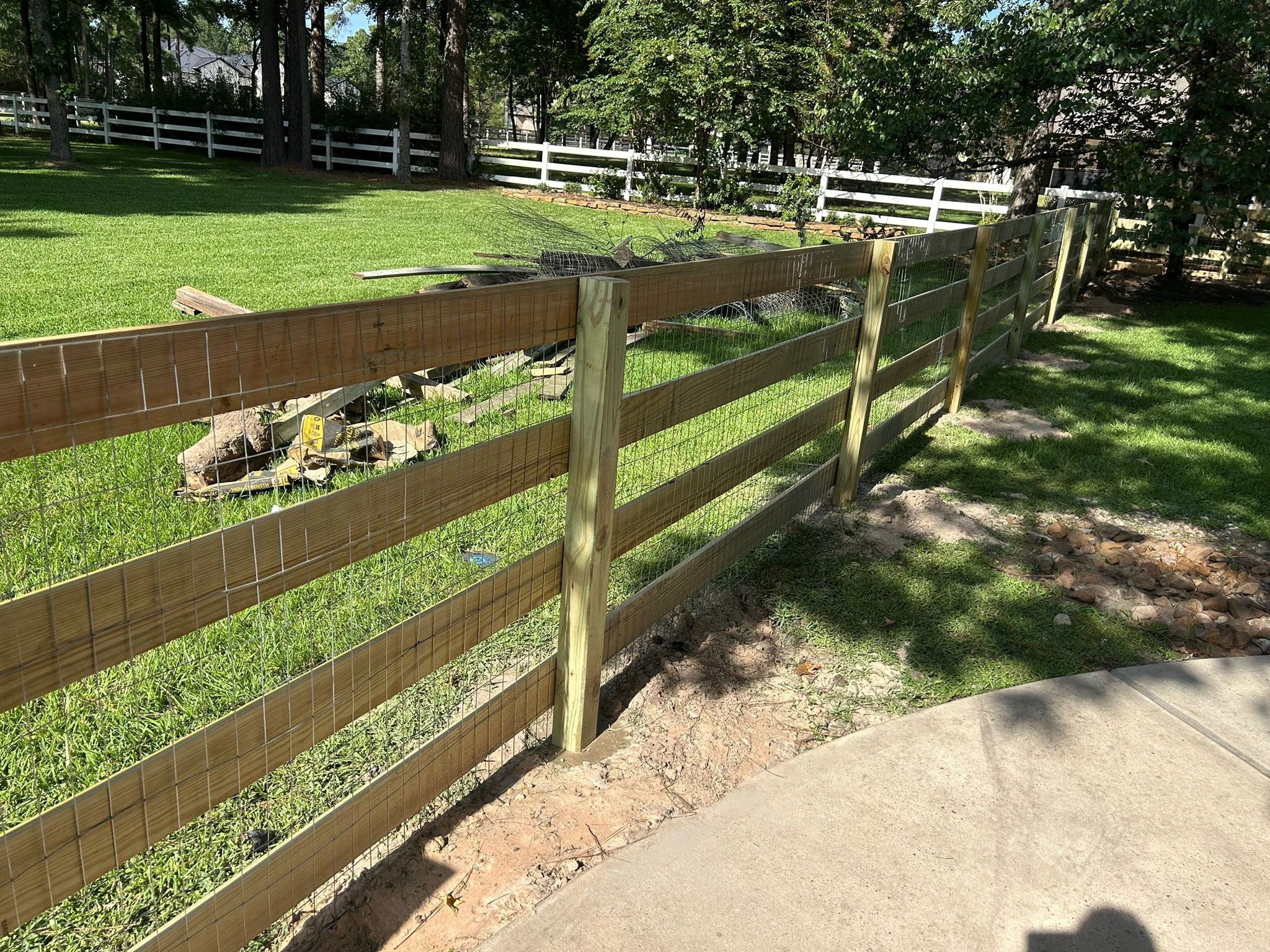
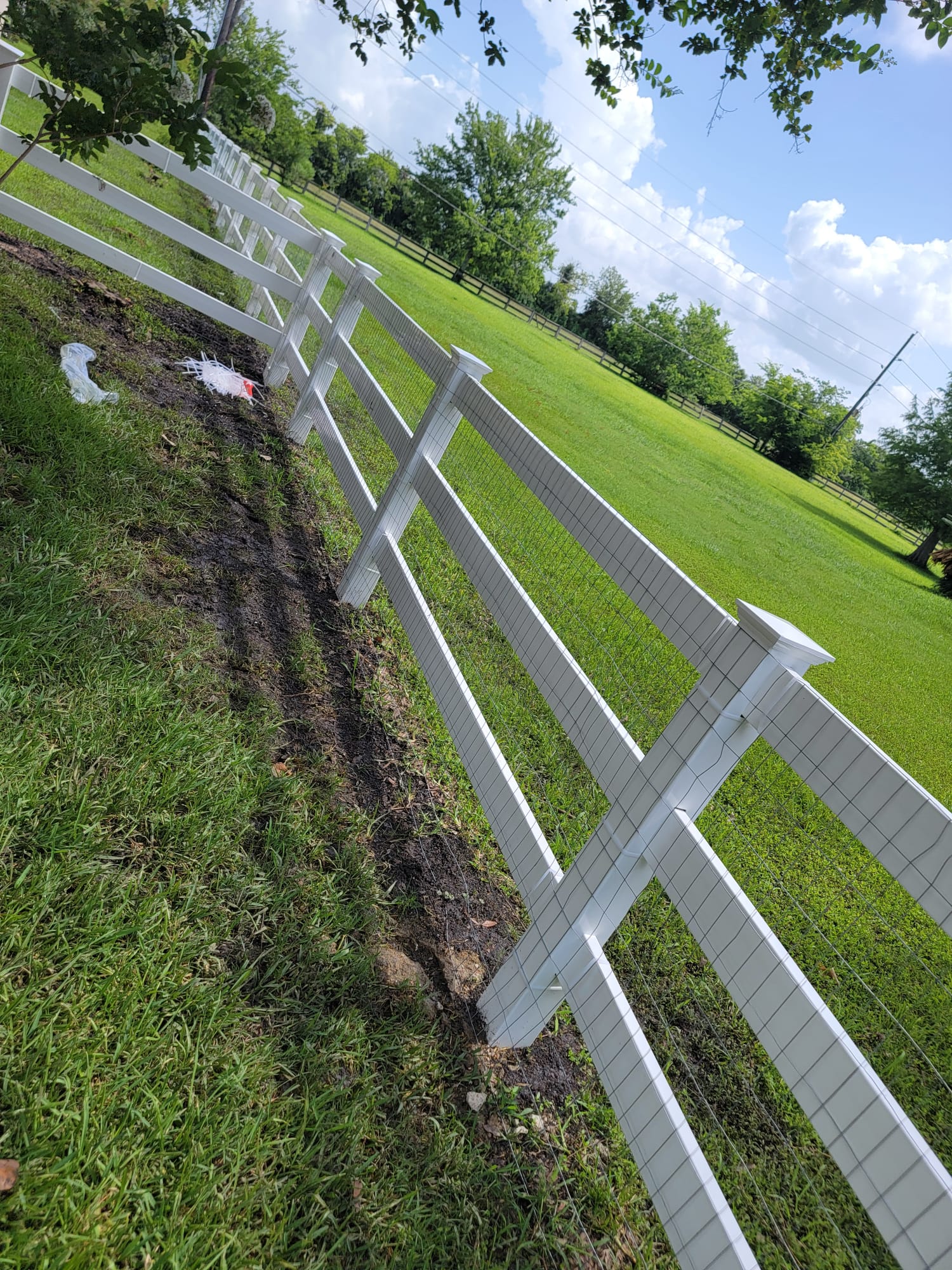
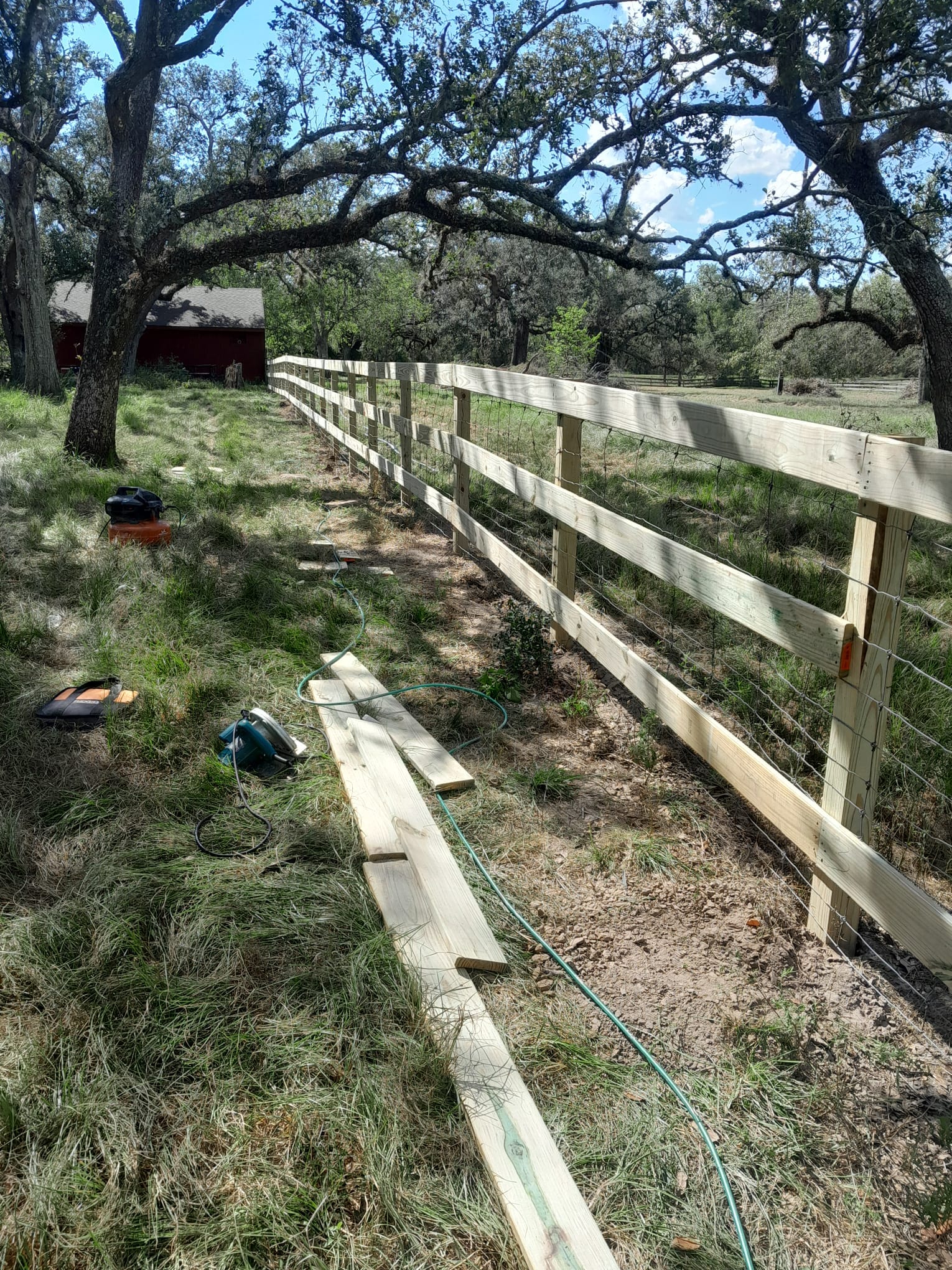
If you’re weighing the choice for a specific lot, farm and ranch fencing covers the options we install, and vinyl fence explains the rail-and-mesh style shown in the photos on this page.
Gates and corners decide how long it lasts
UGA’s bulletin says it plainly: “Horses tend to congregate around gates, so make sure whatever gate used is sturdy and safe.” Its numbers:
- Width. A gate a horse walks through is 4 feet at minimum. If equipment will pass, at least 8 feet. A gate into a pasture for tractors, mowers and wagons should be 14 to 16 feet.
- Height. The gate should be as tall as the fence so horses don’t lean over it or try to jump. UGA Elevated Equine advises against diagonal cross-brace wood gates for horses because legs, feet or heads can get caught in the narrow angles.
- Posts. Corner and gate posts should be at least 8 inches in top diameter, and brace posts 5 inches or more.
For wire fences, the corner and end assemblies are, in UGA’s words, “the most important structures in the entire fence.” The sheet below shows the H-brace and its dimensions. For gate styles, see farm-style gates and farm gate vs ranch gate.
What customers say on Google
5.091 Google reviews · read them all on Google
Very professional and friendly. Gotten automatic gates done and they are done to perfection! Thank you
had an excellent experience with mustang fencing From the initial consultation to the final installation, the team was professional, punctual, and attentive to detail. They helped me choose the perfect fence style to match my property and ensured everything was installed with precision. The quality of materials is top-notch, and the fence has completely transformed the look and security of my home. I highly recommend mustang services to anyone looking for reliable and high-quality fencing services!
Absolutely loved my fence once i saw the finished product. No hassle, no rude interactions, and no inconveniences everything was just perfect. One of the best fencing companies in Texas
Reviews shown word for word from the Mustang Fencing Services Google Business Profile (Galveston), captured 2026-10-26.
Questions we get about this
What is the safest fence for horses?
How tall should a horse fence be?
Is barbed wire okay for cattle?
What fence works for horses and cattle together?
How wide should a pasture gate be?
Do I have to fence my livestock in Texas?
Sources
Checked October 27, 2026. Rules change, so confirm with the City before you build.
- University of Georgia Cooperative Extension Bulletin 1192, Fences for Horses (J. W. Worley) — Horse fence heights (60 in perimeter, 54 in dividing), visibility, gate widths, post sizes and H-brace dimensions.
- University of Tennessee Agricultural Extension Service, PB1541, Planning & Building Fences on the Farm (2001 reprint) — Cattle fence height (54 in), handling facilities (60 in), bulls, barbed wire, and horse fence types.
- University of Georgia Cooperative Extension, Elevated Equine, Fencing for Horses (Fall 2022) — Gate height and width, and why diagonal cross-brace wood gates are not recommended for horses.
- Texas A&M AgriLife Extension, AGEC-PU-114, A Landowner’s Guide to Fence Law in Texas (2nd ed., 2022) — Stock laws, closed-range counties and the duty to keep livestock fenced in.
Fencing a pasture or paddock?
We’ll walk the fence line, look at the gates and corners, and put the materials, bracing and gate widths on a written quote. Free on-site estimates across Galveston County.