
Pipe Gate or Panel Gate: Which One for Livestock?
A pipe gate and a panel gate solve the same problem — closing an opening — with different hardware. Here is how the tubing is actually specified, where a hinged gate beats a pinned panel run (and the reverse), and a picker to narrow down a confinement tier before you call a supplier.
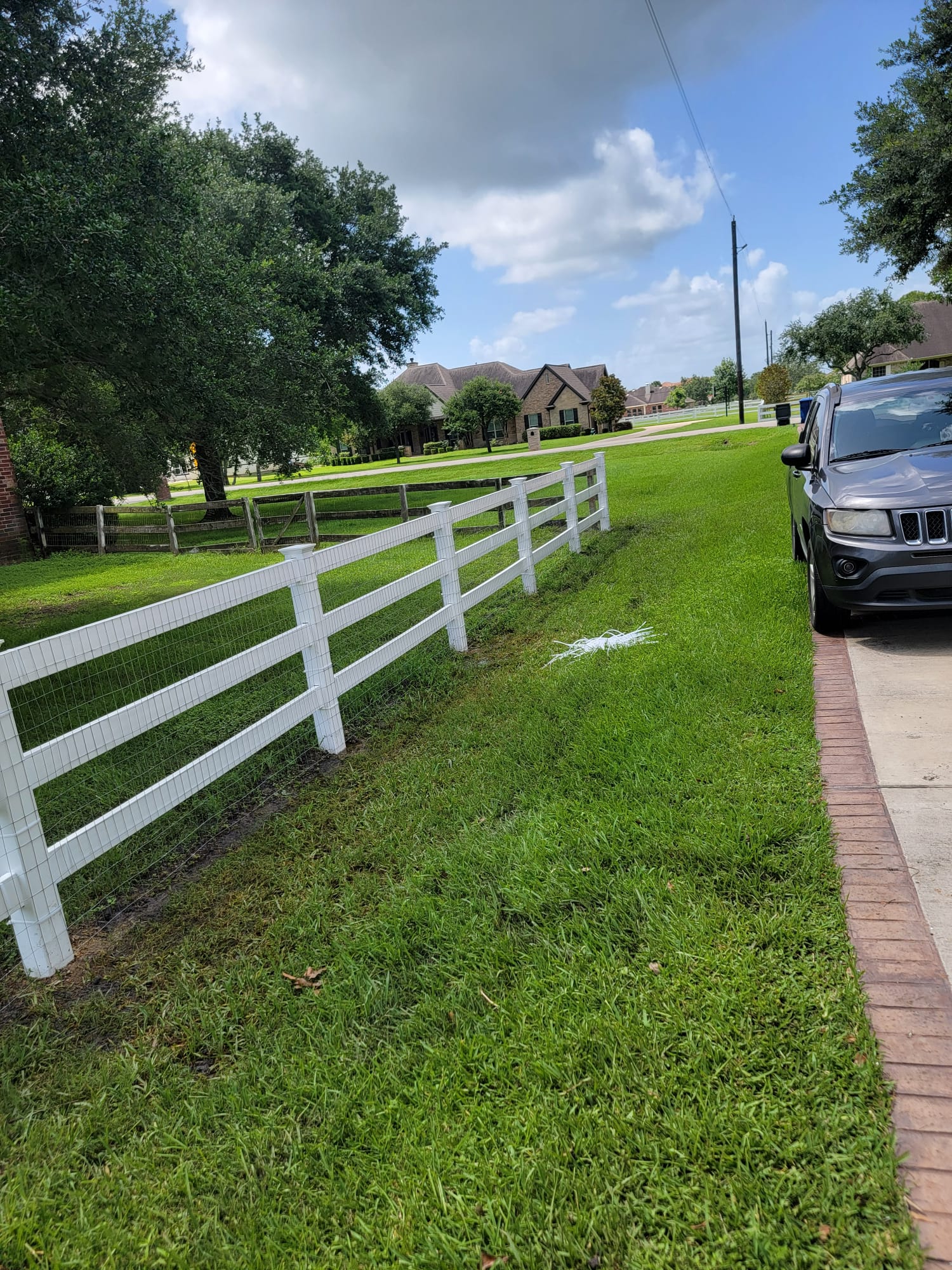
A pipe gate is a single gate hinged to two set posts; a panel gate is a walk-thru gate built into a run of panels that pin together without posts. A common stocked pipe gate runs 1-¾ in tubing at 19 gauge, 50 in tall, in 4 to 16 ft lengths. Which tubing diameter and wall thickness you actually need is set less by “gate vs. panel” and more by the animals and how often they lean on it — Behlen Country publishes four confinement tiers that step up together from 1-⅝ in/18 gauge to 2 in/14 gauge. Neither style has a published price here; ask a supplier for a quote once you know the tier.
Sources: Agri Supply product listings for the Tarter 6-bar tube gate and 4 ft walk-thru gate; Behlen Country, Gates & Panels Guide; FENCEpipe continuous fence panel guide. Checked October 28, 2026.
Two different things, one job
“Pipe gate” and “panel gate” both close an opening, but they’re different hardware. A pipe gate is a single tube-steel gate hung on hinges between two set posts, with a latch and chain at the receiving post — the kind you see at a pasture entrance or a driveway into a field. A panel gate is a walk-thru gate built into one section of a corral or continuous-fence panel run: the panels pin together edge to edge, often standing on their own feet with no posts set in the ground, and one panel in the line has a smaller hinged gate for people or stock to pass through.
That difference drives the rest of it: a pipe gate is built for a fixed opening you’ll use for years. A panel run is built to be moved, reconfigured or rented — sorting pens, a temporary corral, a working chute laid out for the day.
What the steel is actually spec’d to
Behlen Country’s gate and panel guide doesn’t separate gates from panels by name — it sizes both by a confinement level, driven by “animal type and size” and “frequency of contact.” Their four tiers: Access Control (1-⅝ in tube, 18 to 20 gauge), Pasture Confinement (1-⅝ in, 16 to 18 gauge), Moderate Confinement (1-⅝ in, 16 gauge) and Maximum Confinement (2 in tube, 14 to 16 gauge). Their rule of thumb: “If in doubt, step up one level for safety and longevity.”
A lower gauge number is a thicker wall, so the jump from 18-20 gauge up to 14-16 gauge at Maximum Confinement is real steel, not just a bigger number. A panel built for a sheep pen and a panel built for a bull pen can look alike in a photo and be a different product entirely.
Typical off-the-shelf specs
| Spec | Pipe gate (6-bar tube gate) | Panel system |
|---|---|---|
| Tubing | 1-¾ in OD, 19 gauge | Walk-thru gate: 1-¾ in, 19 gauge; continuous fence panel itself: 1-¼ in, 14 gauge |
| Height | 50 in | Varies with the panel chosen |
| Length options | 4, 6, 8, 10, 12, 14, 16 ft | Continuous fence panels commonly run 20 ft |
| How it mounts | Hinges + chain latch on two set posts | Quick-pin latch into the next panel; often self-supporting feet, no set posts |
| Built for | A fixed opening, used for years | A run you can move, add to or take apart |
Agri Supply product listings for the Tarter 6-bar tube gate, 4 ft walk-thru gate and panels; FENCEpipe continuous fence panel guide.
Pipe gate or panel gate?
Answer two questions and get a starting point: which hardware style fits, and which Behlen confinement tier to ask for. Not a stocking list or a price quote.
Hardware style: fixed openings on a permanent fence line typically use a hinged pipe gate on set posts; portable/temporary pens use panels that quick-pin together, often with a walk-thru gate built into one panel. Confinement tier: Behlen Country’s four-level framework, by animal size and contact frequency — step up one level if in doubt. Not a price or stocking tool.
A panel run still needs a gate
A continuous fence panel is a fence section, not an opening. FENCEpipe, a continuous-fence manufacturer, describes its own panels and gates as a pair: “Continuous fence panels work with livestock gates to control access between areas.” That’s consistent with what’s on the shelf: a dedicated walk-thru gate (1-¾ in tube, 19-gauge, per Agri Supply) is sold specifically to pin into a panel line, rather than expecting a plain fence panel to swing open.
So “pipe gate vs. panel gate” isn’t really pipe vs. no gate at all — it’s a gate on set posts versus a gate pinned into a portable run. Either way, something hinged has to be in the line somewhere.
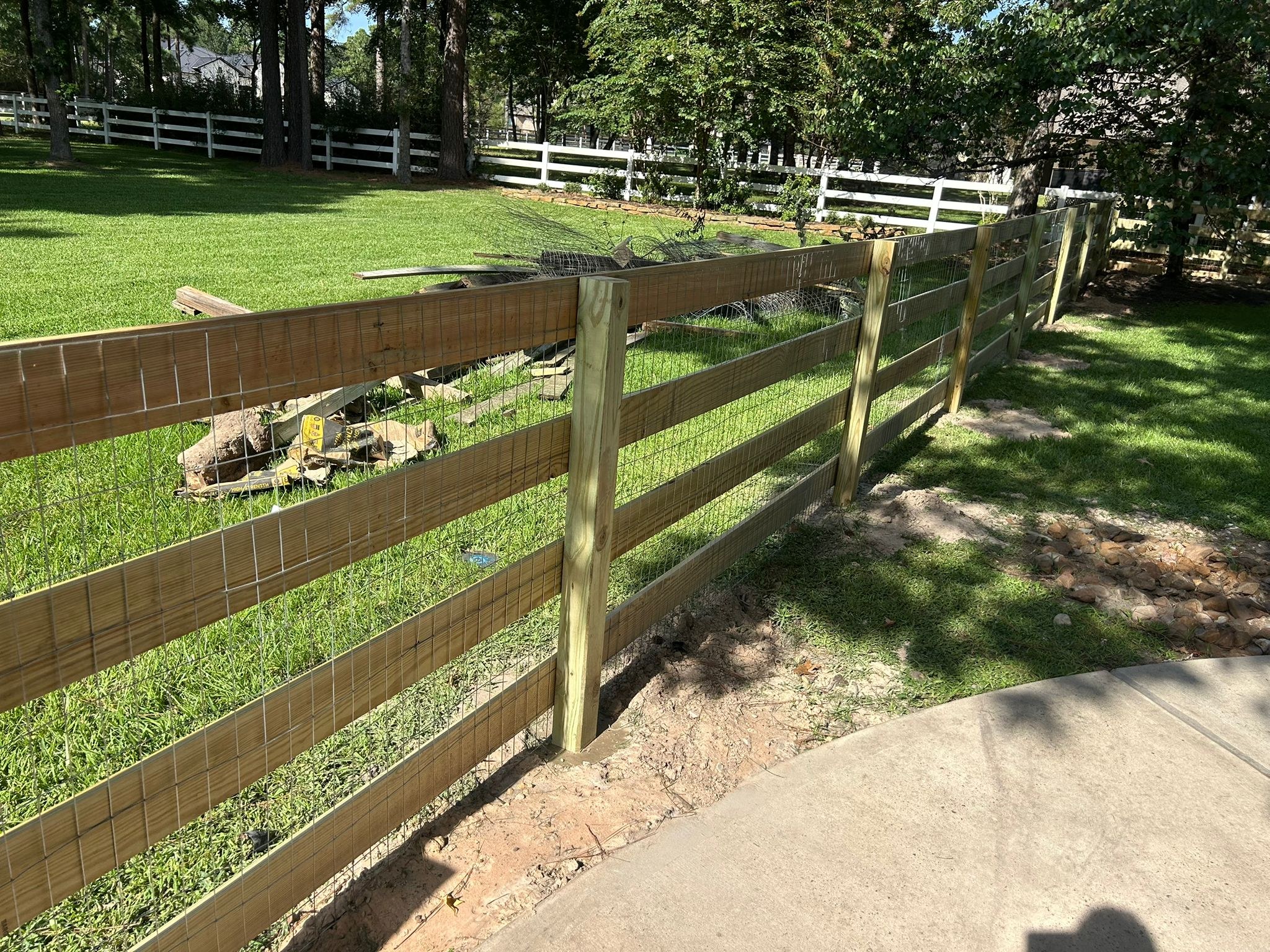
What customers say on Google
5.091 Google reviews · read them all on Google
We just installed iron gate and it looks amazing thank you very much mustang fencing .
Mustang’s team installed iron fence for me and did an absolutely incredible job! I would recommend this company to anyone I know!
True professionalism is very rare in this day and age, these guys live upto their word and deliver on their service! Our fence was down in the July storm and these guys came and gave a reasonable quote, after confirming I received a time line and they delivered! Will recommend them to everyone I know who needs fencing done.
Reviews shown word for word from the Mustang Fencing Services Google Business Profile (Galveston), captured 2026-10-26.
Questions we get about this
What is the difference between a pipe gate and a panel gate?
What size tubing does a livestock gate need?
Can panels replace a gate entirely?
How tall is a standard farm gate?
Do I have to fence my livestock in Texas?
Sources
Checked October 28, 2026. Rules change, so confirm with the City before you build.
- Agri Supply, Tarter 6-Bar Economy Tube Gate — 1-¾ in tubing, 19-gauge, 50 in tall, lengths to 16 ft, continuous-welded saddle joints, ~51 lb at 12 ft.
- Agri Supply, 4 ft Economy Walk-Thru Gate — 1-¾ in tube, 19-gauge, built to join corral panels.
- Behlen Country, Gates & Panels Guide — Four confinement levels by tubing diameter and gauge, selected by animal type/size and frequency of contact.
- FENCEpipe, The Comprehensive Guide to Continuous Fence Panels — 14-gauge, 1-¼ in pipe, 20 ft x 4 ft continuous fence panels, sold to pair with livestock gates.
- Texas A&M AgriLife Extension, AGEC-PU-114, A Landowner’s Guide to Fence Law in Texas (2nd ed., 2022) — Stock laws, closed-range counties and the duty to keep livestock fenced in.
Fencing a pasture, pen or corral?
We’ll walk the site, talk through gate and panel options, and put it on a written quote. Free on-site estimates across Galveston County.