
How Do I Manually Open My Automatic Gate If the Power Is Out?
Most automatic gate operators have a manual release that disconnects the motor so the gate can be pushed by hand — but which mechanism yours uses depends on the operator. LiftMaster’s arm-mounted slide and swing operators use a release handle; FAAC’s underground swing operators use a key-locked release built into the gate leaf itself. Here’s both, plus why a backup battery might mean the gate still works before you need either.
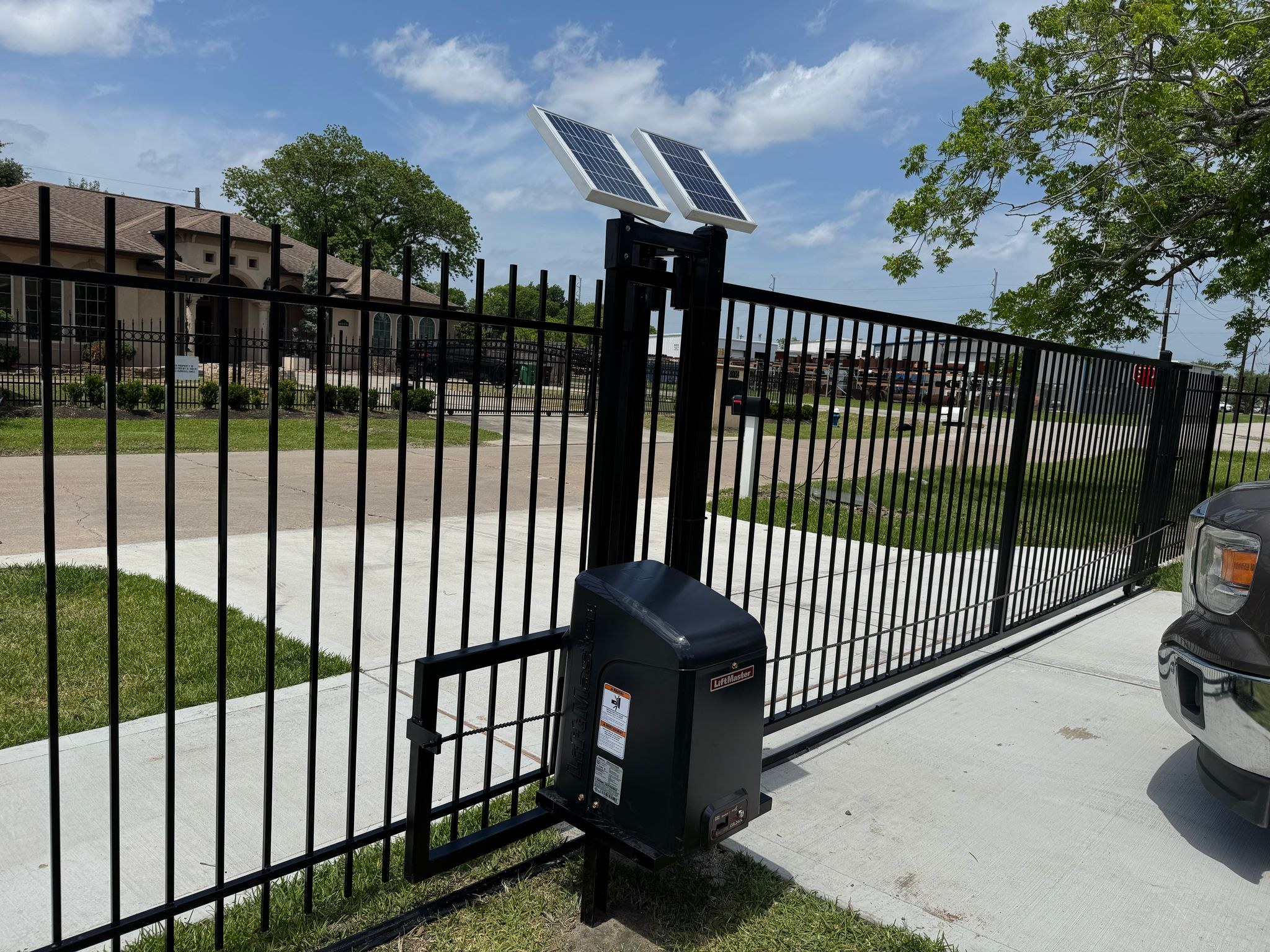
Yes — but the mechanism depends on which operator is installed, and both documented versions warn against using it while the gate is moving. On LiftMaster’s CSL24UL (slide) and CSW24UL (swing) arm operators, the manual release is a handle on the operator arm: press the reset switch to RESET/DISCONNECT, then release that handle to swing or slide the gate by hand. On a FAAC 770 underground swing operator, there’s no handle to find — instead, a release key unlocks a mechanism built into the gate leaf itself and turns to disengage it. Before assuming you need either one, it’s worth knowing that many operators run on 24 Vdc with a battery backup (commonly two 7AH batteries) charged by the transformer, so a healthy backup battery can keep the gate working for a while even without AC power.
Sources: LiftMaster CSL24UL installation manual; LiftMaster CSW24UL installation manual; FAAC 770 24Vdc manual.
There isn’t one universal manual release
A manual release just disconnects the motor from the gate so it can be pushed or swung by hand — but exactly how you do that depends on which operator is installed. The two mechanisms documented on this page come straight from the installation manuals for operators Mustang actually installs: LiftMaster’s CSL24UL (slide) and CSW24UL (swing) arm-mounted operators use a release handle on the operator arm itself; FAAC’s 770 underground swing operator instead uses a key-locked release built into the gate leaf. If your gate uses a different brand or model, its own manual is the only reliable source — don’t assume one mechanism applies to a different operator. For how the operator and its controls normally work, see our automatic gate installation page.
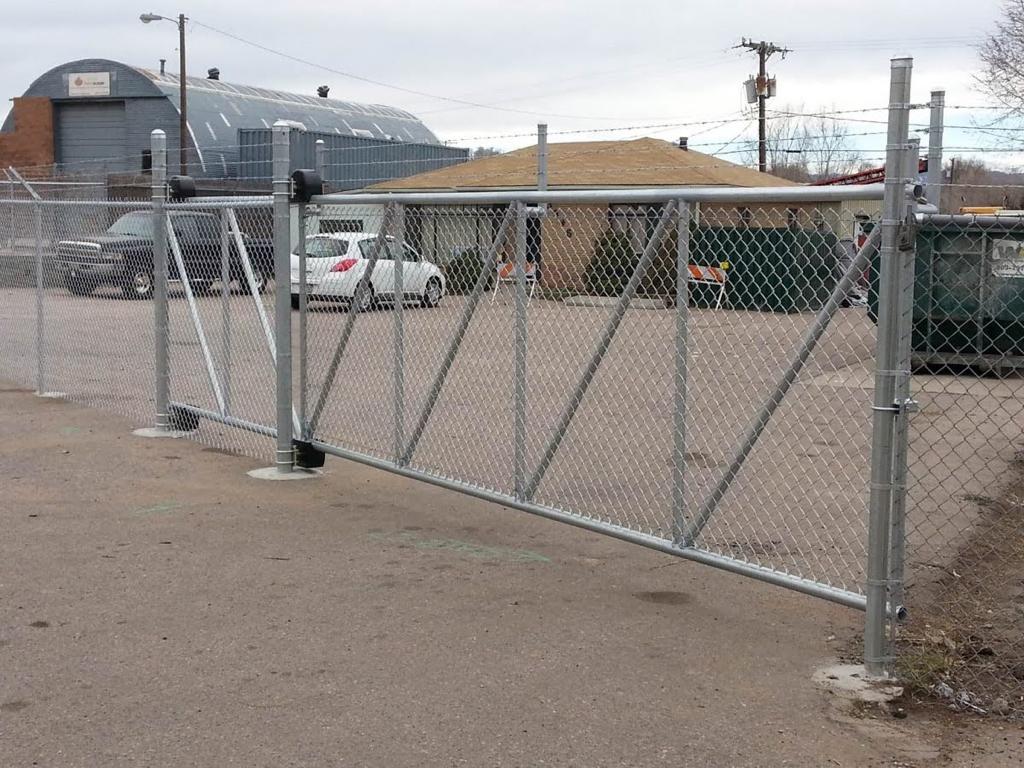
Before you release it: check the power path
Both LiftMaster manuals cited above describe the operator as running on 24 Vdc, “Transformer Run / Battery Backup” — meaning the integrated transformer keeps a backup battery (commonly two 7AH batteries, with an optional 33AH upgrade “for solar applications and extended battery backup”) charged during normal operation. If that battery is in good shape, the gate can keep working for a while during a short outage without AC power at all. A manual release is for when that’s not the case — dead or missing batteries, a motor fault, or a mechanical jam — not a step to take automatically every time the power flickers.
Whichever mechanism applies, both manuals carry the same core warning: use the manual release only when the gate is completely stopped. The CSW24UL manual adds a spring-specific caution for swing operators: “Use the emergency release ONLY when the gate/door is closed… Weak or broken springs may cause the gate/door to fall rapidly,” which is a real risk with a spring-assisted swing gate held partway open.
Side by side
| Handle release (LiftMaster arm operators) | Key release (FAAC underground operators) | |
|---|---|---|
| Where it is | A handle on the visible operator arm | A locked mechanism inside the gate leaf |
| Tool needed | None — a reset switch and the handle itself | The release key for that unit |
| Dual-gate setups | Release the handle on both operators | Release both leaves if both are powered |
| To restore | Tighten the handle back down | Push the lever home, turn the key back |
| Shared warning | Only when the gate is NOT moving | Only when the gate is NOT moving |
Sources: LiftMaster CSL24UL / CSW24UL installation manuals; FAAC 770 24Vdc manual.
Find your manual release
Pick the closest match to your gate’s operator. This only covers the two mechanisms documented in the manuals cited on this page — if your operator doesn’t match either description, check its own manual or call us before forcing anything.
Based on LiftMaster CSL24UL / CSW24UL installation manuals (handle release) and the FAAC 770 24Vdc manual (key release). Only use a manual release when the gate is fully stopped.

What Galveston customers say
5.091 Google reviews · read them all on Google
Mustang Fencing Services was dependable and honest from start to finish. They stuck to our timeline and budget, and the fence looks fantastic. I appreciate their hard work and would recommend them to anyone.
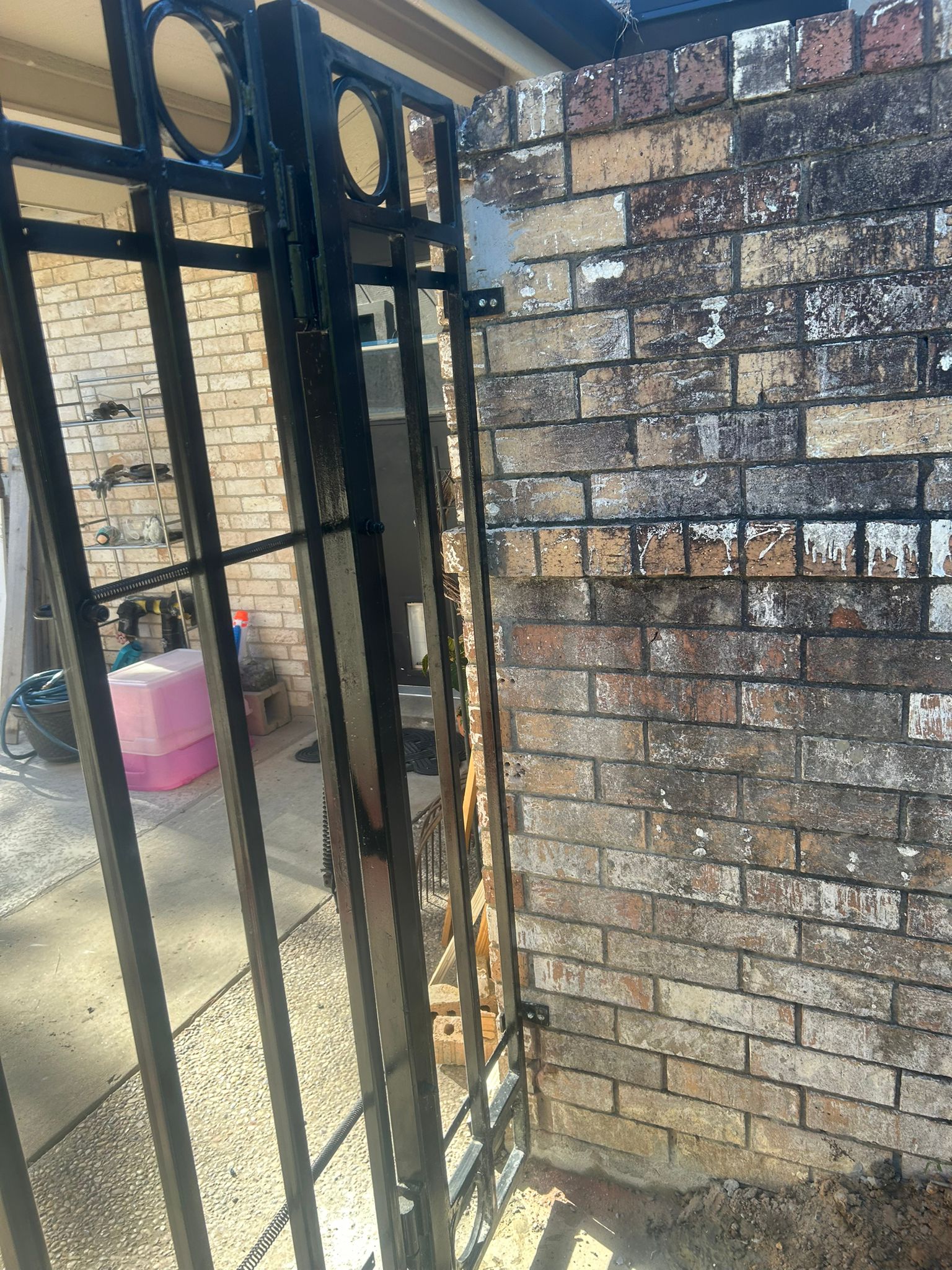
We just installed iron gate and it looks amazing thank you very much mustang fencing .
Amazing work will go ahead and recommend everyone in friends and family We installed 8ft tall double sided stained cedar wood fence in our backyard, it’s really looks great, installed perfectly nice finishing and cost effective, thanks mustang fencing.
Reviews shown word for word from the Mustang Fencing Services Google Business Profile (Galveston), captured 2026-10-12.
Questions we get about this
Can I open my automatic gate by hand if the power goes out?
Is it safe to use the manual release while the gate is moving?
Why would my gate still work during a power outage?
Does every automatic gate use the same manual release mechanism?
What should I check before calling for a gate repair?
Sources
Checked October 14, 2026. Rules change, so confirm with the City before you build.
- LiftMaster CSL24UL Slide Gate Operator Installation Manual — Manual Disconnect procedure (handle release) and battery-backup specifications.
- LiftMaster CSW24UL Swing Gate Operator Installation Manual — Manual Disconnect procedure (handle release), spring-related emergency-release warning, and battery-backup specifications.
- FAAC 770 24Vdc Underground Swing Gate Operator Manual — Key-locked manual release procedure built into the gate leaf, and the matching gate-must-be-stopped warning.
Gate not responding during an outage?
We’ll identify your operator, walk you through the correct manual release for that model, and check the battery backup so the gate works the way it’s supposed to next time the power drops.