
Sliding Gate vs Swing Gate: Which Fits Your Driveway?
A swing gate needs depth behind the opening; a slide gate needs length beside it. Slope, what lies outside the gate and whether it will be automated narrow it down from there. Four measurements usually settle it before style or budget comes into it.
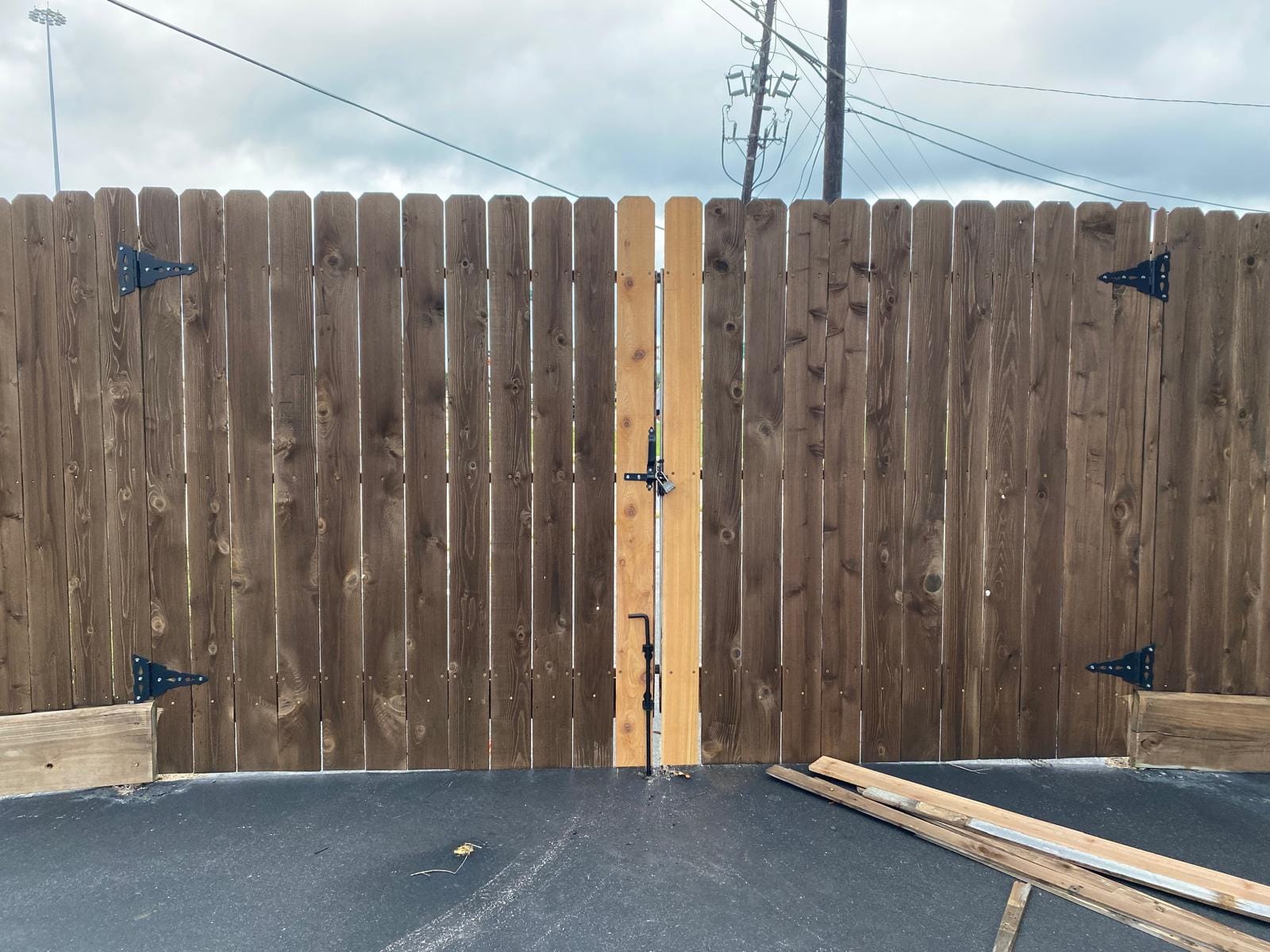
Choose a swing gate when there is clear, fairly level ground behind the opening, and a slide gate when there isn’t but there is a long straight fence run beside it. A swing leaf needs depth equal to its length: a 12 ft opening needs 12 ft as one leaf or 6 ft as two. A slide gate needs fence line beside the opening: about 12 ft for a V-track gate on a level rail, or about 19 ft 6 in for a cantilever on one maker’s tail table (the industry minimum tail is 40% of the opening). Ground that rises into the swing, or a sidewalk or street right outside an automatic gate, pushes the answer toward sliding. For larger openings and commercial sites, Mustang Fencing Services builds both styles as part of full commercial gate installation in Galveston County.
Sources: CLFMI guide specification 32 31 13; LiftMaster CSW24UL and CSL24UL installation manuals (UL 325 / ASTM F2200); Anchor SURTRAC and iDeal V-Track instructions. Read September 27, 2026.
Space: depth behind, or length beside
The two gate types use completely different parts of the lot:
- A swing gate needs depth. Each leaf sweeps a quarter circle as long as itself. One 12 ft leaf needs 12 ft of clear, fairly level ground on the side it swings into; two 6 ft leaves need 6 ft. Parked cars, steps, pilings, planting beds and utility pedestals all eat into that depth. More in single vs double swing gates.
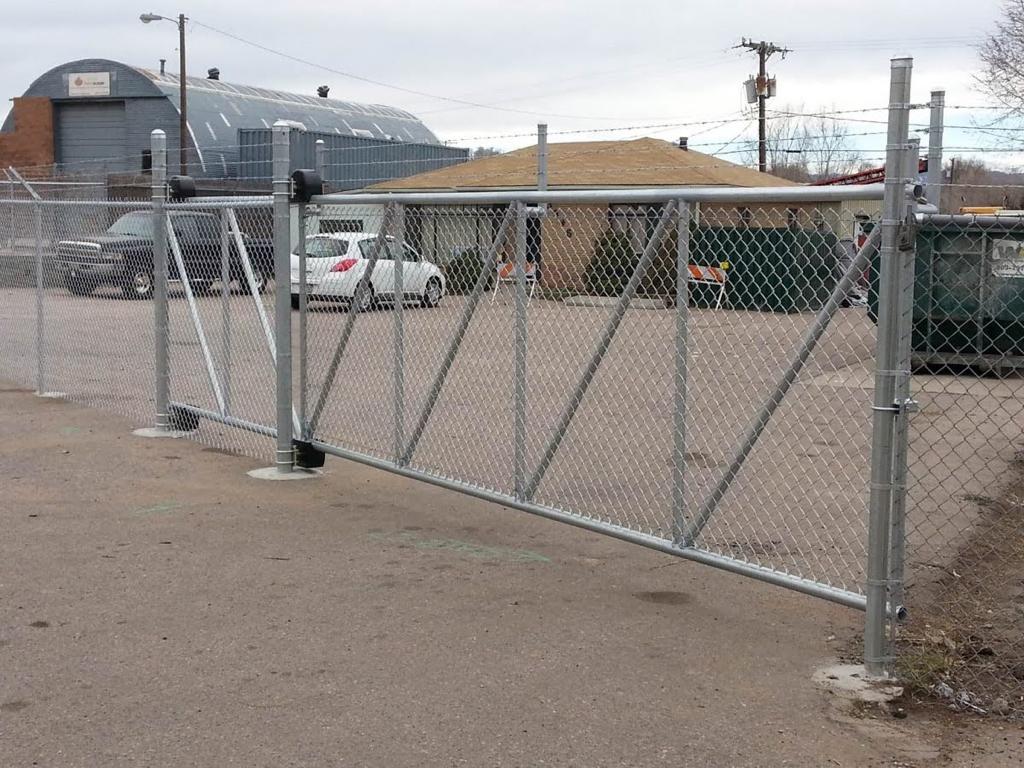
- A slide gate needs length. It parks beside the opening along the fence. A V-track gate needs about the opening’s width; a cantilever needs the opening plus a counterbalance tail of at least 40% of the opening, and makers’ tables often run longer (Anchor uses 7 ft 6 in for an 11 to 14 ft opening). More in how much space a sliding gate needs.
So measure two things before anything else: the clear depth inside the gate line, and the straight, clear fence run beside the opening. A corner, a step in the fence, a tree or a drain inlet ends that run.
Slope: the swing gate’s weak spot
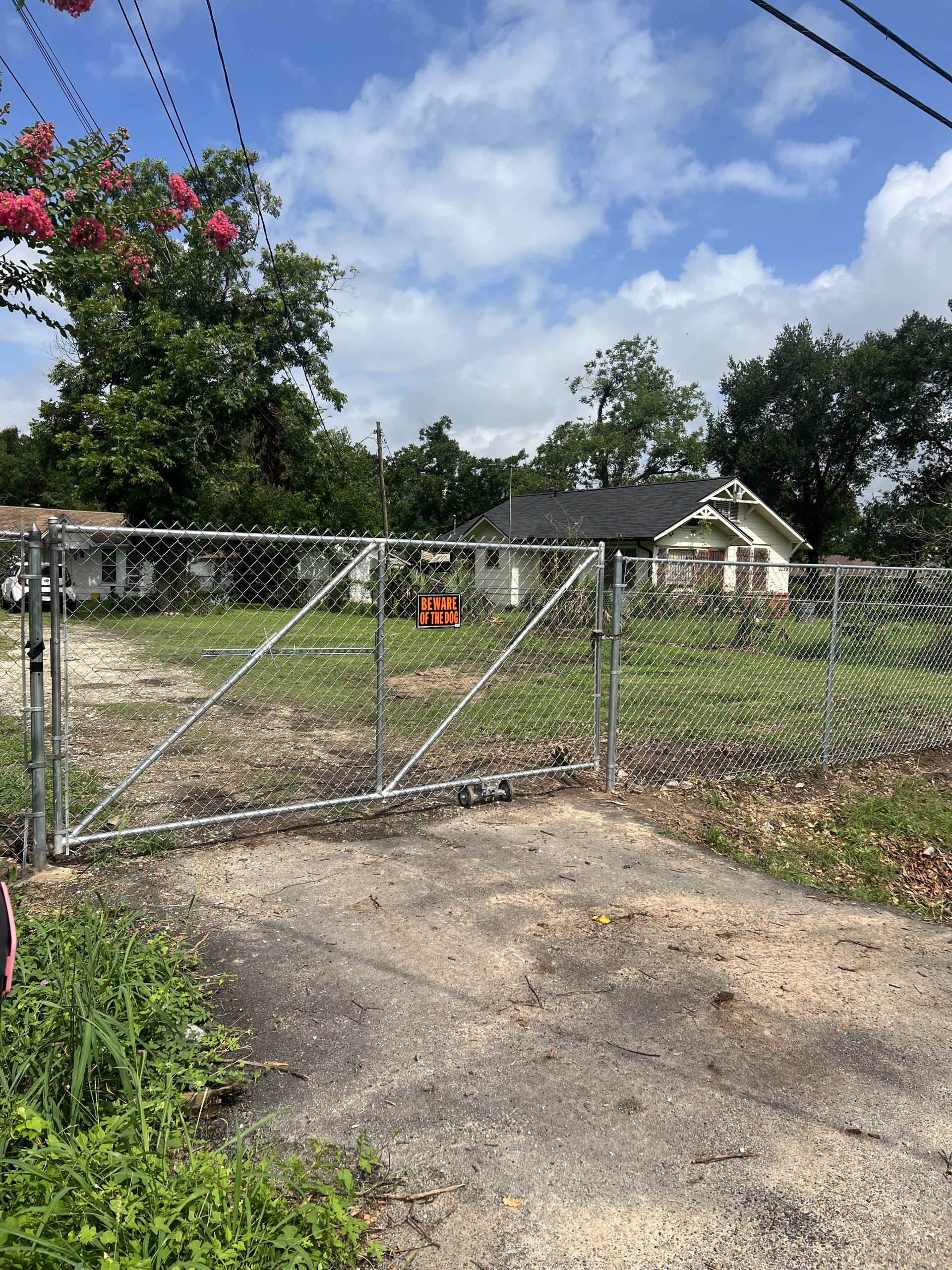
A gate is hung level. When the ground rises into the swing, the leaf has to clear the highest ground its tip passes over, and that height shows up as a gap under the closed gate. The arithmetic is simple: 3 in of clearance (the chain link guide specification’s number) plus the rise under the tip. A 12 ft leaf over ground that rises 6 in in 10 ft needs about 10 in; two 6 ft leaves need about 6.6 in.
An automatic swing gate can’t be tilted to follow the ground: the LiftMaster CSW24UL manual says the gate “MUST be level”, must not drag, and must hang on its hinges alone. A bottom edge 4 to 16 in above the ground anywhere in the swing needs a bottom-edge contact sensor.
A slide gate moves across the slope instead of over it. A cantilever just has to be hung high enough to clear the highest point in its path (DuraGates); a V-track rail has to be installed level. See can a swing gate work on a sloped driveway.
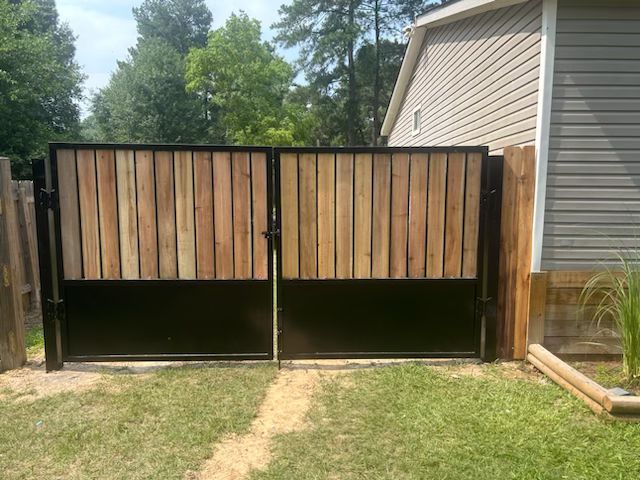
What’s outside the gate, and automation
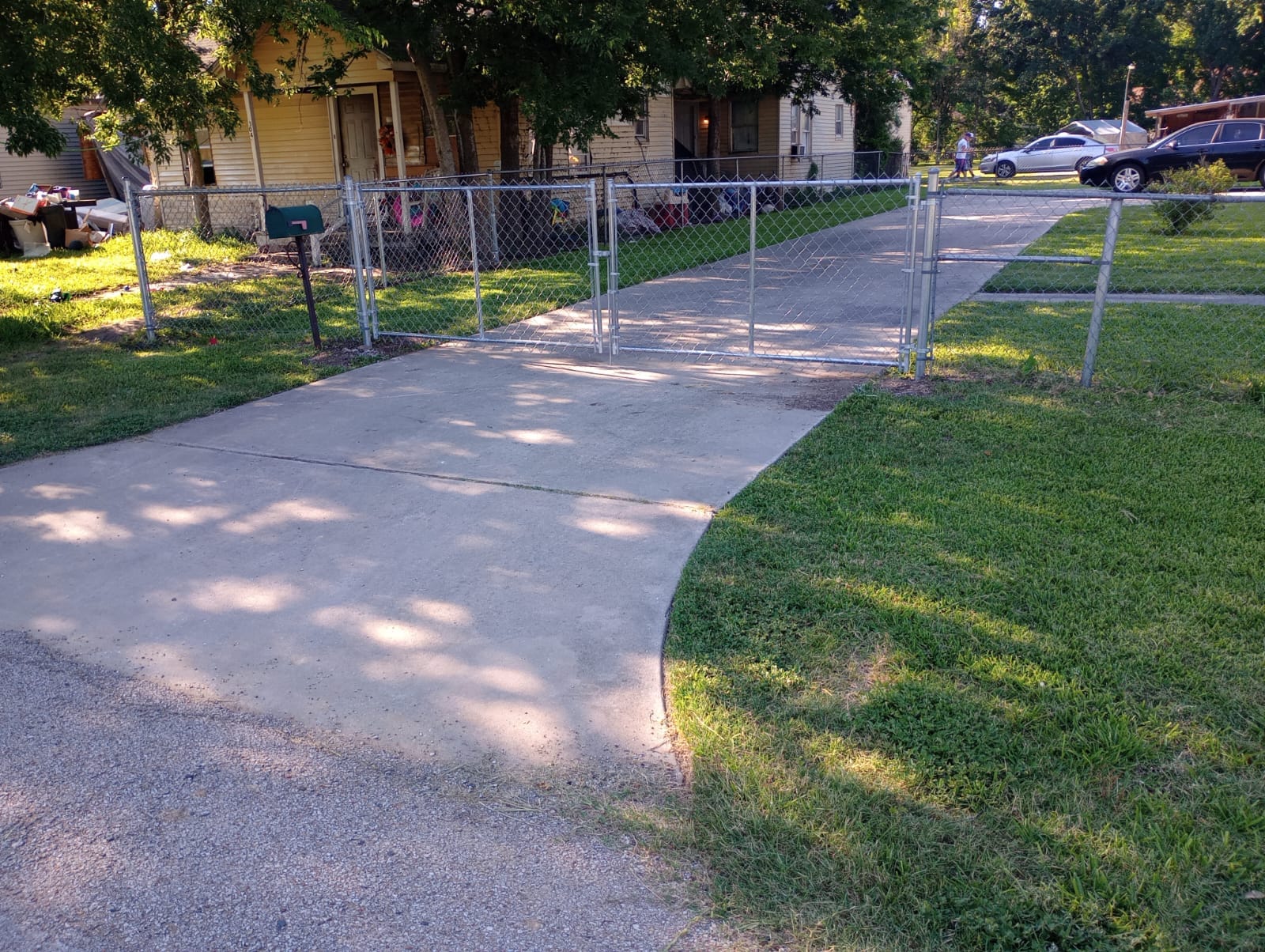
- A sidewalk or street right outside. The UL 325 instructions in swing operator manuals say “swinging gates shall not open into public access areas.” An automatic swing gate by the road has to swing inward, into the depth you measured; if there isn’t enough, a slide gate is the way out.
- A laned road. An HOA may require a driveway gate to sit at least 10 ft back from the right-of-way on a road with two marked lanes (Property Code 202.023(c)(4)), which moves either kind of gate into the lot. See how wide a driveway gate should be.
- Automation, either way. Operators are listed to UL 325 and gates should meet ASTM F2200. A swing gate keeps 16 in from walls and columns when open; a slide gate keeps a 16 in corridor along its path and needs the fence it covers screened to 6 ft. Both need the keypad at least 6 ft from moving parts and a separate walk gate. See UL 325 and ASTM F2200 explained.
Swing or slide: what fits your drive?
Four measurements decide it. Enter them and the checker tests all four gate types against the numbers on this page and its companion guides. It says what fits, not what to buy. No prices.
Swing depth and slope gap are geometry (3 in clearance from CLFMI 32 31 13). Slide lengths use the Anchor SURTRAC tail table and iDeal’s V-track rule. Automatic gate rules from UL 325 / ASTM F2200 as printed in LiftMaster’s CSW24UL and CSL24UL manuals. Read September 27, 2026.
Cost and upkeep: what drives each
We don’t publish prices on guide pages, but the part lists show where the money and the maintenance go:
- Swing gate. Hinge posts sized for the leaf (the chain link table steps up with leaf width), hinges and a latch; a double gate adds a drop rod set in a concrete receiver at least 6 in across and 24 in deep, and holdbacks. Automated, each leaf gets its own operator.
- Cantilever slide gate. A gate longer than the opening (the tail), roller trucks on two posts, roller guards and stops. Automated, one operator on a pad, plus screening for the fence it covers if that fence is open.
- V-track slide gate. A gate about as long as the opening and a ground rail about twice as long, set level. The rail has to be kept clear: DuraGates, a cantilever maker, notes the track “can be obstructed by objects laying over it,” and LiftMaster lists debris on the track among the causes of operator alarms.
On sand and shell, which is common on coastal lots, that track-cleaning point is worth weighing. More in cantilever vs V-track slide gates.
Side by side
| Swing gate | Slide gate | |
|---|---|---|
| Space it uses | Depth behind the opening: the leaf length | Straight fence line beside it: the opening, plus the tail for a cantilever |
| Sloped drive | Gap grows with leaf length and rise; automatic gates must hang level | Cantilever clears the highest point; V-track rail must be level |
| Sidewalk or street outside | Automatic gate must swing inward | No swing into the public area |
| Extra parts | Double: drop rod, receiver, holdbacks; a second operator if automated | Cantilever: tail, roller trucks, guards; V-track: ground rail |
| Automatic safety | 16 in from walls when open; bottom-edge sensor for a 4–16 in gap | 16 in corridor; 2¼ in gap at posts; fence it covers screened to 6 ft |
What Galveston customers say
5.091 Google reviews · read them all on Google
Very professional and friendly. Gotten automatic gates done and they are done to perfection! Thank you
Nice customer service! Reliable company, everything on time! And really, professionals definitely recommended
I highly recommend using these guys as they’re very professional. Their work stands out and have very high attention to detail.
Reviews shown word for word from the Mustang Fencing Services Google Business Profile (Galveston), captured 2026-10-05.
Questions we get about this
Should I get a sliding gate or a swing gate?
Which needs less space, a sliding or a swing gate?
Is a sliding gate better on a slope?
Can an automatic swing gate open toward the street?
Which is cheaper, a sliding gate or a swing gate?
Sources
Checked September 27, 2026. Rules change, so confirm with the City before you build.
- Chain Link Fence Manufacturers Institute, guide specification 32 31 13 Chain Link Fence and Gates — Cantilever back frame at least 40% of the opening; swing gate 3 in bottom clearance, drop bar receiver footing, holdbacks; gate post table.
- LiftMaster CSW24UL swing gate operator, installation manual — Gate level, no dragging, hung on hinges only; bottom-edge sensor for a 4–16 in gap; no opening into public access areas; 16 in clearance; keypad 6 ft.
- LiftMaster CSL24UL slide gate operator installation manual — Slide gate F2200 provisions (screening to 6 ft incl. the covered fence, 16 in exemption, 2¼ in gap); operator placement; debris on the track.
- Anchor Fence, SURTRAC Cantilever Slide Gate installation instructions — Tail (overhang) table by opening.
- iDeal Aluminum Products, V-Track Install Instructions — Track level, fixed to grade, twice as long as the opening.
- DuraGates, Sliding Gate Systems catalog (2023) — Incline FAQ; V-track drawbacks as described by a cantilever maker.
- Texas Property Code, Chapter 202 — 202.023(c)(4): HOA may require a 10 ft setback from the right-of-way on a laned road.
Swing or slide for your drive?
We’ll measure the depth behind the opening, the fence run beside it and the slope, and put the gate type, hardware and any automation on one written estimate. Free on-site estimates across Galveston County.