
Can a Swing Gate Work on a Sloped Driveway?
Yes, if the gate can clear the ground through its whole swing. A gate is hung level, so when the ground rises into the swing, the gap under the closed gate has to be as big as the rise under the leaf’s tip, plus clearance. Measure that rise, and the answer, and the fix, follow from the numbers.
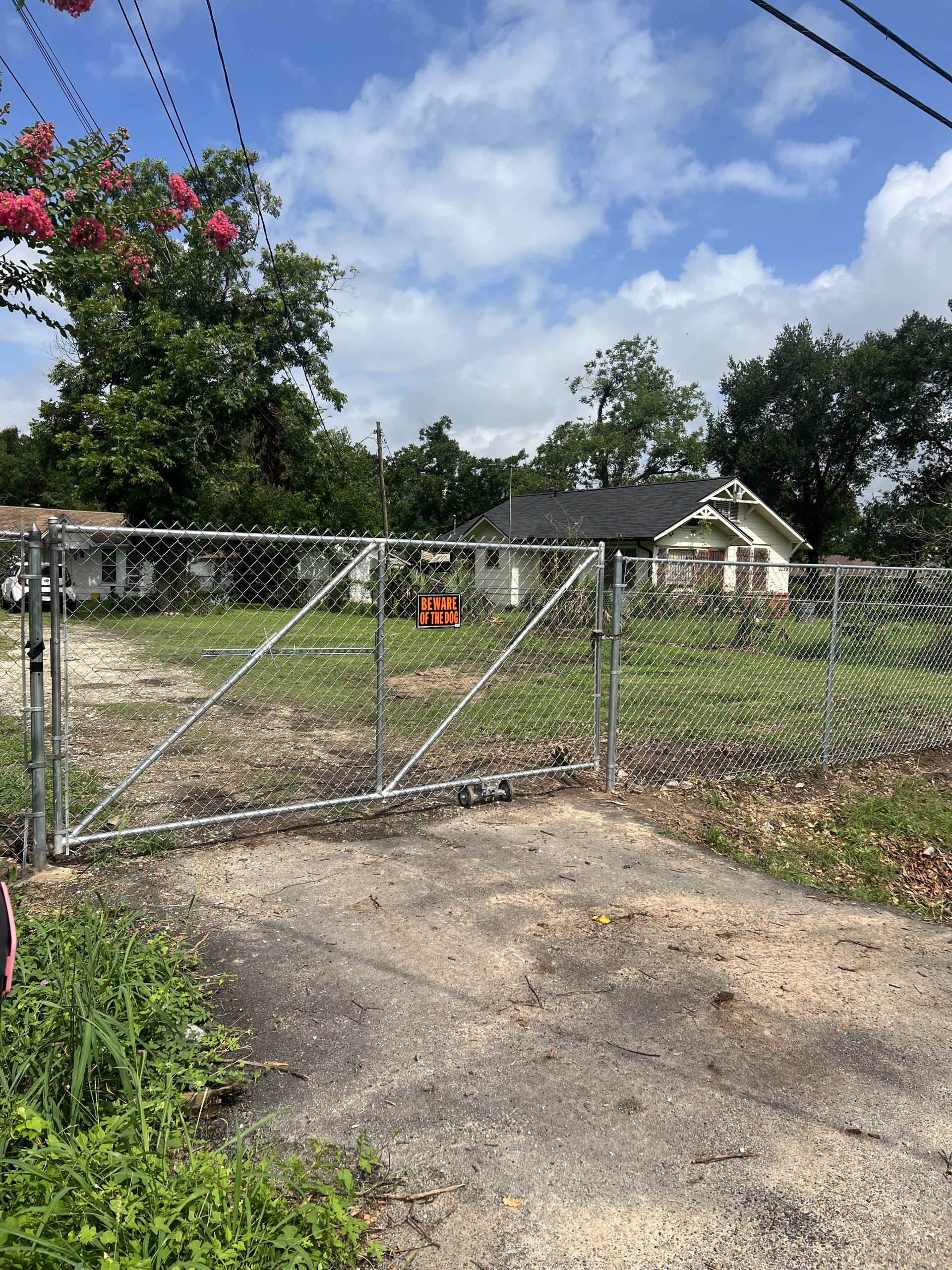
A swing gate works on a slope as long as it can swing fully open without touching the ground, and for an automatic gate that has to happen with the gate hung level on its hinges alone. When the ground rises into the swing, the gate’s bottom has to sit as high as the ground under its tip when open. A 14 ft leaf over an 8% rise needs about 16.4 in of gap under the closed gate (13.4 in of rise plus the 3 in bottom clearance in the chain link industry’s guide specification). Split it into two 7 ft leaves and that drops to about 9.7 in. On an automatic gate, a bottom edge between 4 and 16 in above the ground anywhere in its swing needs a contact sensor on the bottom edge.
Sources: LiftMaster CSW24UL installation manual (UL 325 instructions and ASTM F2200 provisions); Chain Link Fence Manufacturers Institute guide specification 32 31 13; DuraGates Sliding Gate Systems catalog (2023). Read September 27, 2026.
Why slope matters to a swing gate
A swing gate is hung level and plumb, and it pivots on its hinges through a quarter circle. On flat ground the gap under it is the same all the way round. When the ground rises inside the gate, the far end of the leaf moves over higher and higher ground as it opens.
So the gate has to be hung high enough to clear the highest ground its tip passes over, and that whole height shows up as a gap under the gate when it is closed. The chain link industry’s guide specification asks for a bottom clearance of 3 in, “grade permitting”. On a slope the grade doesn’t permit it everywhere, and the question becomes how big the gap has to be. (For the gap numbers on level ground, including the limits for pool and security gates, see how much gap should be under a gate.)
What matters is how the ground runs in the direction the leaf swings. A drive that rises from the street toward the house, a ramp up from the road, a crowned driveway or a raised slab can all put inches under a swinging leaf even when the drive looks flat.
Gap under the closed gate, in inches
Leaf hung level with 3 in under its tip when fully open, for ground rising evenly into the swing
Measure the rise before you choose
Slopes are hard to judge by eye, and a few inches is all it takes. The simplest way to measure is a string and a line level:
- Tie a string to the hinge post exactly 12 in above the ground.
- Run it level (a line level at the middle of the string) to a stake set one leaf-length inside the gate line: the full opening for a single gate, half of it for a double.
- Measure from the string down to the ground at the stake.
- The rise under the leaf’s tip is 12 in minus that measurement. More than 12 in means the ground falls away.
If the drive has a crown or a bump in the swing, measure at the high point too; the gate has to clear the highest ground, not the average. Enter your numbers in the slope check below.
Slope check for a swing gate
Measure how much the ground rises (or falls) inside the gate line with the string method above, then enter it. The check works out how high the gate has to hang to swing fully open, what that means for an automatic gate, and whether a double gate would help. It assumes a level gate and an even slope; a crown or a bump needs its own measurement at the high point.
Geometry on this page, with the 3 in bottom clearance from the CLFMI guide specification 32 31 13. Automation rules from the UL 325 instructions and ASTM F2200 provisions printed in the LiftMaster CSW24UL manual; slide gate note from the DuraGates 2023 catalog. Read September 27, 2026.
Automatic gates on a slope: the rules that bite
Operators are listed to UL 325 and the gates they move should meet ASTM F2200. The LiftMaster CSW24UL swing operator manual puts the practical requirements plainly:
- “Gate MUST be level. Gate and gate post MUST be plumb.” You can’t tilt an automatic swing gate to follow the slope.
- “Gate MUST NOT hit or drag across ground” and “Gate MUST swing freely and be supported entirely by its hinges.” Any wheels come off the bottom of the gate. The support wheel that helps a long manual leaf is not an option once it is automated.
- Bottom-edge sensors. Contact sensors go on the leading edge, and “if the bottom edge of a swing gate is greater than 4 inches but less than 16 inches above the ground at any point in its arc of travel,” on the bottom edge too. On a slope that is the usual case.
- No swinging into public areas. “Swinging gates shall not open into public access areas.” Swinging downhill often means swinging out toward the street, which rules that direction out for an automatic gate near a sidewalk or road.
More in UL 325 and ASTM F2200 explained and electric gate installation.

Your options when the ground rises
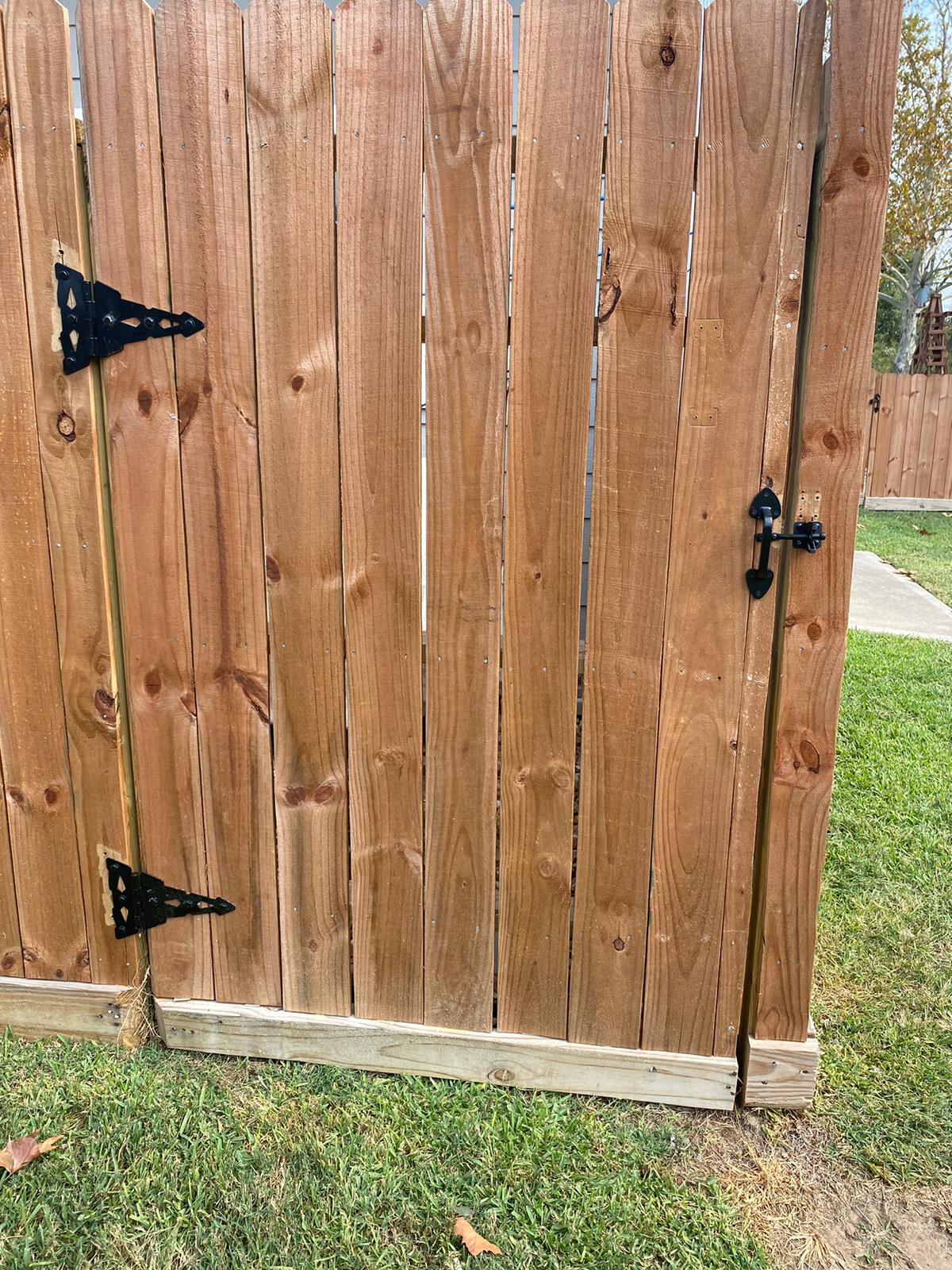
- Split the opening. Each leaf of a double gate is half as long, so the rise under its tip is half as much. On the S-1 example the gap drops from 16.4 in to 9.7 in. See single vs double swing gates.
- Swing the other way. If the ground falls away on the outside, the leaf clears easily in that direction, but an automatic gate must not open into public access areas, so this only works where the outside isn’t a sidewalk or street.
- Flatten the swing area. Regrading or paving a level pad where the leaves travel removes the rise at the source; it is the only option that keeps the small 3 in gap.
- Accept a bigger gap, with a bottom-edge sensor on an automatic gate, if the gate’s job allows it. A gap of many inches under a gate lets small animals through and leaves the bottom of the opening unscreened.
- Use a slide gate. A cantilever slide gate doesn’t swing over the rise. Its hardware still has to be level and in line, but, as one maker puts it, “the ground itself can be at an incline. You just have to install the gate high enough to clear the highest point on the ground.” See sliding vs swing gates and cantilever vs V-track slide gates.
Options side by side
| Gap under the gate | Works automated? | Watch out for | |
|---|---|---|---|
| Single leaf, hung level | Largest: 3 in + the full rise | Yes, with bottom-edge sensor in the 4–16 in range | Big gap on steep or long swings |
| Double gate | About half the single-leaf rise + 3 in | Yes, one operator per leaf | Centre stop and drop rod |
| Swing away from the rise | 3 in at the gate line | Not into public access areas | Only where the outside is private |
| Level the swing area | 3 in | Yes | Drainage of the regraded area |
| Cantilever slide gate | Set by the highest point in its path | Yes | Clear fence line beside the opening |
What Galveston customers say
5.091 Google reviews · read them all on Google
Very professional and friendly. Gotten automatic gates done and they are done to perfection! Thank you
Love the quality and service. Totally recommend this for people who are looking for some nice finishings and top quality.
Nice customer service! Reliable company, everything on time! And really, professionals definitely recommended
Reviews shown word for word from the Mustang Fencing Services Google Business Profile (Galveston), captured 2026-09-27.
Questions we get about this
Can a swing gate work on a sloped driveway?
How much gap will my gate need on a slope?
Can an automatic swing gate follow the slope?
Does a gap under an automatic gate need a sensor?
Is a slide gate better on a slope?
Sources
Checked September 27, 2026. Rules change, so confirm with the City before you build.
- LiftMaster CSW24UL swing gate operator, installation manual — Gate level and plumb, no dragging, supported entirely by hinges, wheels removed; UL 325 bottom-edge contact sensor for a 4–16 in gap; swinging gates not to open into public access areas.
- Chain Link Fence Manufacturers Institute, guide specification 32 31 13 Chain Link Fence and Gates — §3.5.A: swing gates plumb in the closed position with a bottom clearance of 3 in, grade permitting; swing direction specified inward or outward.
- DuraGates, Sliding Gate Systems catalog (2023) — FAQ: cantilever carriages installed level and in line; the ground can be at an incline if the gate clears the highest point.
Not sure your drive is flat enough?
We’ll measure the rise across the swing, check the opening and the space beside it, and put the gate type and hardware on one written estimate. Free on-site estimates across Galveston County.