
Straight answers from a local fence and gate contractor serving Galveston, Brazoria, and Chambers Counties.
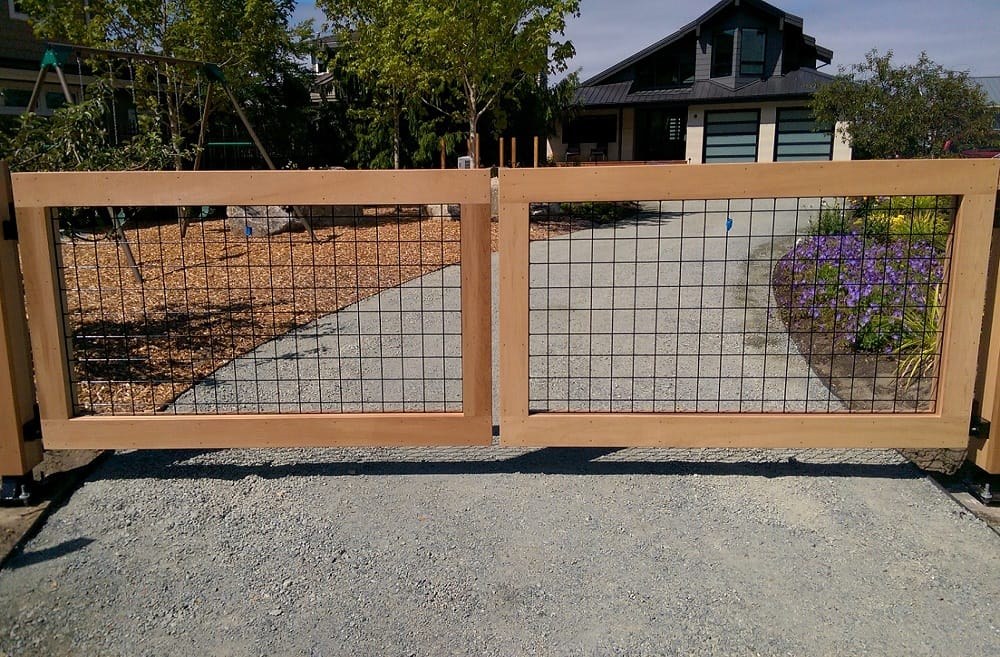
The gap left between the bottom of a gate and the ground looks like a small detail, but getting it wrong causes real problems — a gate that drags and won’t swing, standing water that doesn’t drain, or an unnecessarily large security gap.
The Standard Range
Most gates are built with a 2-to-4-inch gap between the bottom of the gate and level ground. Within that range, the hinge side and latch side often differ slightly: the latch side typically gets a smaller gap (around 3/4 inch to 1 inch), while the hinge side’s gap depends on the hinge type used and can range from nearly no gap up to about 3/4 inch.
Why the Gap Matters Beyond Clearance
- Drainage: the gap lets water pass underneath instead of pooling against the gate, which matters anywhere water tends to sheet across a driveway during heavy rain — a routine occurrence during Gulf Coast downpours.
- Ground movement: a few inches of clearance accounts for minor settling, soil expansion, or gravel shifting over time without the gate beginning to drag.
- Safety: enough clearance prevents small objects — or fingers — from being pinched as the gate swings.
- Security: too large a gap defeats part of the point of the gate, giving easier access underneath for small animals or, in extreme cases, a security workaround.
Sloped or Uneven Ground
On a driveway with any slope, a level-cut gate bottom creates an uneven gap — tight on the uphill side, excessive on the downhill side. There are two standard fixes: build the gate level across the bottom and increase clearance on the downhill side specifically (simpler, but leaves a visibly larger gap on that side), or “rack” the gate frame with an angled bottom cut that follows the slope, keeping a consistent gap the entire width at the cost of a slightly more complex build.
Flood-Prone and Low-Lying Lots
For properties in low-lying areas of Galveston County that see standing water after heavy rain, it’s worth discussing gap sizing specifically with your installer rather than defaulting to the standard range — a slightly larger bottom clearance, corrosion-resistant hardware near ground level, and drainage-conscious post placement all help a gate hold up better where water sits longer than it would on higher ground.
Related Questions
Q: Does a bigger gap under the gate make it less secure?
Q: Should farm gates have a different ground clearance than residential driveway gates?
Ready for a real number for your property? Request a free on-site estimate from Mustang Fencing Services.