
How Wide Should a Walk Gate Be?
Wide enough for the biggest thing that has to go through it, measured the right way. Here is what the published numbers actually say, how to turn them into a post-to-post opening, and a planner for your gate.
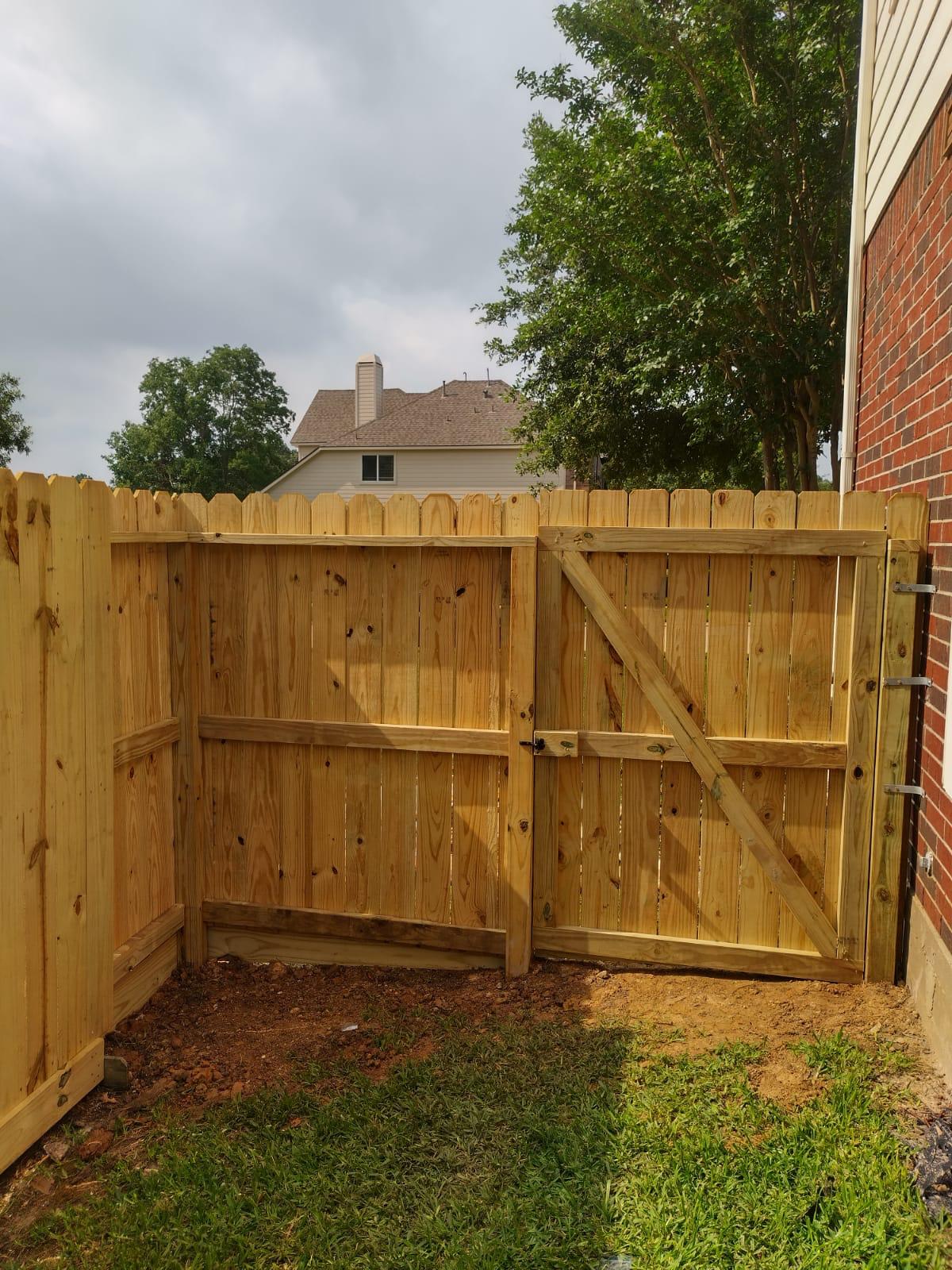
There is no code-mandated “standard” width for a private walk gate. The published numbers that do exist: the 2010 ADA Standards require 32 inches of clear width for a gate on an accessible route, measured from the face of the open gate to the stop, not post to post. A 96 gallon Toter cart is 29¾ in wide. And vinyl kit makers size gates by the opening: MVP sets a 4 ft gate in a 48 in opening. So size the gate to the widest thing that has to pass, add the gate’s own thickness, and set the posts to that.
Sources: 2010 ADA Standards 404.2.3 and Table 404.2.4.1; Toter two-wheel cart specifications (TOT047-092018); Buy Direct Vinyl Fence gate kit instructions; MVP gate installation instructions.
Is there a standard walk gate width?
Not in the sense most people mean. No building code sets one width for a backyard gate on a private house. What you find instead are three kinds of published numbers, and each answers a different question:
- Accessibility rules say how much clear space a person using a wheelchair needs. The 2010 ADA Standards apply them to “doors, doorways, and gates that are part of an accessible route” at businesses and public facilities.
- Product sizes say what fits: trash carts, mowers, wheelbarrows, appliances. These come from the maker’s spec sheet or your own tape measure.
- Gate kit sizes say what is easy to buy. MVP’s vinyl gate instructions list a 4 ft gate for a 48 in opening, 5 ft for 60 in and 6 ft for 72 in, measured between the posts.
The right walk gate is the smallest one that clears the biggest thing you will push through it, with some room to spare. On a narrow island lot, that decision also decides how much of the side yard the posts and the swinging leaf take up.
Clear width: the number that matters
The ADA rule is worth reading closely even for a house, because it defines the measurement properly. Section 404.2.3 says openings “shall provide a clear width of 32 inches minimum,” and that for swinging doors and gates it is “measured between the face of the door and the stop, with the door open 90 degrees.” It also allows no projections into that width below 34 inches above the ground, and asks for 36 inches where the opening is more than 24 inches deep.
On a gate, that means two things eat into the opening between the posts:
- The leaf itself. When it swings open, its thickness, and anything bolted to its face, sits inside the opening at the hinge side.
- The latch side. The latch, keeper or stop on the latch post sticks out into the opening.
Worked example: a 36 in opening, a leaf 2 in thick and 1 in of latch hardware leave 36 − 2 − 1 = 33 in clear. That just clears ADA’s 32 in, and leaves 3¼ in beside a 29¾ in trash cart. A thicker wood gate with a heavy frame, or a latch that sticks out further, can take that below 32.
What has to fit, in inches of width
Published widths for common walk gate traffic. ADA’s minimum clear width at a gate is 32 in.
Walk gate width planner
Tick what has to fit through the gate. The planner works out the clear width you need, the opening between posts that gives it, and the matching leaf and hardware checks. It does not price anything.
Opening = the widest item + your spare room, plus the thickness of the open gate and 1 in for the latch and stop. Item widths: Toter spec sheet (96 and 64 gallon EVR II carts); ADA 2010 Standards 404.2.3 and Table 404.2.4.1. Leaf: Buy Direct Vinyl Fence kit instructions (gate 2 to 3 in less than the opening); kit sizes: MVP gate instructions. Posts: CLFMI Section 32 31 13, table 2.9 B (chain link, gates up to 6 ft high). Measure your own mower, cart or equipment: a mower’s cutting width is not its overall width.
Size for your biggest load, then add room
A gate sized only for a person can end up fighting a trash cart every week. Measure what actually goes through:
- Trash carts. Toter lists its 96 gallon EVR II cart at 35½ × 29¾ × 43¼ in and its 64 gallon at 31½ × 24¼ × 41¾ in (length × width × height). If your cart is from another maker, measure it.
- Mowers and wheelbarrows. Measure the widest point, including a side-discharge chute or wheels. A mower’s advertised cutting width is not its overall width.
- Wheelchairs, walkers and strollers. The ADA figure is 32 in clear, and ADA’s clear floor space for a wheelchair is 30 by 48 in.
- Anything else that will ever need to reach the back yard: a hot tub delivery, a small tractor, a boat trailer. If it is wider than about 6 ft, that is a drive gate or a double gate, not a walk gate. See do I need a walk gate with my driveway gate.
How much room to spare is your call; the planner above lets you set it. Pushing a loaded cart through a gate with an inch either side is possible, but it is the kind of thing that scuffs gates and bends latches.
From clear width to posts and leaf
Once you know the clear width, work outward:
- Opening between posts = clear width + the open leaf’s thickness + the latch-side hardware.
- Leaf width = the opening minus the hinge and latch gaps. Buy Direct Vinyl Fence tells kit buyers the gate should be 2 to 3 in less than the gate opening. For chain link, the CLFMI specification keeps the hinge and latch gaps to 3 in or less and asks for 3 in of clearance under the gate, grade permitting.
- Gatepost size. For chain link, CLFMI’s table 2.9 B sets the minimum swing gatepost by leaf width: 2.375 in outside diameter up to 4 ft wide and 2.875 in over 4 ft to 10 ft, for gates up to 6 ft high. For wood, vinyl and metal gates, ask for the post and hinge sizes in writing. Our guide to how much weight gate hinges hold shows why a wider leaf is harder on its hinges.
If you are buying a kit, round the opening up to a size that exists (48, 60 or 72 in in MVP’s list) and build the fence line around it. Cutting a kit down is possible with some products and not others; check the maker’s instructions first. For material choices, see wood gates, vinyl gates, chain link gates and aluminum gates.
Sizing a walk gate for your yard?
We’ll measure what has to go through it and put the clear width, leaf size and hardware on a written quote. Free on-site estimates across Galveston County.
The ground in front of the gate matters too
Width is only half of what makes a gate easy to use. ADA’s Table 404.2.4.1 sets maneuvering clearances: level space where someone waits while the gate opens. For a gate approached head-on, it asks for 60 in of depth on the pull side, running 18 in beyond the latch edge, and 48 in on the push side (more if the gate has a closer and a latch). Two gates in a row, such as a side-yard gate and a pool gate, need 48 in between them plus the width of any gate swinging into that space (404.2.6).
On a private house you are not bound by those numbers, but they are a good check. A gate squeezed against the corner of the house, with the latch hard against a wall, is awkward even for someone on foot with a full cart. Plan the swing, too: a walk gate needs its full leaf width clear on the side it opens toward. For raised homes, keep the gate’s swing clear of the stair landing.
ADA also puts gate hardware 34 to 48 in above the ground and allows the latch release on a pool barrier gate up to 54 in. Those heights are shown on the drawing below.
What to settle before the posts go in
- What is the widest thing that will go through? Measure it. Write it on the quote.
- What clear width does the gate leave when it is open? Ask for it, not just the post-to-post opening.
- Which way does it swing, and is the ground level on that side? Pool barrier gates must open away from the pool.
- What are the leaf, post and hinge sizes? For chain link, compare the post with the CLFMI table.
- Where is the latch, and how high? 34 to 48 in is the ADA range; pool gates follow the ISPSC.
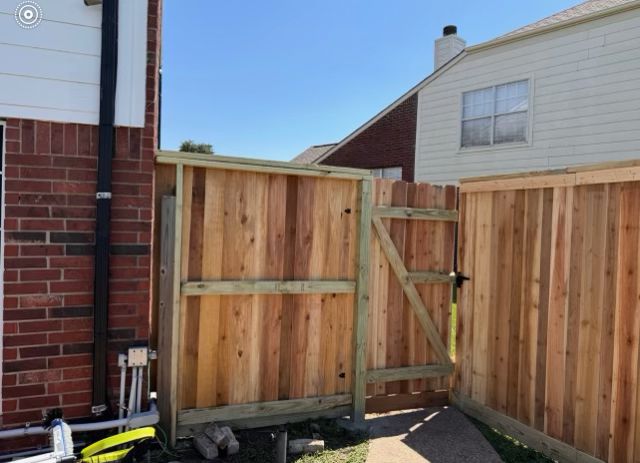
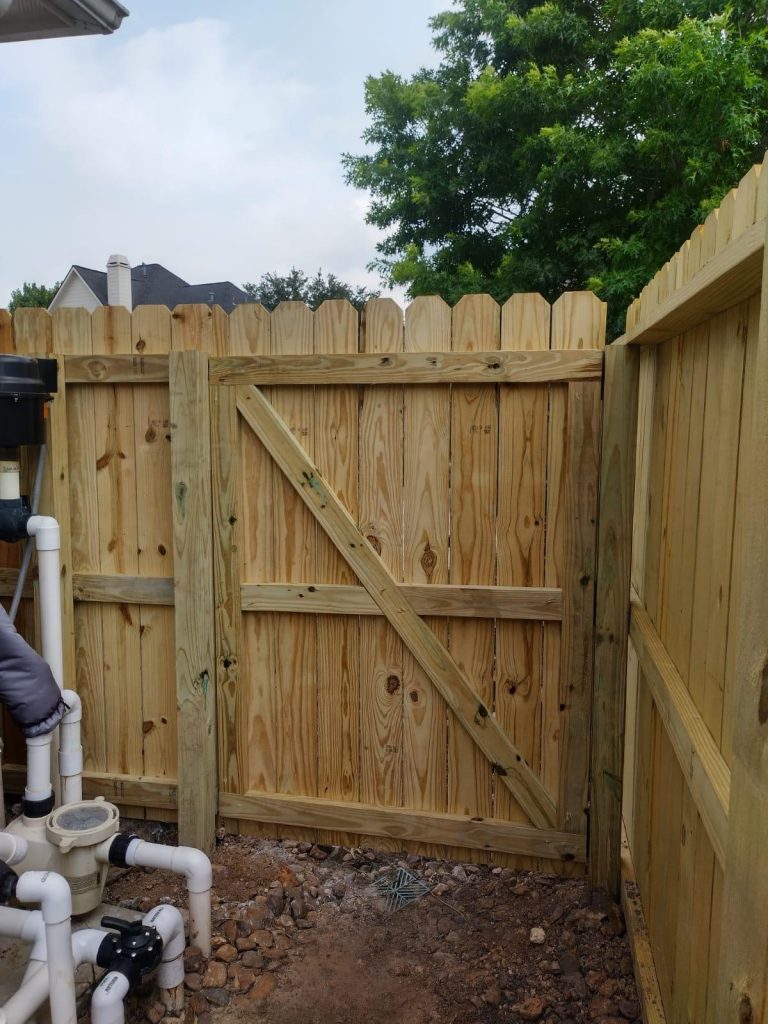
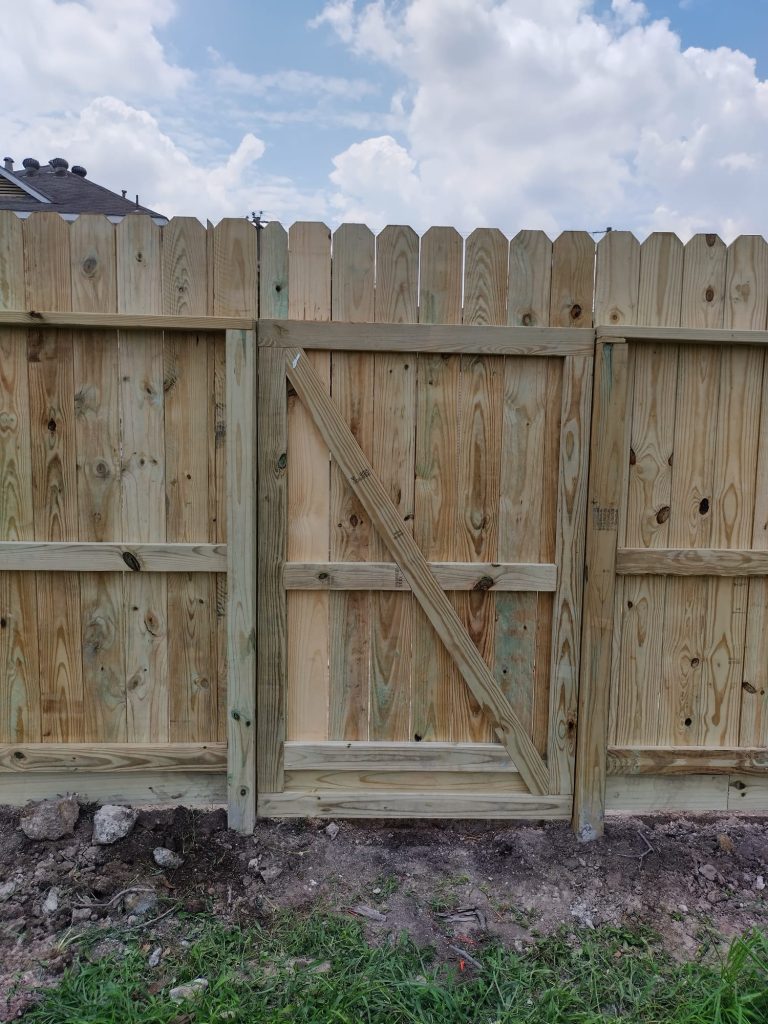
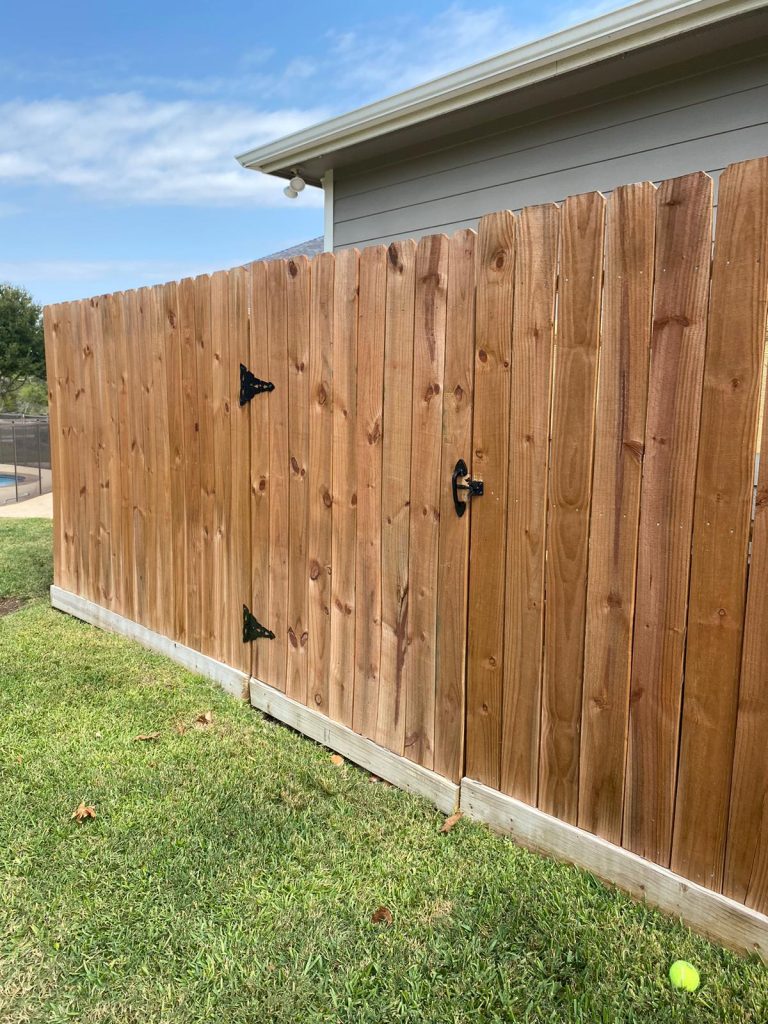
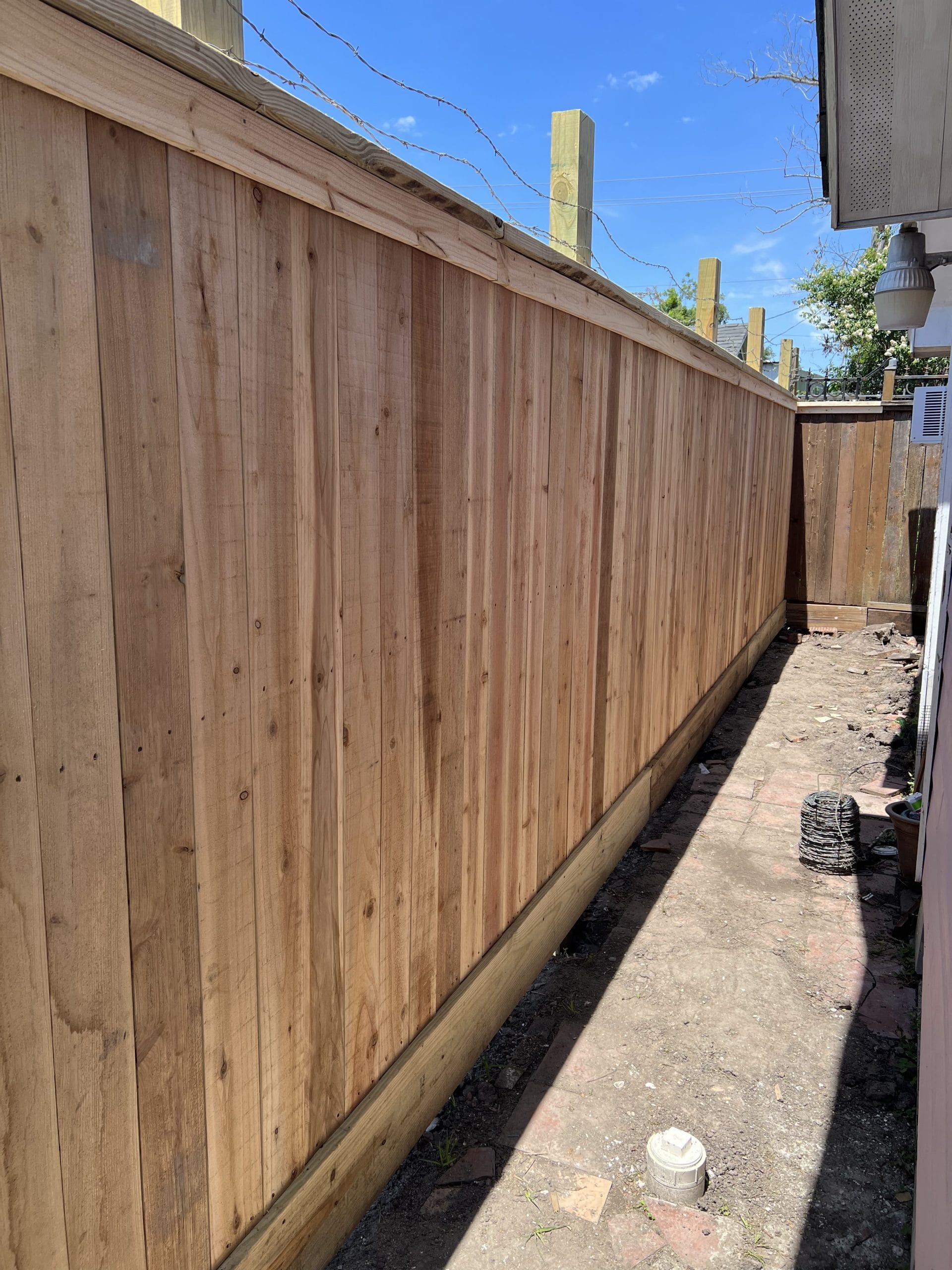
For walk gates in every material, see our walk and pedestrian gate page. For a finished example, see the pine walk gate in Galveston in the photos above.
What Galveston customers say
5.091 Google reviews · read them all on Google
had an excellent experience with mustang fencing From the initial consultation to the final installation, the team was professional, punctual, and attentive to detail. They helped me choose the perfect fence style to match my property and ensured everything was installed with precision. The quality of materials is top-notch, and the fence has completely transformed the look and security of my home. I highly recommend mustang services to anyone looking for reliable and high-quality fencing services!
We just installed iron gate and it looks amazing thank you very much mustang fencing .
Absolutely loved my fence once i saw the finished product. No hassle, no rude interactions, and no inconveniences everything was just perfect. One of the best fencing companies in Texas
Reviews shown word for word from the Mustang Fencing Services Google Business Profile (Galveston), captured 2026-10-05.
Questions we get about this
What is the standard width of a walk gate?
How wide does a gate need to be for a wheelchair?
Will a 96 gallon trash cart fit through a 36 inch gate?
How much smaller than the opening is the gate itself?
What size post does a chain link walk gate need?
Which way should a walk gate swing?
Sources
Checked September 27, 2026. Rules change, so confirm with the City before you build.
- U.S. Access Board, 2010 ADA Standards for Accessible Design — 404.1 (gates on accessible routes), 404.2.3 (32 in clear width, measured with the gate open 90°; no projections below 34 in), Table 404.2.4.1 (maneuvering clearances), 404.2.6 (gates in series), 404.2.7 (hardware 34–48 in; pool gate latch up to 54 in), 305.3 (30 × 48 in clear floor space), 403.5.1 (36 in walking surface).
- Toter, Two-Wheel Cart Specifications (TOT047-092018) — 96 gallon EVR II cart 35½ × 29¾ × 43¼ in; 64 gallon 31½ × 24¼ × 41¾ in (length × width × height).
- Chain Link Fence Manufacturers Institute, Guide for Specifying Commercial/Industrial Chain Link Fence, Section 32 31 13 — Table 2.9 B swing gatepost diameter by leaf width; §3.5 gates plumb, 3 in bottom clearance grade permitting, hinge and latch offset 3 in maximum.
- Buy Direct Vinyl Fence, Gate Kit Assembly Instructions — Gate width 2 to 3 in less than the gate opening (the measurement between the gate posts).
- Mid-Atlantic Vinyl Products (MVP), Gate Installation Instructions — Standard gates set in openings between posts: 4 ft gate 48 in, 5 ft gate 60 in, 6 ft gate 72 in.
- City of Galveston, Swimming Pool Permit Application — Barriers must comply with the 2021 ISPSC; site plan to show fence location, height and self-closing gates.
- International Swimming Pool and Spa Code 2021, Section 305.3 — Pedestrian gates in pool barriers open outward away from the pool, self-closing and self-latching.
Planning a walk gate?
We’ll measure the opening, the side yard and whatever has to get through, and put the post-to-post opening, the leaf size and the hardware on a written quote. Free on-site estimates across Galveston County.