
Do I need a separate walk gate if I already have a driveway gate?
It depends on how the property gets used day to day, not just how the entrance looks. Two situations make a dedicated pedestrian gate the actual rule, not a preference: an ADA-covered accessible route, and a pool barrier. Everywhere else, it’s a real trade-off between convenience and simplicity. Here is each case, sourced, with a quick tool to sort out which applies to you.
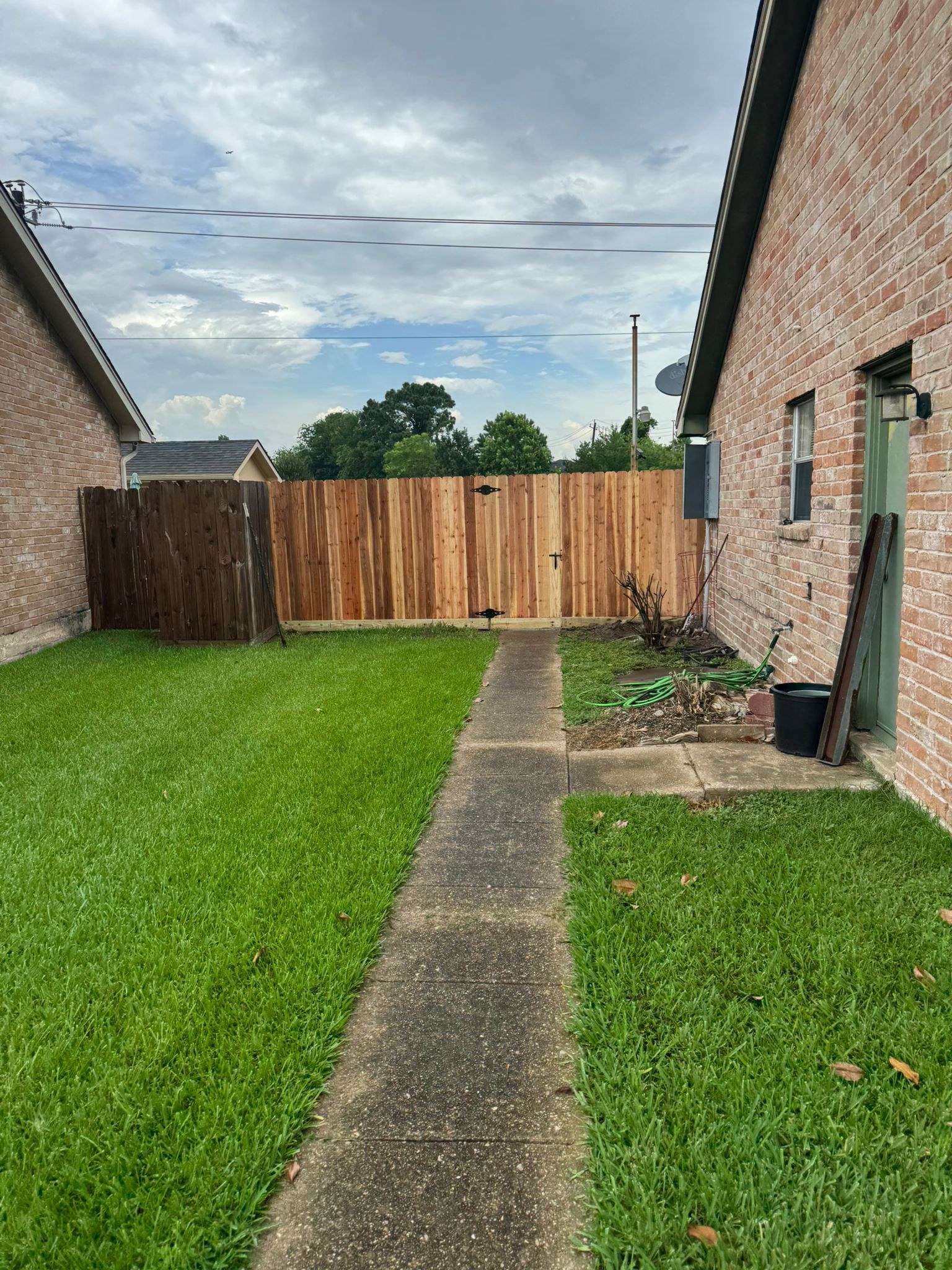
Usually it’s a trade-off, but in two situations it’s a real requirement. If an ADA-covered accessible route crosses the entrance, the gate on that route needs 32 inches of clear width, measured with the gate open 90 degrees — a vehicle gate that’s awkward to operate on foot often can’t deliver that cleanly, so a dedicated walk gate sized for it is the practical fix. If there’s a swimming pool, its barrier’s pedestrian gate must be self-closing and self-latching and swing away from the pool — a driveway slide or swing gate is almost never built that way, so the barrier needs its own compliant gate regardless. Outside those two cases, it comes down to foot traffic, security, and whether cycling an automated driveway gate for every pedestrian is worth avoiding.
Sources: 2010 ADA Standards for Accessible Design (404.2.3); International Swimming Pool and Spa Code 2021 (305.3); City of Galveston Swimming Pool Permit Application.
Two situations where it isn’t really optional
An ADA-covered accessible route. This applies to places like a rental office, a business entrance, or an HOA amenity — not a typical single-family driveway, which generally isn’t covered by the ADA at all. Where it does apply, 404.2.3 sets a 32-inch minimum clear width at the gate, measured with the gate open 90 degrees, not post to post. A driveway gate sized and hinged for vehicles often doesn’t meet that cleanly for a pedestrian using it daily.
A swimming pool barrier. This one comes up constantly on Galveston properties with a pool. Section 305.3 of the 2021 ISPSC — the code Galveston’s own pool permit application requires compliance with — says pedestrian gates in the barrier must open outward away from the pool, and be self-closing and self-latching. An automated slide or swing driveway gate is almost never built or configured to do this, so if the driveway gate is part of the barrier line, the barrier still needs a separate, code-compliant pedestrian gate.
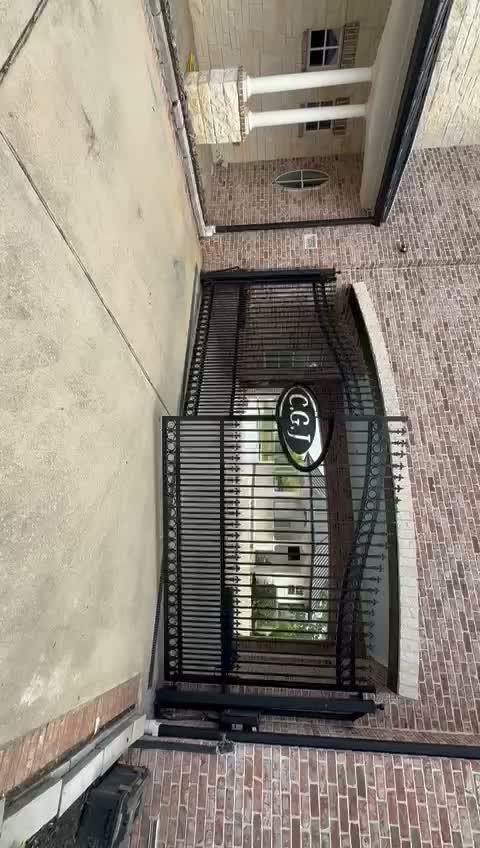
Driveway gate alone vs. driveway gate + walk gate
| Driveway gate alone | Driveway gate + walk gate | |
|---|---|---|
| Vehicle entry/exit | Yes | Yes |
| Foot traffic entry/exit | Only by cycling the vehicle gate | Dedicated path; vehicle gate stays closed |
| ADA accessible-route width (404.2.3) | Only if the vehicle gate itself meets 32 in clear + hardware rules | Walk gate can be sized and fitted to meet it directly |
| Pool-barrier pedestrian gate (ISPSC 305.3) | A slide/swing vehicle gate usually isn’t self-closing/self-latching | Walk gate can be built self-closing and self-latching |
| What it adds | — | One more gate and posts, matched to the driveway gate’s material and finish |
Reasoning drawn from 2010 ADA Standards 404.2.3 and International Swimming Pool and Spa Code 2021 Section 305.3; not a universal requirement for every driveway.
Do I need a dedicated walk gate?
Check what applies to your property. The first two are real code triggers; the rest is a practical trade-off.
Pool logic follows ISPSC 2021 Section 305.3 (self-closing, self-latching, swings away from the pool). ADA logic follows the 2010 ADA Standards, 404.2.3 (32 in clear width on an accessible route). Neither applies to every private driveway — check which actually cover your property.
Designing them together
Where a walk gate is added, it reads best as part of the same entrance composition as the driveway gate — matching material, picket style and finish, rather than a mismatched panel added on later. It’s also the point to plan hinge posts and clearances together, so the two gates share sightlines instead of competing visually at the entrance. For sizing the walk gate itself once the decision is made, see how wide a walk gate should be — there’s no single code-mandated “standard” width for a private gate, but there are real numbers to size it from.
What Galveston customers say
5.091 Google reviews · read them all on Google
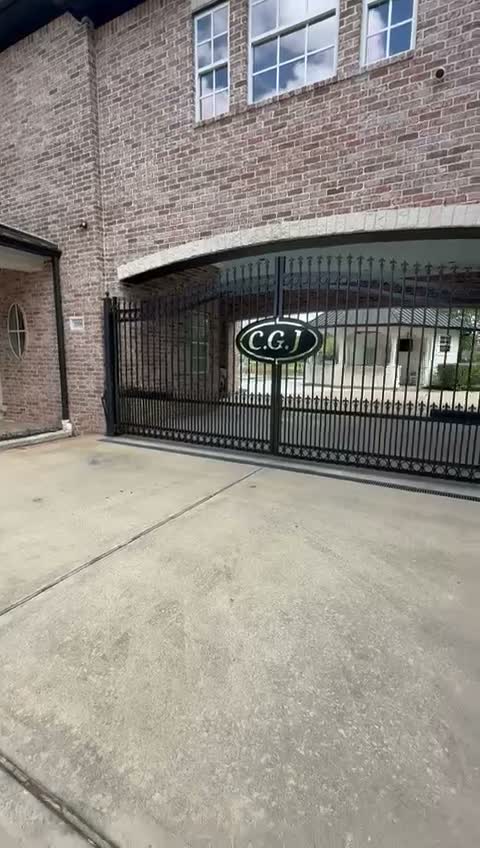
We just installed iron gate and it looks amazing thank you very much mustang fencing .
Very professional and friendly. Gotten automatic gates done and they are done to perfection! Thank you
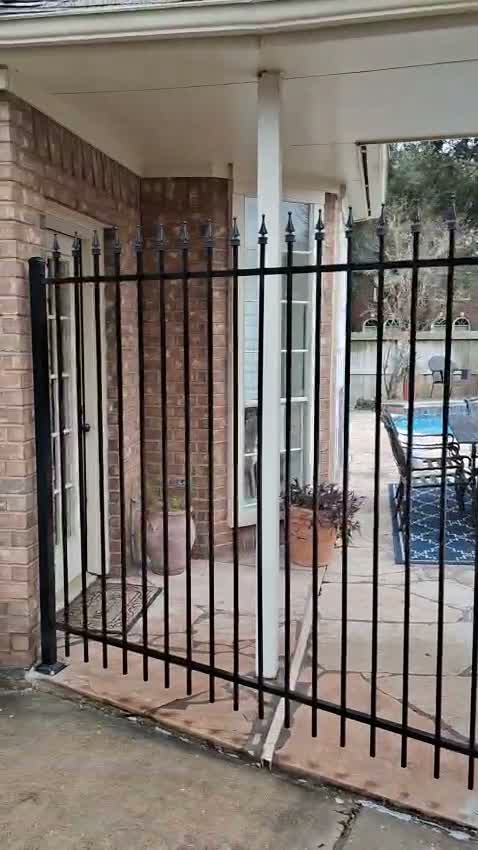
Mustang’s team installed iron fence for me and did an absolutely incredible job! I would recommend this company to anyone I know!
Reviews shown word for word from the Mustang Fencing Services Google Business Profile (Galveston), captured 2026-10-12.
Questions we get about this
Is there a code requirement to have a separate walk gate?
Is there a standard width for a walk gate next to a driveway gate?
Does a walk gate save wear on the driveway gate’s automation?
Can a walk gate be automated too?
If there’s a pool, does the driveway gate count as the required barrier gate?
What’s the best way to add a walk gate to an existing driveway gate?
Sources
Checked October 16, 2026. Rules change, so confirm with the City before you build.
- U.S. Access Board, 2010 ADA Standards for Accessible Design — 404.2.3: 32 in clear width at a gate on an accessible route, measured with the gate open 90°.
- International Swimming Pool and Spa Code 2021, Section 305.3 — Pedestrian gates in pool barriers open outward away from the pool, self-closing and self-latching.
- City of Galveston, Swimming Pool Permit Application — Barriers must comply with the 2021 ISPSC; site plan must show fence location, height and self-closing gates.
Planning a driveway gate — with or without a walk gate?
We’ll walk the site, check for ADA or pool-barrier triggers, and lay out both gates together if you need them. Free on-site estimates across Galveston and Brazoria Counties.