Gate opener repair · Galveston Island & County, TX

Gate Opener Repair: Match the Symptom to the Fix

A gate that won’t move, one that grinds before it moves, and one that won’t reverse when something blocks it are three different problems -- and the last one is a safety issue, not just an inconvenience.
  • Reviewed Nov 8, 2026
  • Source: DASMA + UL 325
  • Interactive symptom check
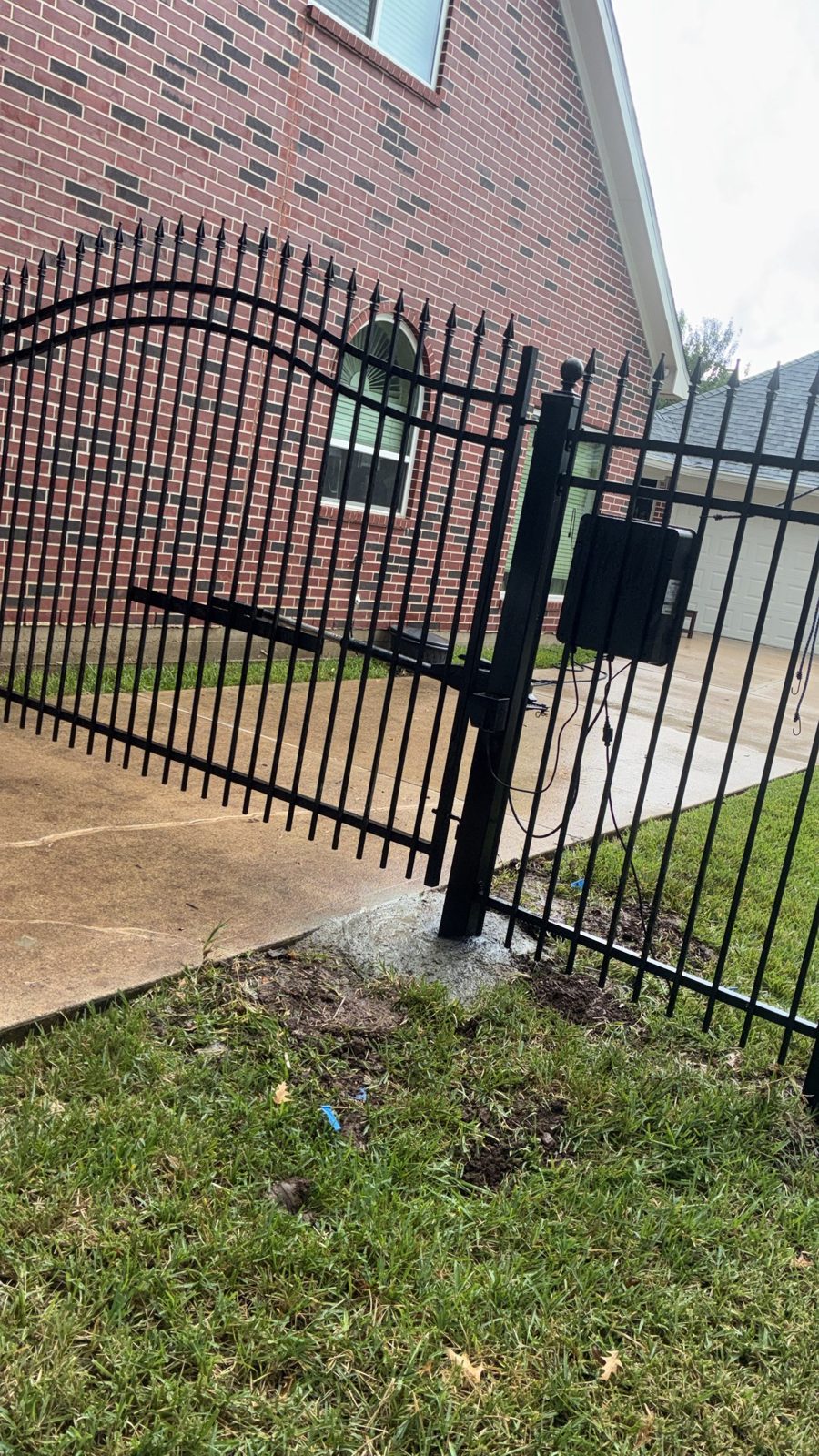
Black aluminum arched swing gate with an opener box beside a brick house
An automatic swing gate with its operator box mounted beside the gate post.
The short answer

A gate operator repair almost always comes down to one of three places: the control box, the drive mechanism, or the safety sensors. Matching your symptom to the right one is the first step — and one specific symptom (a gate that doesn’t reverse when blocked) is a safety issue that shouldn’t wait.

3Places a gate opener repair usually comes down to: the control box, the drive mechanism, or the safety sensors
2 secMaximum time a gate operator should take to start reversing after sensing an obstruction while closing, per UL 325 (DASMA TDS 353)
NeverDASMA guidance: end users should never attempt to repair a gate operator themselves
1 testA simple push-test on the closing gate tells you whether the safety system is working, before any other repair question matters

Source: DASMA #352, "Automatic Vehicular Gate Operating Systems: Guidelines... for End Users"; DASMA TDS 353, "Vehicular Gate Operators and the ANSI/CAN/UL 325 Standard."

A gate opener problem is usually one of three things

It’s tempting to assume "the opener is broken" means the whole unit needs replacing. In practice, a repair technician is almost always narrowing things down to one of three places: the control box that powers and controls it, the drive mechanism that actually moves the gate, or the safety sensors that stop it from closing on an obstruction. For the gate itself (hinges, posts, latch) rather than the opener, see gate repair.
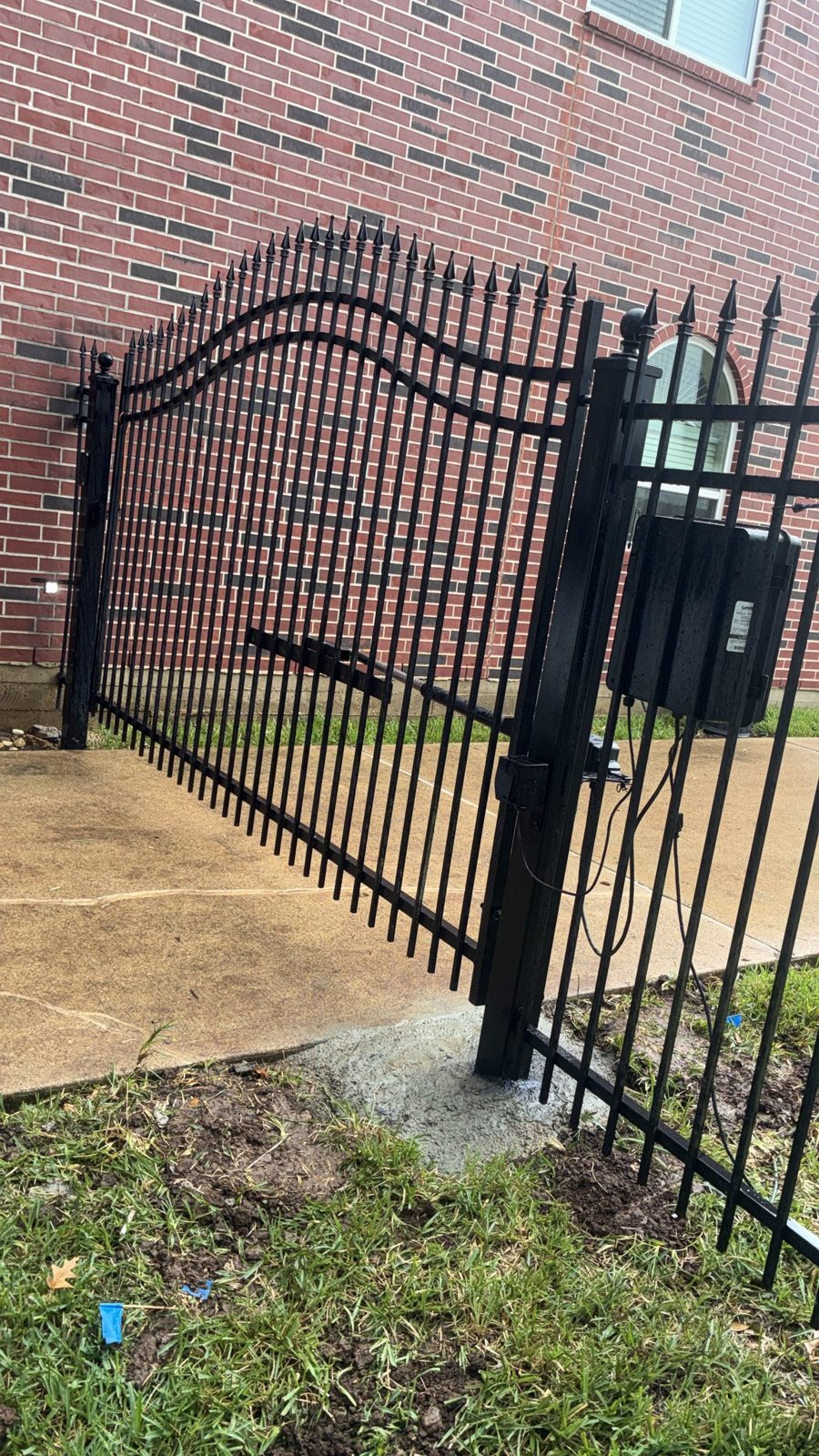
Diagram of a gate operator in three parts: the control box (logic board, transformer, breaker), the drive mechanism (motor, gearbox, chain or arm or track), and the safety sensors (photo-eye pair and edge sensor). Most repair symptoms trace back to one of the three. A gate opener problem is usually one of three places 1CONTROL BOXlogic board,transformer, breaker 2DRIVE MECHANISMmotor, gearbox,chain / arm / track 3SAFETY SENSORSphoto-eye pair,edge sensor Most symptoms trace back to exactly one of these three -- which one tells a technicianroughly what to check first, long before any repair actually starts. General operator layout, informed by manufacturer installation manuals (component names and locations, not brand-specific wiring).
GOR-1
DrawingA gate opener problem is usually one of three places
BasisGeneral operator layout, informed by manufacturer installation manuals. Not to scale
ScaleNot to scale
Most symptoms trace back to exactly one of these three parts.
Black wrought iron arched gate with spear pickets and a gate operator box beside a brick house
A wrought iron driveway gate with its operator box mounted at the post.

Gate opener symptom check

Pick what the gate is actually doing. This points to which of the three places (box, drive, or sensors) is involved -- it isn’t a diagnosis of your specific unit.

Based on DASMA #352/TDS 353 (UL 325) and manufacturer operator documentation.

Table mapping five gate opener symptoms to their likely cause: no response points to the control box; weak or slow movement and grinding noise point to the drive mechanism; unreliable remote points to the control box; stopping and reversing before closing usually means the safety sensors are working as designed. Match the symptom to the likely cause Won’t move or respond at all Control box -- power, breaker, or transformerMoves, but weak, slow, or seems to strain Drive mechanism -- motor, gears, chain, or a low battery on a solar unitRemote or keypad works only sometimes Control box -- receiver, antenna, or interferenceGrinding, clicking, or knocking while moving Drive mechanism -- chain, gear rack, or arm linkage wearStops and reverses before fully closing Safety sensors -- usually working as designed, see note below A site visit confirms the exact part; this sorts a symptom into the right category first.
GOR-2
DrawingMatch the symptom to the likely cause
BasisGeneral operator troubleshooting logic. Not to scale
ScaleNot to scale
A site visit confirms the exact part; this sorts a symptom into the right category first.
Two-step safety test: while the gate is closing, push steadily against it. If it stops and reverses within about 2 seconds, the safety system is working and the repair can be scheduled normally. If it does not reverse, stop using the gate immediately. The one test to run before any other repair question 1While the gate isclosing, push steadilyagainst it 2It stops and reverseswithin about 2 seconds,per UL 325 (DASMA) Safety system OK --schedule the actual repair It does NOT stop and reverseStop using the gate now -- this is an entrapment-protection failure, not a quirk Source: DASMA TDS 353 (UL 325 reversal timing); DASMA #352 ("end users should never attempt to repair the gate").
GOR-3
DrawingThe one test to run before any other repair question
BasisDASMA TDS 353 (UL 325 reversal timing); DASMA #352. Not to scale
ScaleNot to scale
DASMA guidance: end users should never attempt to repair the gate themselves, but should routinely test the safety systems.

Gate opener symptom quick reference

SymptomLikely cause
Won’t move or respond at allControl box — power, breaker, or transformer
Moves, but weak, slow, or seems to strainDrive mechanism — motor, gears, chain, or a weak battery
Remote or keypad works only sometimesControl box — receiver, antenna, or interference
Grinding, clicking, or knocking while movingDrive mechanism — chain, gear rack, or arm linkage wear
Stops and reverses before fully closingSafety sensors, usually working as designed
Does NOT reverse when blockedSafety failure — stop using the gate, call a technician

DASMA #352; DASMA TDS 353 (UL 325).

What a gate opener repair visit looks at

A free on-site visit starts by narrowing your symptom to the control box, the drive mechanism, or the safety sensors — the same three places covered above — then confirms the exact part. No price or turnaround time is quoted here; both depend on what’s actually found.

Free on-site estimate

Have a gate opener acting up?

We’ll check the control box, the drive mechanism, and the safety sensors, and give you one written estimate before any work starts.

★★★★★
Very professional and friendly. Gotten automatic gates done and they are done to perfection! Thank you
Tannia Cravinas · Google review · a year ago
★★★★★
We just installed iron gate and it looks amazing thank you very much mustang fencing .
Jordan Carrillo · Google review · a year ago
★★★★★
I am so pleased with the fence!! Your solution was exactly the right one and the team did a highly professional job. Frankly, I was amazed at how clean the job site was at the completion of the project. Feel free to list me as a reference and a very happy customer. Thanks again and please let the men know That I appreciate their hard work and quality craftsmanship.
Anees Abbas Bawa · Google review · 2 years ago

Reviews shown word for word from the Mustang Fencing Services Google Business Profile (Galveston), captured 2026-11-08.

Questions we get about this

Does Mustang Fencing Services repair gate openers in Galveston, TX?
Yes — Galveston is within our confirmed Galveston County service area, along with League City, Texas City, La Marque, Dickinson, Santa Fe, Hitchcock, Kemah, Clear Lake Shores, Bacliff, and San Leon.
My gate stops and reverses before it closes — is that broken?
Usually not. That’s the entrapment-protection sensors doing their job. See our dedicated page on why a gate stops and reverses for the specifics.
My gate does NOT reverse when something blocks it — what do I do?
Stop using it immediately and call a technician. A gate operator that fails to reverse on an obstruction is an entrapment-protection failure under UL 325, not routine wear.
Can I repair my own gate opener?
DASMA’s own guidance for end users is clear: you should never attempt to repair a gate operator yourself. You can safely run the push-test described above, but repairs should go to a trained technician.
Do you also repair the gate itself, not just the opener?
Yes, see our gate repair page.

Sources

Checked November 8, 2026. Rules change, so confirm with the City before you build.

  1. DASMA #352, "Automatic Vehicular Gate Operating Systems: Guidelines for Specifiers, Designers, Dealers, Installers and End Users" — "Role of End Users": end users should never attempt to repair the gate, and should routinely check all gate operator functions and test all safety systems.
  2. DASMA TDS 353, "Vehicular Gate Operators and the ANSI/CAN/UL 325 Standard" — S32.1.1: after an entrapment-protection device senses an obstruction while closing, reversing must begin within 2 seconds and the gate must reverse at least 2 inches.
Page reviewed November 8, 2026 by Mustang Fencing Services, Galveston. Next review due May 2027.

PLAN YOUR FENCE OR GATE PROJECT WITH US TODAY

Planning a new fence, a driveway gate or an automated entry? Tell us about your property and we’ll set up a free on-site estimate. We work with homeowners, HOAs and businesses across Galveston Island and Galveston County.

Prefer to talk? Call (346) 910-8641.

WHAT OUR CLIENTS ARE SAYING

Mustang Fencing

WE PROUDLY SERVE GALVESTON ISLAND & GALVESTON COUNTY

Areas we serve:

Galveston TX

Galveston Island

Jamaica Beach TX

Tiki Island TX

Bayou Vista TX

La Marque TX

Texas City TX

Hitchcock TX

Santa Fe TX

Dickinson TX

Bacliff TX

San Leon TX

Kemah TX

League City TX

Clear Lake Shores TX

OUR PARTNERS

Genie brand logo
LiftMaster brand logo