
Straight answers from a local fence and gate contractor serving Galveston, Brazoria, and Chambers Counties.
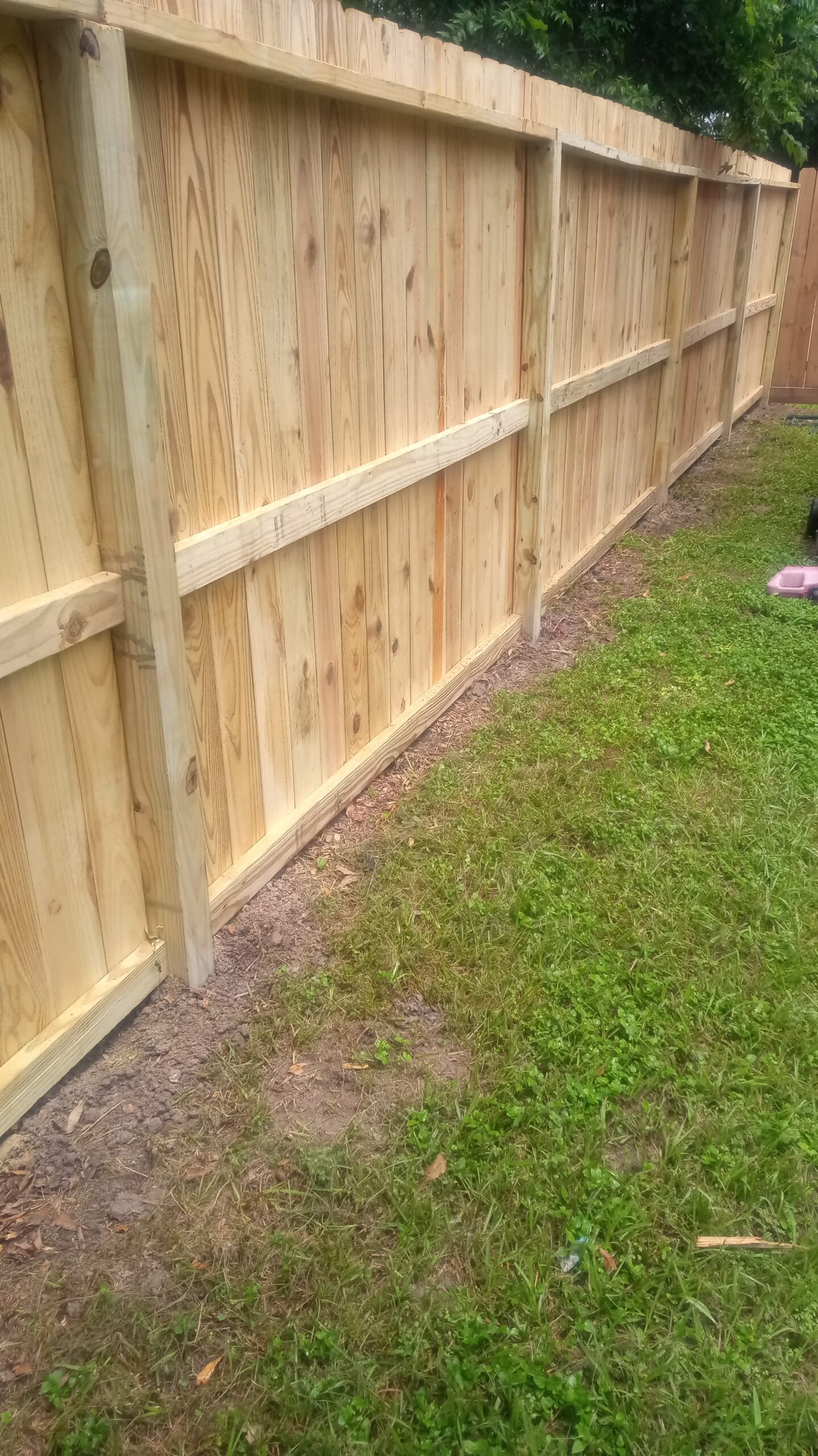
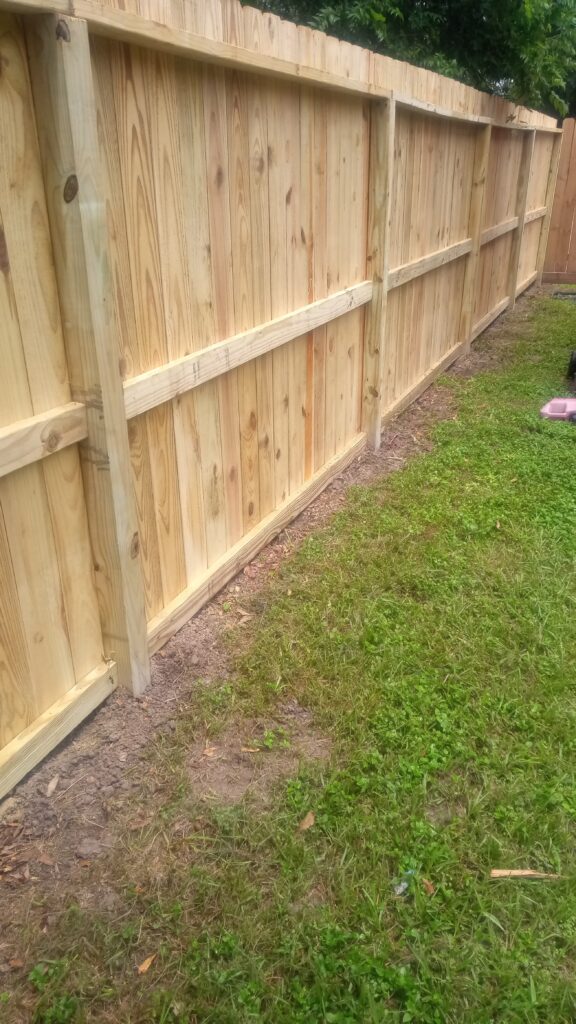
This is the most common wood-species comparison homeowners search before building a fence, and the honest answer is that it’s a budget-versus-longevity tradeoff rather than a clear winner.
Cost and durability
Pressure-treated pine costs less upfront and is chemically treated to resist rot and insects, but the treatment doesn’t stop the wood from moving — pine boards commonly warp, shrink, or crack as they dry out, sometimes within the first month after installation, and that movement tends to get worse under strong sun exposure. Cedar costs more per linear foot but contains natural oils that resist rot and insects without chemical treatment, and it holds its shape better over time, generally lasting 15-30 years versus pine’s 5-10 years untreated (or 15-20 years well-maintained).
Appearance and feel
Cedar has a warm reddish-brown tone and a distinctive aroma, and it ages into an attractive silvery-gray patina if left unsealed. Pressure-treated pine often has a slight greenish tint from the treatment chemicals and a flatter, less natural look, though it takes stain well once fully dried.
Which handles Galveston’s humidity better
Because pine takes on and releases moisture more readily than cedar, it’s more prone to the swell-shrink cycle that causes checking and warping — and that cycle runs faster in a humid, near-coastal climate with frequent rain. Cedar’s natural resistance to moisture absorption gives it a real edge here, which is part of why many fence contractors along the coast lean toward cedar for anything where long-term shape and appearance matter, reserving pressure-treated pine mainly for structural framing or budget-driven projects.
A common compromise
Many homeowners split the difference: pressure-treated pine for the posts (since ground-contact durability matters more than appearance below grade) and cedar for the visible boards and rails. This balances upfront cost against the parts of the fence that show the most.
Bottom line
If budget is the primary driver and you’re comfortable with a shorter lifespan and more maintenance, pressure-treated pine is a reasonable choice — see our southern pine fence page. If you want a fence that holds its shape and needs less frequent attention in our climate, cedar is generally the better long-term value; see our cedar wood fence page.
Related Questions
Does cedar need to be sealed at all?
Will pressure-treated pine really warp that fast?
Can I mix cedar boards with pine posts?
Ready for a real number for your property? Request a free on-site estimate from Mustang Fencing Services.