
Straight answers from a local fence and gate contractor serving Galveston, Brazoria, and Chambers Counties.
The choice between a sliding gate and a swing gate usually comes down to one thing first: how much usable space you have, and in which direction. From there, cost, slope, and style narrow it down further.
Space is the deciding factor
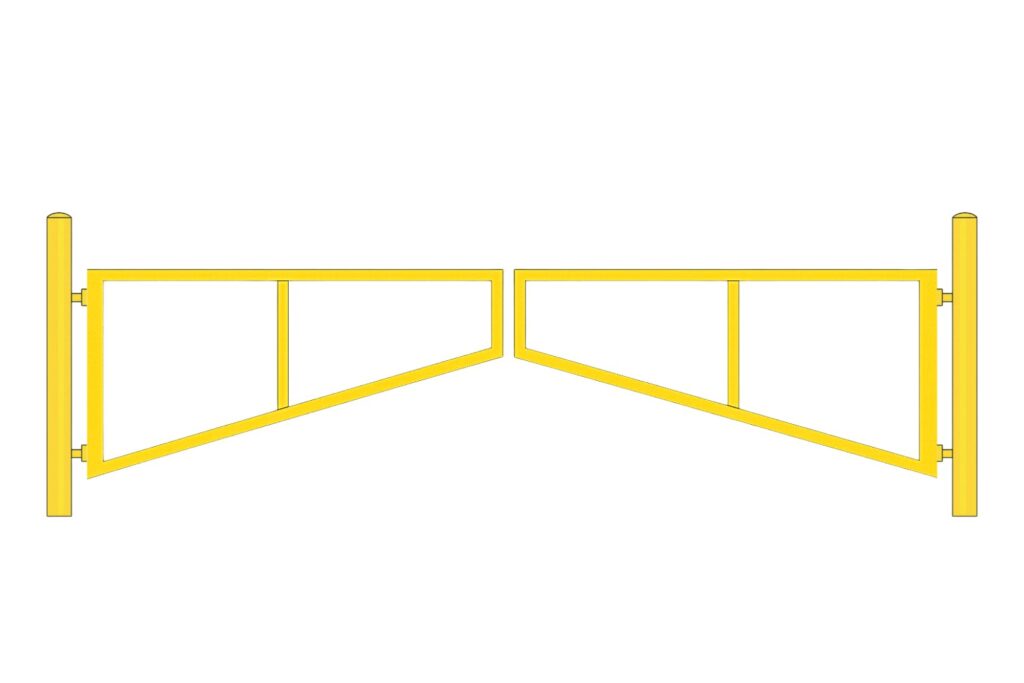
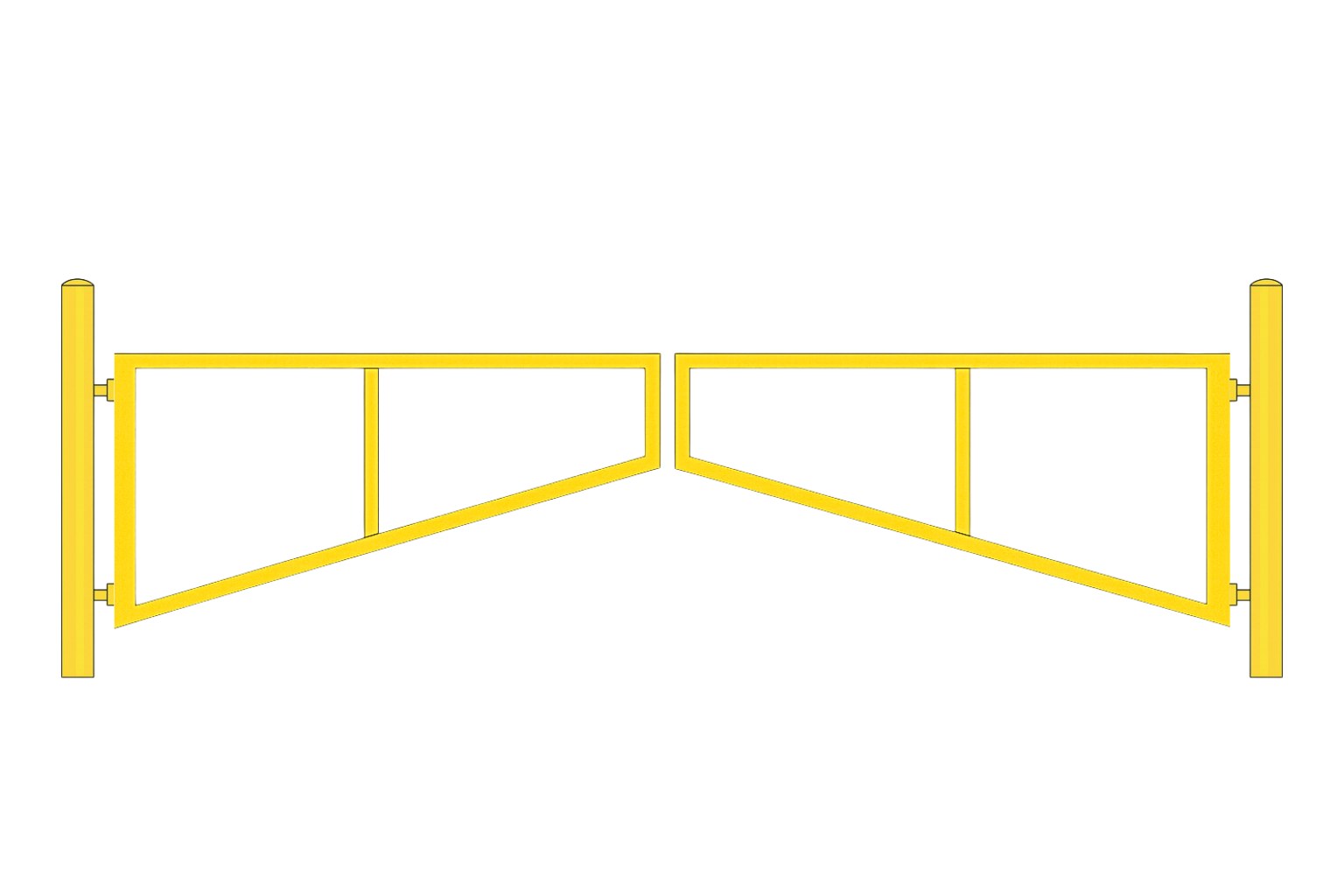
Swing gates need clear space in front of (or behind) the opening for the gate to arc through — a single 12-foot swing gate needs roughly that much open space to swing fully clear, while splitting it into a double swing gate cuts that requirement roughly in half, since each leaf only travels about 6 feet. Sliding gates solve this differently: they need room along the side of the driveway, parallel to the fence line, rather than space in front of the opening. That makes sliding gates the practical choice for driveways that open directly onto a street or a short approach, where there’s no room for a gate to swing outward.
Slope changes the answer
If your driveway isn’t flat, this matters more than most homeowners expect. A swing gate that opens uphill fights the rising grade and can bind or fail to fully open once the slope gets much past a gentle incline. A sliding gate travels parallel to the ground rather than arcing over a rise, which makes it the more reliable choice on a driveway with any real slope — and a cantilever slide gate (see our post comparing cantilever vs. track systems) handles uneven or sloped ground even better than a track-mounted slider.
Cost and maintenance
Swing gates are usually the less expensive option to install, since the mechanism is simpler — a hinge, an arm, and an operator. Sliding gates typically cost more upfront because of the track (or cantilever counterweight frame) and a more involved mechanism, though a properly installed cantilever slider can actually have lower long-term maintenance costs than a track system, since there’s no ground-level track to collect debris. Swing gates have fewer moving parts overall, but in windy conditions they can need more frequent adjustment than a slider that stays low and parallel to the ground.
Style and security
Swing gates tend to read as more traditional and ornate, which suits classic wrought-iron or estate-style properties. Sliding gates have a cleaner, more contemporary look and are common on commercial properties and modern residential builds. On security, a well-built gate of either style, paired with proper access control, is secure — the type of infill and the access control system matter more than swing-versus-slide alone, though sliding gates do remove the swing arc as a potential point of leverage.
The practical takeaway
If your driveway is flat with room to swing, and you like a classic look, a swing gate is a strong, cost-effective choice. If your driveway is narrow, opens close to the street, or has any real slope, a sliding gate is usually the more reliable long-term choice.
Related Questions
Which is cheaper, a sliding gate or a swing gate?
Can a swing gate work on a hill?
Which style is more secure?
Ready for a real number for your property? Request a free on-site estimate from Mustang Fencing Services.