
Straight answers from a local fence and gate contractor serving Galveston, Brazoria, and Chambers Counties.
This is one of the most common questions homeowners face before any fence project, and on the upper Texas Gulf Coast the answer has a few local wrinkles worth knowing.
Upfront cost and long-term cost aren’t the same number
Wood typically has a lower installed cost than vinyl. But vinyl requires no staining or sealing, while a wood fence needs recoating every 2-3 years in a humid climate to keep protecting the wood underneath. Add up a 15-20 year ownership period and the total cost gap narrows — sometimes vinyl comes out ahead, sometimes wood still wins, depending on how much of the maintenance you do yourself versus hire out.
How each holds up to Gulf Coast conditions
Salt air, humidity, and UV exposure affect the two materials differently. Wood’s main coastal enemies are moisture cycling (swelling and shrinking) and rot at ground contact points; a well-built, well-sealed cedar or pressure-treated fence handles this fine with upkeep. Vinyl doesn’t rot or need sealing, but intense UV exposure over many years can make some vinyl formulations more brittle, and in a direct hurricane-force wind event, rigid vinyl panels can crack or blow out of their tracks rather than flexing, whereas a well-built wood fence with gapped or shadowbox-style boards lets wind pass through. Neither material is immune to storm damage — see our coastal fence durability page for how we build for this.
Look, repairability, and resale
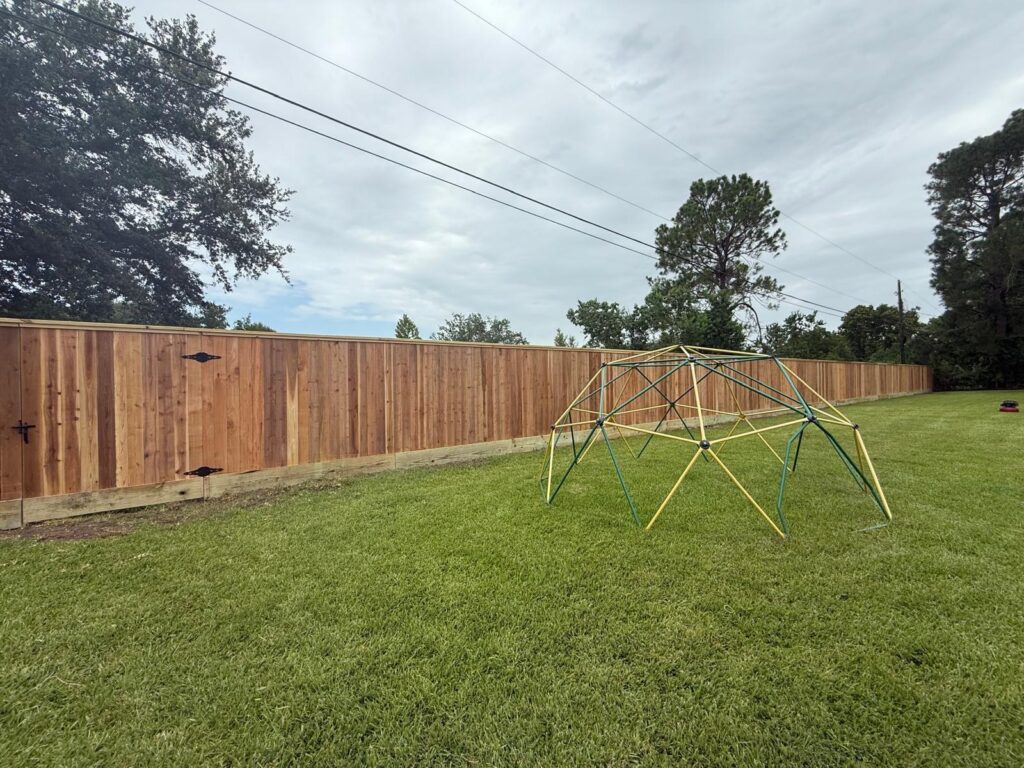
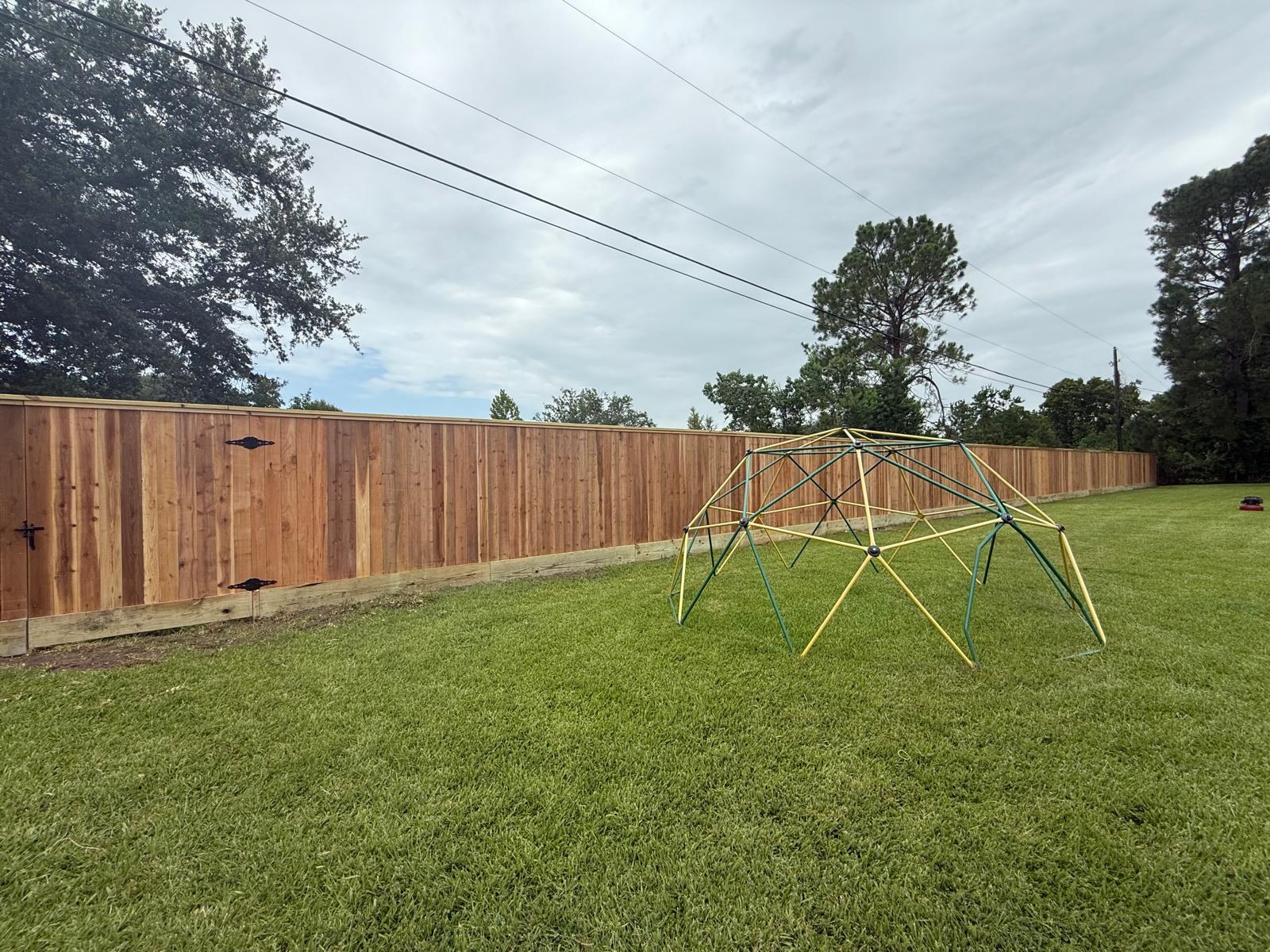
Wood offers a warmer, more natural look and can be stained to match a home’s exterior; it’s also easier to repair in sections — a single damaged board can be swapped out without replacing a whole panel. Vinyl repairs are trickier, since color-matching an aged panel to a new one is difficult, and damaged sections sometimes require replacing a full panel between posts. For resale, both materials perform well in the right neighborhood context; a well-maintained wood privacy fence and a clean vinyl fence are both viewed as a plus by most buyers, so the decision usually comes down to budget, maintenance appetite, and personal style rather than one being objectively “better.”
Which to choose
If you want the lowest-maintenance option and don’t mind the higher upfront cost, vinyl is worth a look — see our vinyl fence page. If you prefer a natural look, don’t mind periodic sealing, and want the flexibility to repair or restyle sections over time, wood remains the more popular choice for Galveston County homeowners.
Related Questions
Does vinyl fencing ever need maintenance?
Which material handles hurricane winds better?
Can I repair just one section of a wood fence instead of replacing it?
Ready for a real number for your property? Request a free on-site estimate from Mustang Fencing Services.