
Straight answers from a local fence and gate contractor serving Galveston, Brazoria, and Chambers Counties.
The core material difference
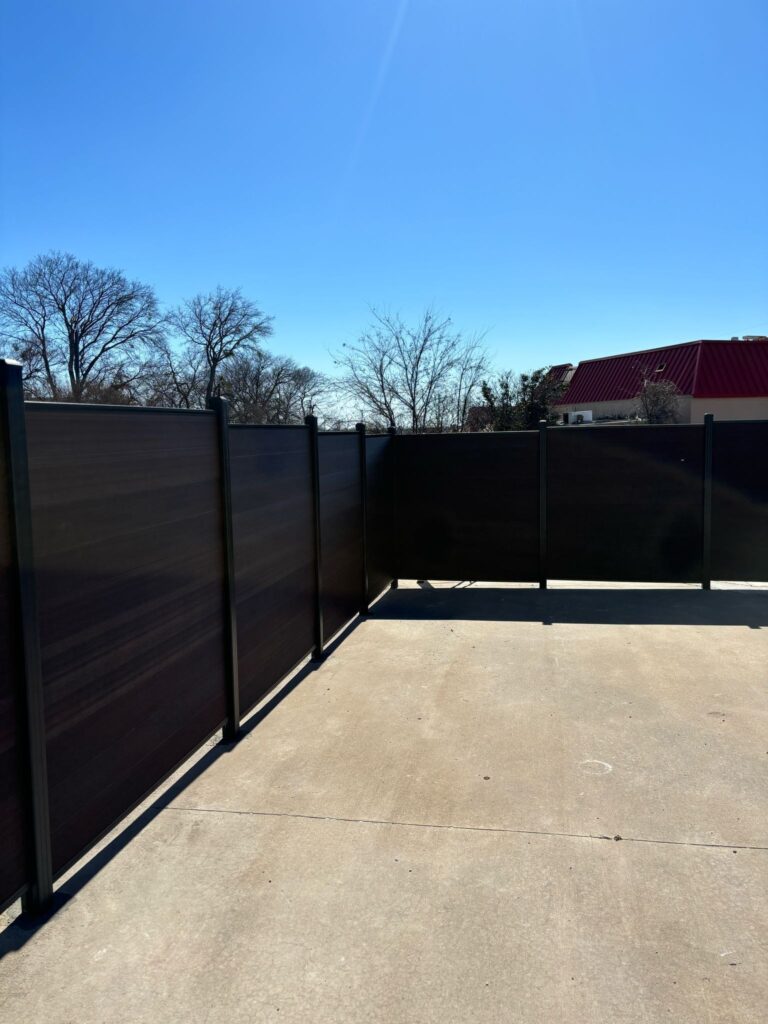
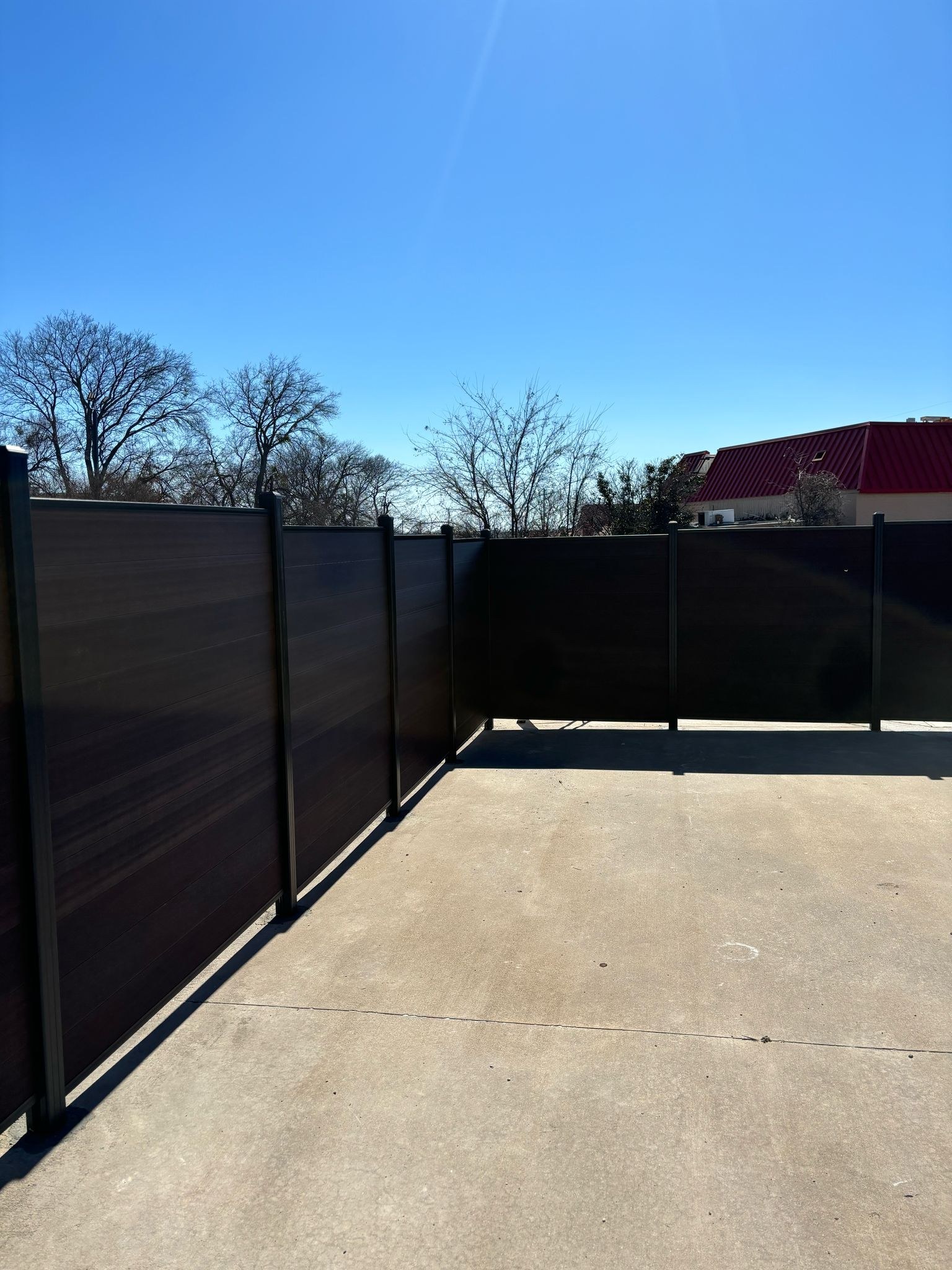
Vinyl fencing is a plastic product (PVC) through and through. Composite fencing is a blend of recycled wood fibers and plastic polymers, mixed with bonding agents and preservatives, then extruded or molded into boards, rails, and posts. That fundamental difference in makeup drives most of the practical differences between the two.
Looks, cost, and everyday performance
Composite is generally regarded as the more natural-looking of the two — it can convincingly mimic the grain, texture, and color variation of real wood, whereas vinyl, especially in solid white, can look more uniformly “plastic” (though wood-grain vinyl finishes have narrowed this gap considerably). That improved realism comes at a real cost premium: composite fencing typically runs noticeably more expensive than vinyl per linear foot, sometimes by a significant margin, making it a bigger upfront investment for the same length of fence line.
On durability, vinyl generally has the edge in wet, humid conditions. Because composite contains wood fiber, it can be more susceptible to moisture-related issues like mold, mildew, or swelling in damp climates than fully synthetic vinyl, which is completely non-porous. Composite also tends to expand and contract more with temperature swings than vinyl does, which over time can contribute to warping or slight board separation if not accounted for in the design and installation. Both materials are considerably lower-maintenance than wood, and both resist rot and insect damage far better than untreated lumber.
Which one fits a Gulf Coast yard better
For a fully humid, salt-air coastal environment like Galveston Island and its surrounding communities, vinyl’s complete imperviousness to moisture is a genuine practical advantage — there’s no wood fiber component to potentially trap moisture or feed mold growth. Composite can still perform well here, but it generally calls for a bit more attention to cleaning and ventilation in shaded, damp spots to avoid mildew buildup, and it comes at a higher price point for that added natural aesthetic.
If your priority is the lowest-maintenance, most weather-agnostic option and cost efficiency matters, vinyl is typically the stronger choice in this region. If a more natural, wood-like appearance is the priority and you’re comfortable with the added cost and slightly more attentive maintenance, composite is a legitimate, longer-lasting alternative to real wood. Composite fencing is part of Mustang Fencing’s standard product lineup, so ask your consultant for a current pricing comparison against vinyl for your specific project.
Related Questions
Is composite fencing more eco-friendly than vinyl?
Does composite fencing need to be sealed like wood?
Can composite and vinyl fencing be mixed on the same property?
Ready for a real number for your property? Request a free on-site estimate from Mustang Fencing Services.