
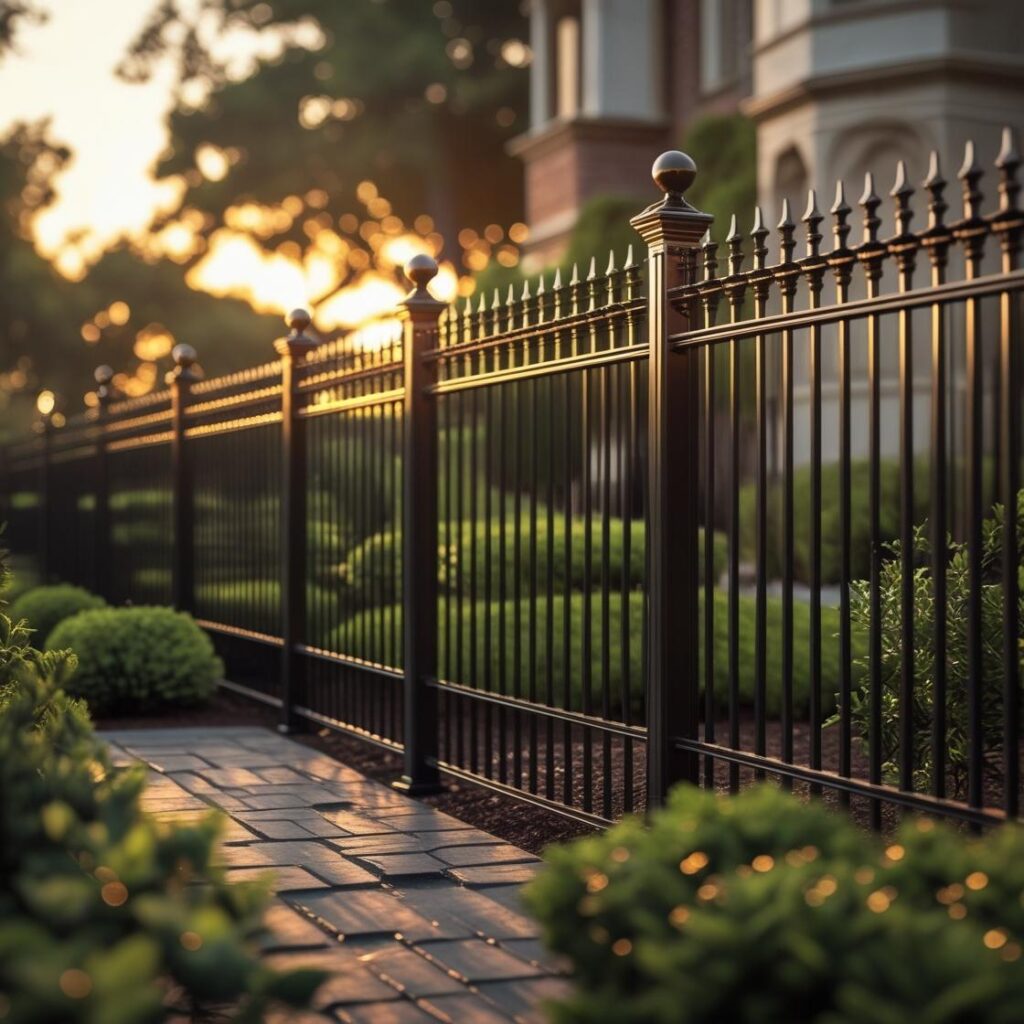
Straight answers from a local fence and gate contractor serving Galveston, Brazoria, and Chambers Counties.
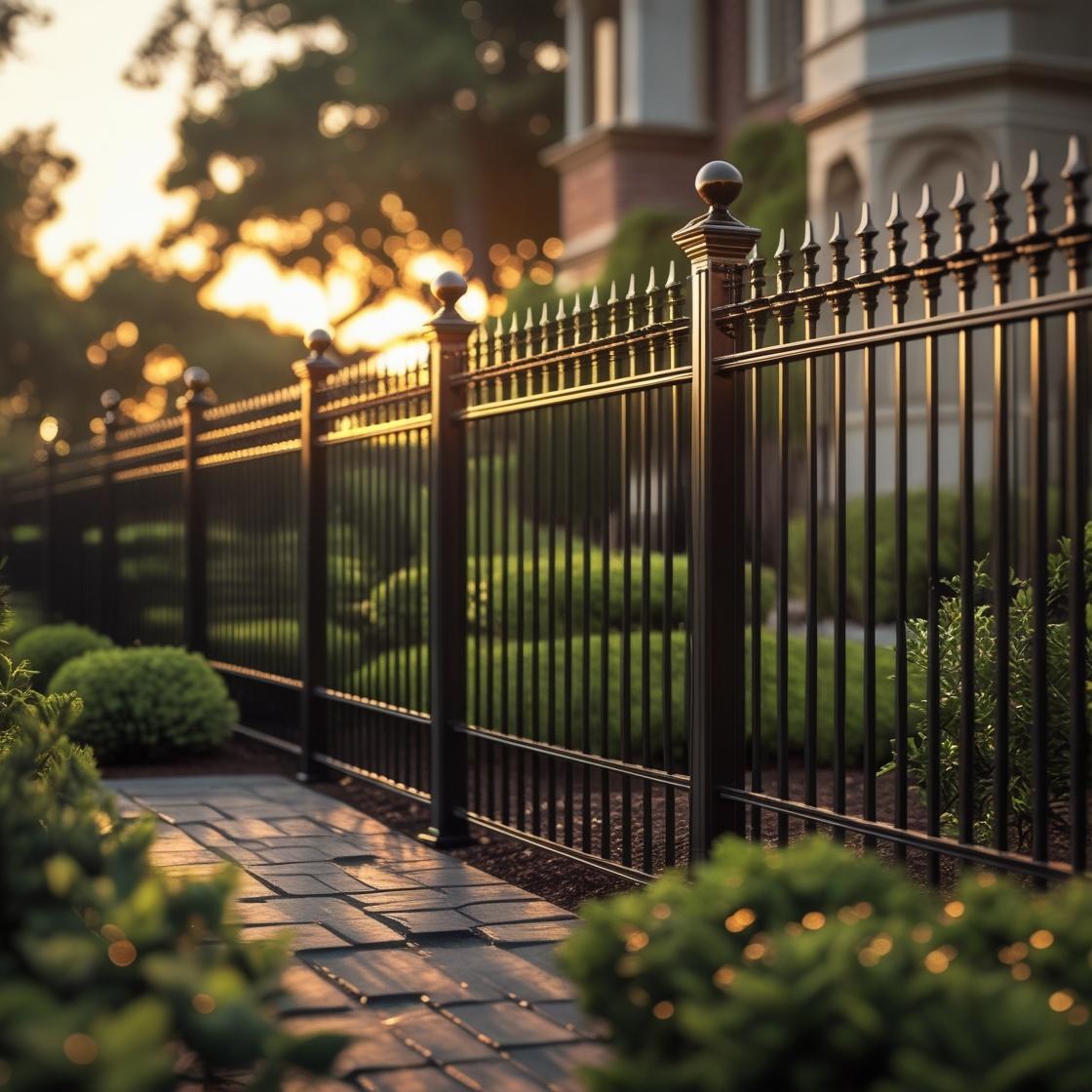
What aluminum fencing typically costs
Nationally, installed aluminum fencing runs roughly $22 to $72 per linear foot, combining materials ($7–$32/ft) and professional labor ($15–$40/ft). Where you land in that range depends heavily on style: open picket/ornamental designs tend to run $15–$55/ft for materials alone, while taller privacy-style aluminum panels run closer to $27–$36/ft, and pool-code aluminum fencing (built to keep the required small gap spacing) typically runs $15–$25/ft. A full residential project average nationally sits around $4,600, but that number swings widely based on total footage, gate count, and terrain.
What actually moves the price
A handful of factors explain most of the variation between a low quote and a high one:
- Height and rail count. A 2-rail, 4-foot aluminum fence costs less per foot than a 3-rail, 6-foot version — more aluminum, more powder coating, more labor to set posts deep enough to handle the taller panel.
- Picket spacing and style. Pool-code spacing (narrow enough that a small child can’t squeeze through) uses more pickets per panel than a standard “estate” spacing, which adds material cost.
- Gates and hardware. Each walk gate or drive gate adds cost beyond the per-foot fence rate — self-closing hinges and pool-compliant latches in particular.
- Site conditions. Digging post holes through caliche, old slab, or a high water table (all common realities on Galveston Island) adds labor time that a quote for inland, sandy-loam soil wouldn’t need.
- Total linear footage. Like most fencing, the cost per foot typically drops as the total run gets longer, since mobilization and gate costs get spread over more feet.
Why the upfront cost pencils out on the coast
Aluminum’s higher sticker price compared to chain link is usually offset by what it *doesn’t* cost you later. Because aluminum is a non-ferrous metal, it doesn’t rust — it forms a thin, stable aluminum-oxide layer instead, so there’s no repainting, no rust treatment, and no wire-brushing every couple of years the way there is with steel or wrought iron. In a coastal, salt-air environment like Galveston, Texas City, or Kemah, that maintenance gap is significant: a powder-coated aluminum fence can hold its structural integrity and finish for decades with nothing more than an occasional rinse, while an untreated steel or iron fence in the same yard would need active rust management within a few years.
The ranges above reflect general national material and labor data, not a quote — the real per-foot number for your property depends on style, height, gate count, and site conditions. Mustang Fencing provides free on-site estimates so you can get an exact, current number for your specific project rather than relying on a national average.
If you’re comparing aluminum against wrought iron or steel for your property, it helps to see all three side by side before deciding — our aluminum fence page breaks down the styles and finishes we install across Galveston County.
Related Questions
Is aluminum fencing cheaper than wrought iron over time?
Does a taller aluminum fence cost more per foot?
Do I need a permit for an aluminum fence in Galveston?
Ready for a real number for your property? Request a free on-site estimate from Mustang Fencing Services.