
Straight answers from a local fence and gate contractor serving Galveston, Brazoria, and Chambers Counties.
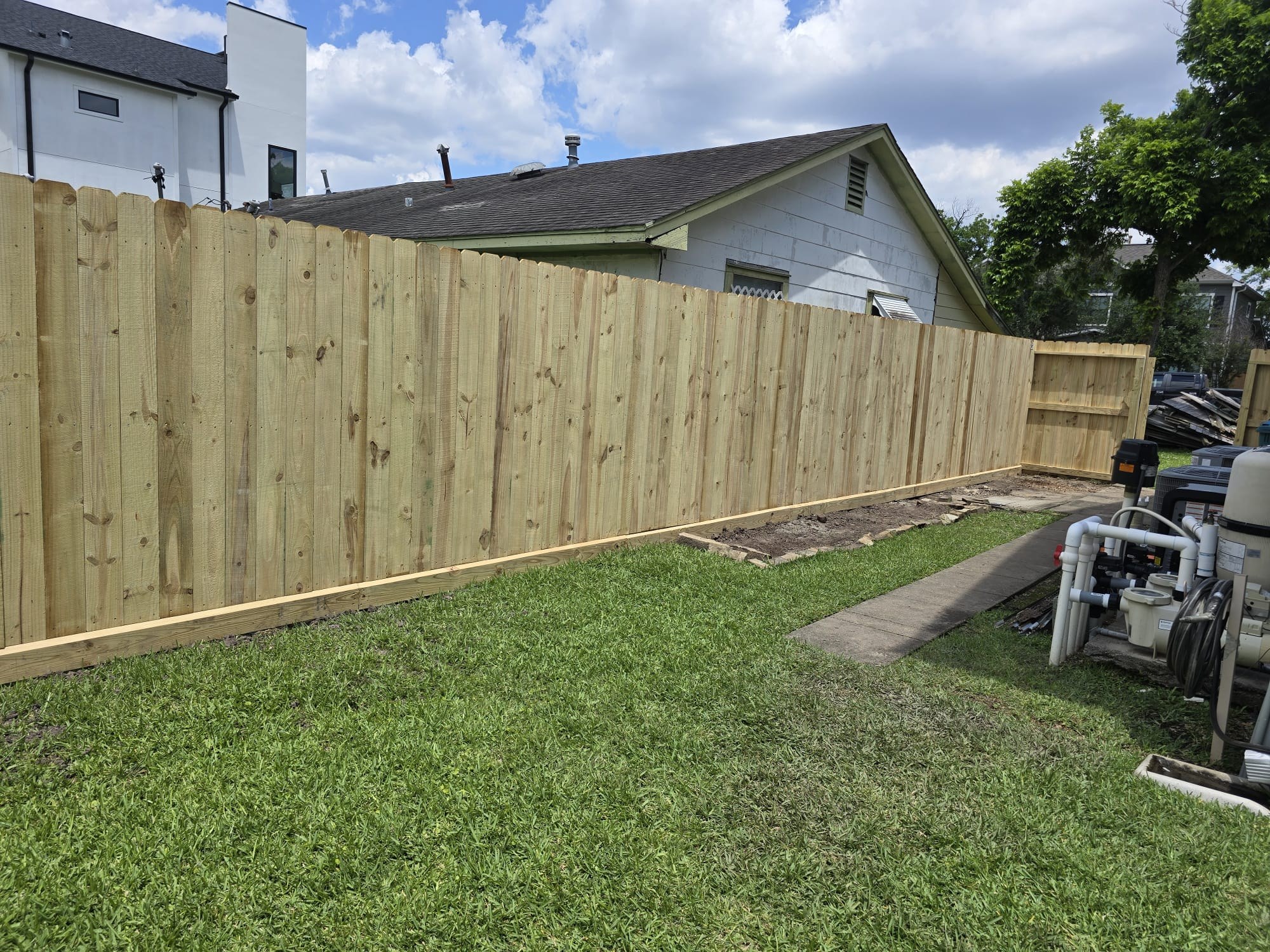
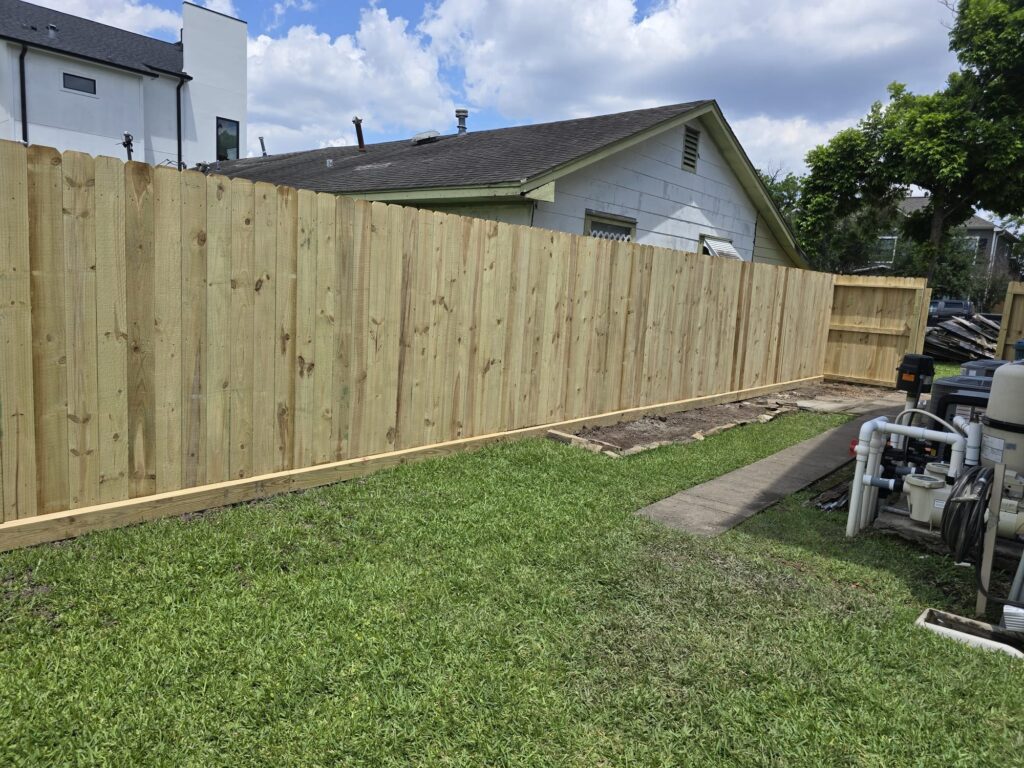
A “good neighbor” fence is any fence built to look the same finished appearance from both sides of the property line — solving the classic complaint that one neighbor gets the smooth board face while the other stares at exposed rails and posts.
Why traditional fences create this problem
A standard wood privacy fence attaches boards to one side of the horizontal rails, which means the rail and post framework is visible from the other side. That’s not a defect, it’s just how a single-sided fence is built — but on a shared property line, it means one household effectively gets the “finished” side by default.
The two common ways to build one
Alternating board design: Boards attach to alternating sides of the rails in a repeating pattern, so each side of the fence sees a mix of board faces and narrow gaps rather than one side getting a smooth wall and the other getting framework. This is very similar in construction to a shadowbox fence design, just built with good-neighbor symmetry in mind.
Double-sided (true two-face) construction: Boards are applied to both sides of the framing, so each side gets a fully finished, gap-free appearance — effectively two fence faces sandwiching one frame. This uses more material and labor than a standard or alternating design, so it costs more, but it delivers full privacy and a finished look on both sides with no compromise.
When it’s worth building
A good neighbor fence makes the most sense when: the fence sits directly on a shared property line and both households will see it daily; you want to avoid a dispute over whose side gets the “good” face; or an HOA or neighborhood norm expects a uniform look from the street and neighboring yards on both sides. It’s a particularly practical choice in tighter-lot neighborhoods common across League City and Texas City, where side and rear fences sit close to a visible neighboring yard.
Cost and shared responsibility
Because good neighbor fences use more material (either through alternating boards or full double-sided construction), expect a modest cost premium over a standard one-sided privacy fence. Many homeowners split this cost with the adjoining neighbor since both sides benefit equally — though there’s no requirement to do so, and the arrangement should be agreed to in writing rather than assumed.
Related Questions
Is a good neighbor fence the same as a shadowbox fence?
Does a good neighbor fence provide as much privacy as a solid privacy fence?
Who owns a good neighbor fence built on the property line?
Ready for a real number for your property? Request a free on-site estimate from Mustang Fencing Services.