
Best Decorative Fence Ideas for Curb Appeal
The height limit on a front-yard fence here is fixed by code, but almost everything else is a style choice: picket top profile, post caps, gate shape, gap width, and material. These are the upgrades that change how a decorative fence reads without changing which height rule applies to it.
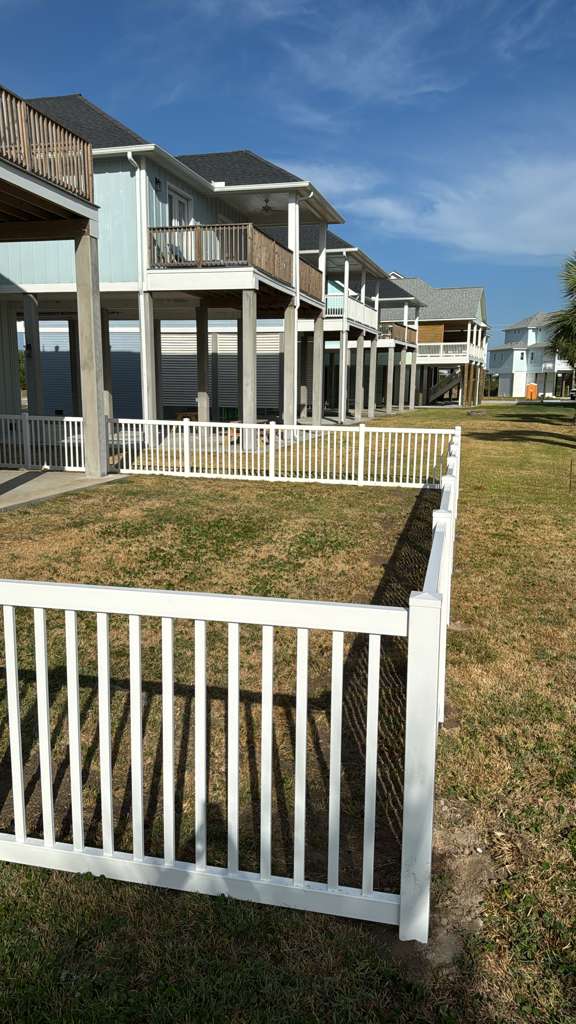
The easiest curb-appeal upgrades to a decorative fence are the ones that don’t touch the height rule: picket top profile, post caps, a gate as a focal point, gap width, and material color/finish. In a Galveston front yard the height ceiling stays fixed either way — 4 ft solid, or 5 ft once the fence is at least 60% see-through — so the style decisions are what actually change how the fence looks.
Sources: City of Galveston Land Development Regulations §2.501(B); Master Halco, Colonial Aluminum Ornamental Fence System Warranty (2017).
Curb-appeal ideas that don’t change the height rule
Most of what makes a decorative fence look upgraded has nothing to do with how tall it is. A different picket top (gothic or pointed instead of plain dog-ear), decorative post caps or finials, and a gate built as a deliberate focal point — arched, wider, or trimmed differently from the run — all read as “nicer fence” without touching the 4 ft / 5 ft front-yard math. Color and finish do the same work: a contrasting gate color, a darker stain on wood, or picking ornamental aluminum in a finish other than plain black all change the look at the same height and the same gap width.
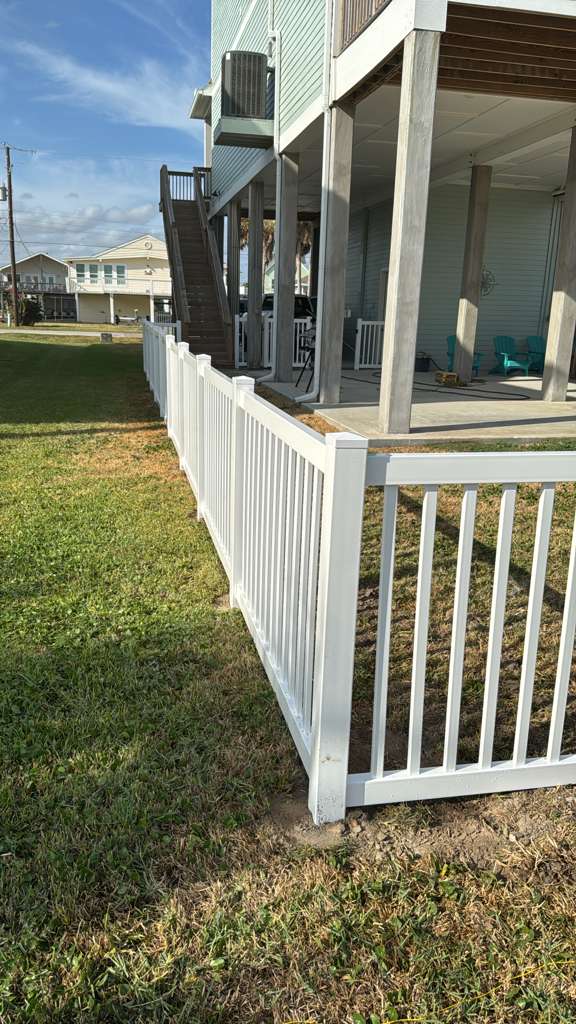
Gap width is a style choice, not just a rule to clear
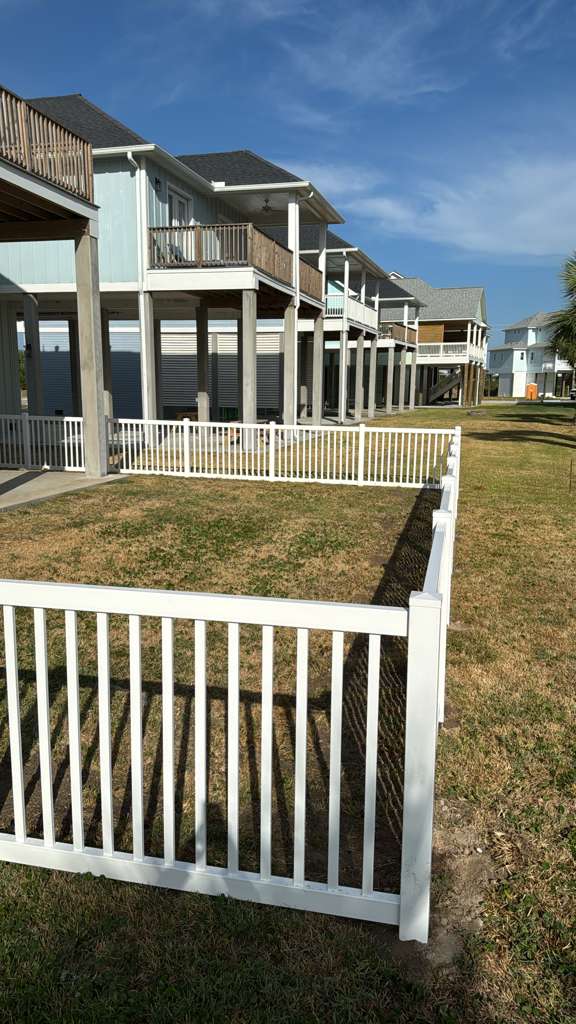
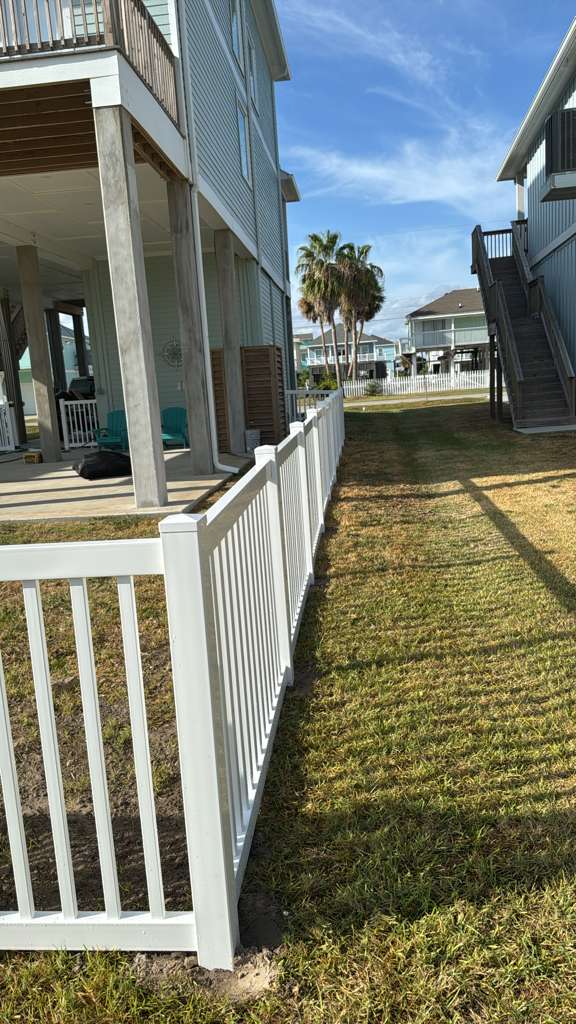
Picket spacing is usually framed as a code question — how open does the fence need to be to count as “see-through” — but it’s also a look. A tight gap (the common 3½-inch picket with a 2½-inch gap, about 42% open) reads as a more solid, traditional picket fence and stays under the 4 ft cap. A wider gap on the same picket width reads airier and more modern, and once it crosses roughly 60% open, Galveston’s front-yard rule allows the taller 5 ft version. Either look is legitimate — it’s worth deciding on the look first, then checking which height it lands you at.
Curb-appeal ideas and what they cost you in rules
| Idea | Changes the height limit? | Notes |
|---|---|---|
| Different picket top (gothic, pointed, flat vs. dog-ear) | No | Purely a look decision; general stock profiles |
| Decorative post caps or finials | No | Added detail at the top of each post |
| Arched or wider gate as a focal point | No | The gate can be styled differently from the fence run |
| Contrasting paint/stain or an aluminum finish other than black | No | Color and finish choice only |
| Wider gap between pickets (toward 60%+ open) | Yes — can unlock 5 ft instead of 4 ft | Galveston LDR §2.501(B); the City’s plan reviewer decides how transparency is measured |
Height-rule column: City of Galveston LDR §2.501(B). Styling rows are general construction/design guidance, not independently cited.
Which decorative fence idea fits your front yard?
General style guidance — your actual lot and front-yard rule still get confirmed on-site.
General style guidance; the Galveston height figures are from LDR §2.501(B), the same rule covered on our picket fence height & spacing guide.
What Galveston customers say
5.091 Google reviews · read them all on Google
had an excellent experience with mustang fencing From the initial consultation to the final installation, the team was professional, punctual, and attentive to detail. They helped me choose the perfect fence style to match my property and ensured everything was installed with precision. The quality of materials is top-notch, and the fence has completely transformed the look and security of my home. I highly recommend mustang services to anyone looking for reliable and high-quality fencing services!
Mustang Fencing Services was dependable and honest from start to finish. They stuck to our timeline and budget, and the fence looks fantastic. I appreciate their hard work and would recommend them to anyone.
We took the services to replace our decade-old rotten fence with a modern one. The Services were Professional, completed the job on time, and the fence looked great, giving a new look to our house and they left the yard spotless. Highly recommend!
Reviews shown word for word from the Mustang Fencing Services Google Business Profile (Galveston), captured 2026-10-12.
Questions we get about this
What is the easiest way to upgrade curb appeal without re-permitting?
Does a taller decorative fence always need a permit?
Can I make a picket fence taller just by spacing the pickets out more?
Is ornamental aluminum a good curb-appeal choice near the coast?
Do these ideas apply to the side or rear yard too?
Sources
Checked October 18, 2026. Rules change, so confirm with the City before you build.
- City of Galveston Land Development Regulations (2015, as amended) — Sec. 2.501(B): front-yard fence height limits and the 60% transparency rule.
- Master Halco, Colonial Aluminum Ornamental Fence System Limited Warranty (2017) — Lifetime residential coverage terms for an all-Master-Halco ornamental aluminum system.
Want help picking the look before the height math?
We’ll bring samples of top profiles and gate styles, confirm what your front yard allows, and price the decorative fence that actually matches what you pictured.