
Straight answers from a local fence and gate contractor serving Galveston, Brazoria, and Chambers Counties.
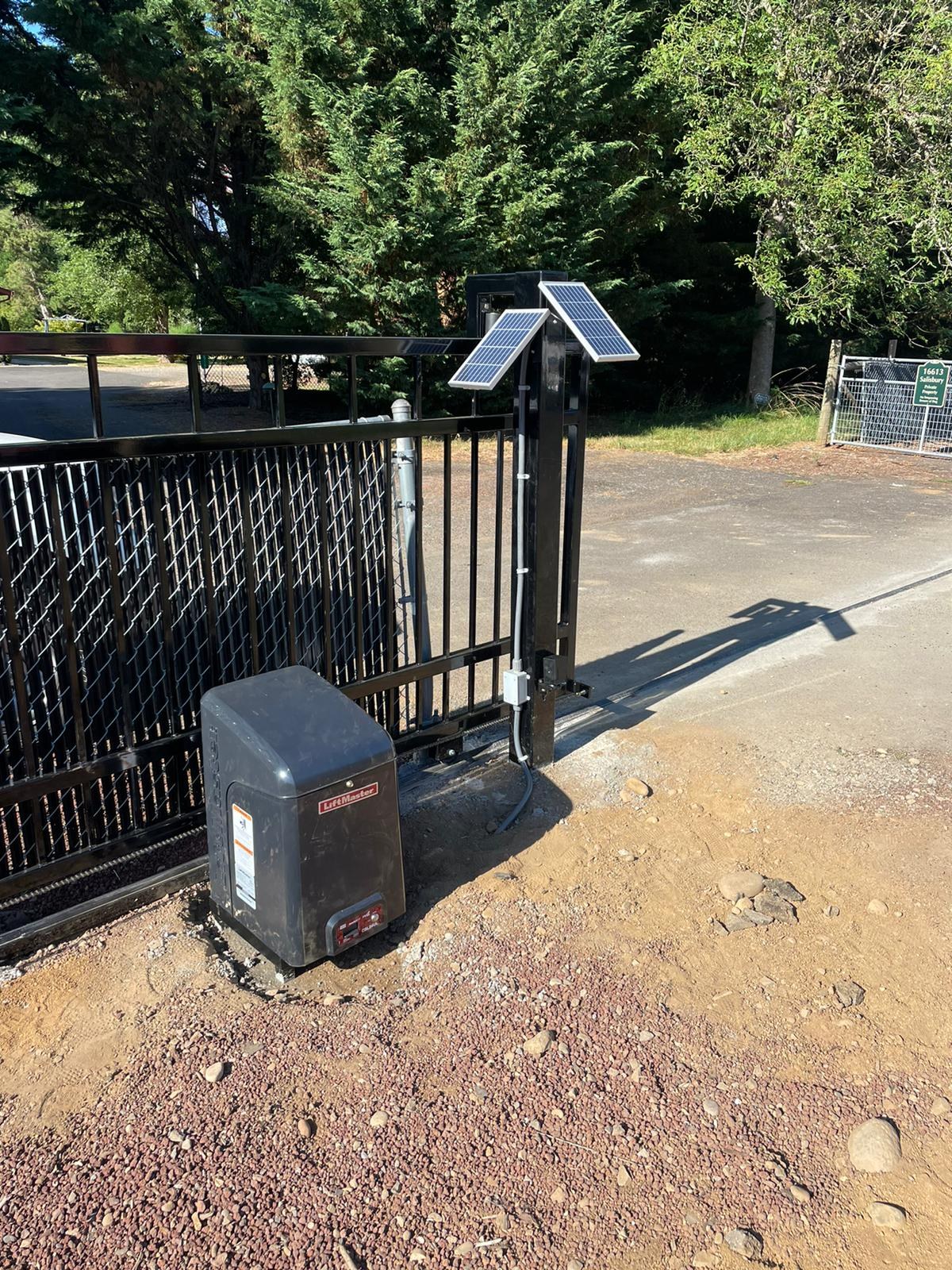
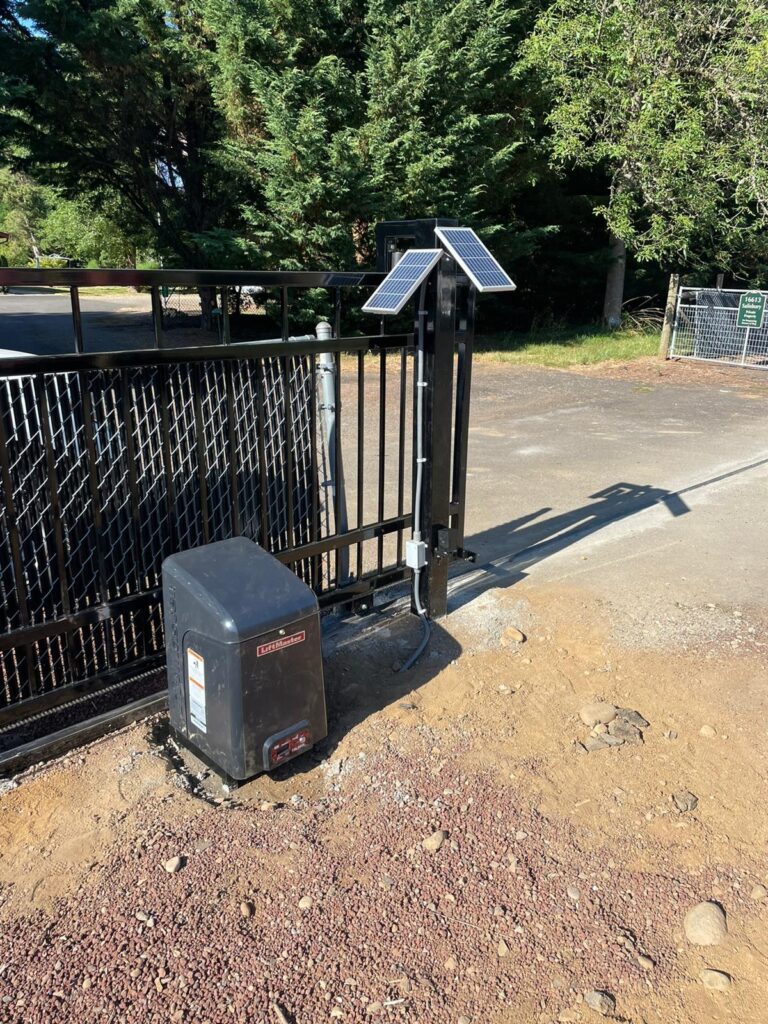
Every properly installed automatic gate has a manual release — a mechanism that disengages the motor from the gate so it can be pushed or slid open by hand. Knowing where it is and how to use it before you need it is worth a few minutes, especially for anyone in a hurricane-prone area where an extended outage is a real possibility.
Finding the manual release
The release is typically located on or near the operator itself — often directly on the motor arm for swing gates, or on the motor housing for slide gate operators. The exact location and mechanism varies by manufacturer and model, so the fastest way to find yours is to check the owner’s manual that came with your specific operator, or to look for a labeled release lever, key slot, or access panel on the operator housing itself.
Using the release
Most manual releases work one of two ways:
- Key-operated release: A specific key or tool (usually provided at installation) is inserted into a lock on the operator and turned to disengage the motor from the gate mechanism.
- Lever-operated release: A lever or handle on the operator is pulled or turned to physically decouple the motor.
Once disengaged, the gate should move freely by hand — push a swing gate or slide a sliding gate open with normal effort. If it feels like it’s fighting you or binding, stop; forcing a gate that hasn’t fully disengaged can damage the gears, the operator arm, or the gate itself.
Re-engaging after power returns
The motor won’t automatically resume control once power is restored — the release lever or key has to be manually turned back to its original locked position first. Skipping this step is a common reason people find their gate “isn’t working” after an outage, when really the manual release was just never re-engaged.
Before you actually need it
The best time to learn your gate’s manual release procedure is during installation or a routine service visit, not in the middle of a storm at night. A few things worth confirming ahead of time: where the release key or lever is kept (and that it’s somewhere accessible, not locked inside the house you’re trying to leave), that the release mechanism moves freely when tested, and that everyone in the household who might need to use it knows the basic steps.
For Galveston-area homes where hurricane season brings real risk of extended outages, treating the manual release the same way you’d treat a flashlight or a battery radio — checked and ready before storm season, not figured out during it — is a genuinely practical piece of preparation.
Related Questions
Where is the manual release usually located?
Can forcing a gate open damage it?
Does the gate automatically go back to automatic mode when power returns?
Ready for a real number for your property? Request a free on-site estimate from Mustang Fencing Services.