
Straight answers from a local fence and gate contractor serving Galveston, Brazoria, and Chambers Counties.
Most commercial properties are required by local code to screen dumpster and refuse storage areas from public view, and getting the enclosure specification right avoids a failed inspection or a required redo after the fact.
Height and screening requirements
The general rule across most municipal codes is that a dumpster enclosure needs to be at least as tall as the container it surrounds, including the lid when raised on a rear-load container — commonly landing around 6 to 8 feet depending on the container size and the specific local code. Many jurisdictions specifically require that the enclosure fully screen refuse storage from any public right-of-way, which is the underlying reason for the height requirement rather than an arbitrary number.
Approved materials for enclosure walls
Some codes are prescriptive about material — allowing wood or chain link fencing up to a certain height without additional review, while requiring product-specific approval for PVC or other metal fencing systems. Many commercial properties use a solid masonry wall on three sides for a more permanent, code-compliant screen, though solid fencing panels can also satisfy the screening requirement where local code allows. Confirming exactly what your local jurisdiction accepts before finalizing a design saves a redesign after a failed plan review.
The service-side gate is its own requirement
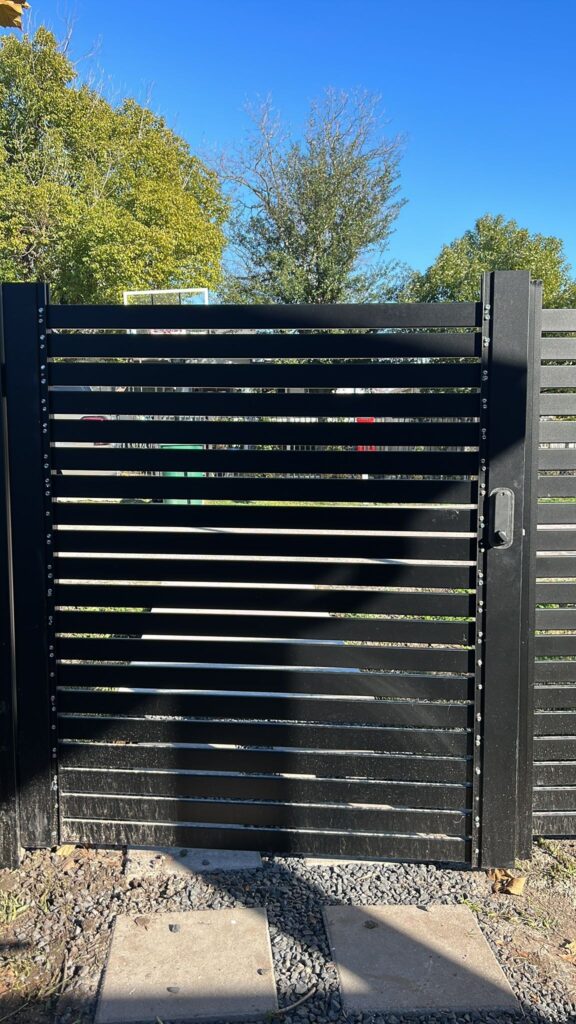
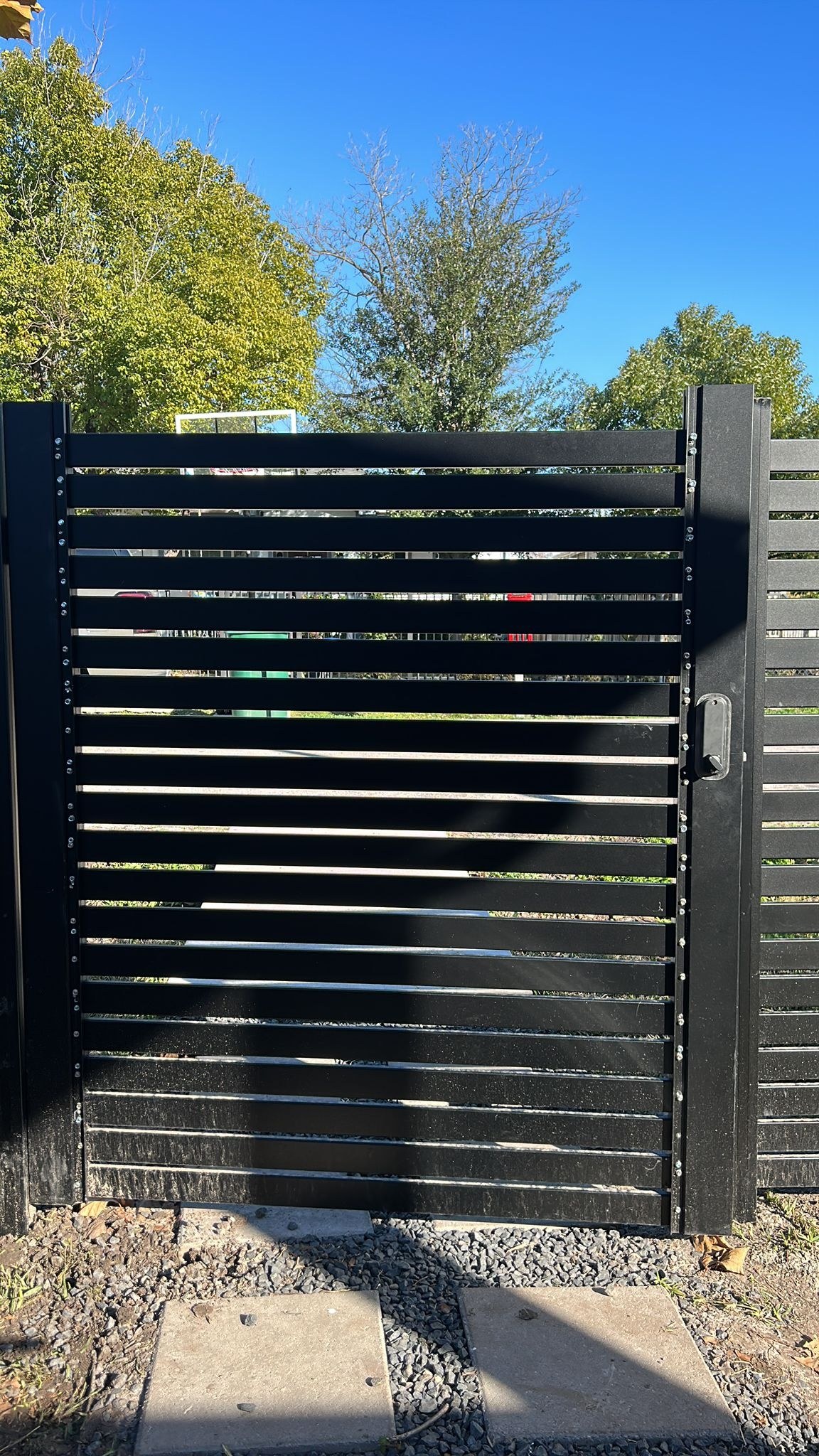
Nearly every dumpster enclosure code requires a gate on the side used for waste collection service, both to keep the enclosure screened when the gate is closed and to allow the hauler’s truck adequate clearance to service the container when it’s open. This gate needs to be sized correctly for the actual collection equipment used at the property — a gate that’s too narrow for the hauler’s truck or lift arm creates an ongoing operational headache regardless of whether it technically meets code.
Concrete pad and fire separation
Beyond the fencing itself, most codes also require a concrete pad inside the enclosure to keep the container from sinking into softer ground and to provide a cleanable surface for spills. Some codes also require a minimum fire-rated separation distance between the dumpster enclosure and any occupied building, which is a detail worth confirming with the local fire code alongside the general zoning and building code requirements for the enclosure itself.
Getting the enclosure right the first time
Because dumpster enclosure requirements combine zoning code, building code, and sometimes fire code all in one relatively small structure, it’s worth confirming the specific local requirements — height, allowed materials, gate width, concrete pad, and fire separation — before construction rather than after a failed inspection. A contractor experienced with commercial enclosures in the local jurisdiction can often anticipate these requirements from experience rather than starting from scratch on each project.
Related Questions
Ready for a real number for your property? Request a free on-site estimate from Mustang Fencing Services.