
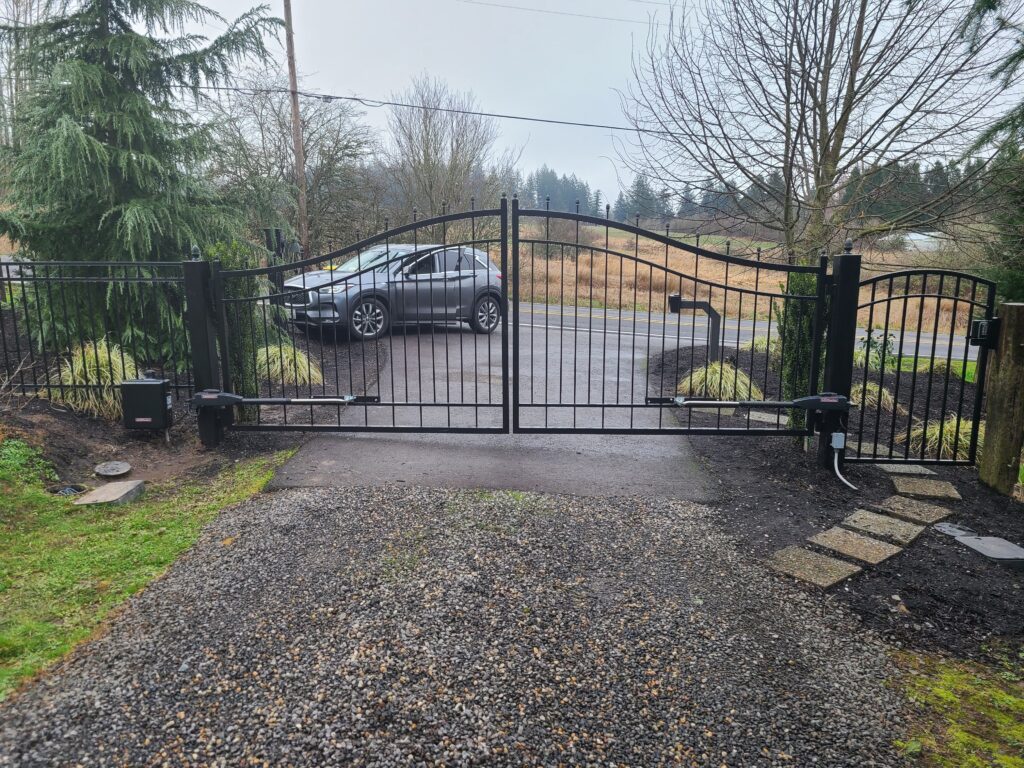
Straight answers from a local fence and gate contractor serving Galveston, Brazoria, and Chambers Counties.
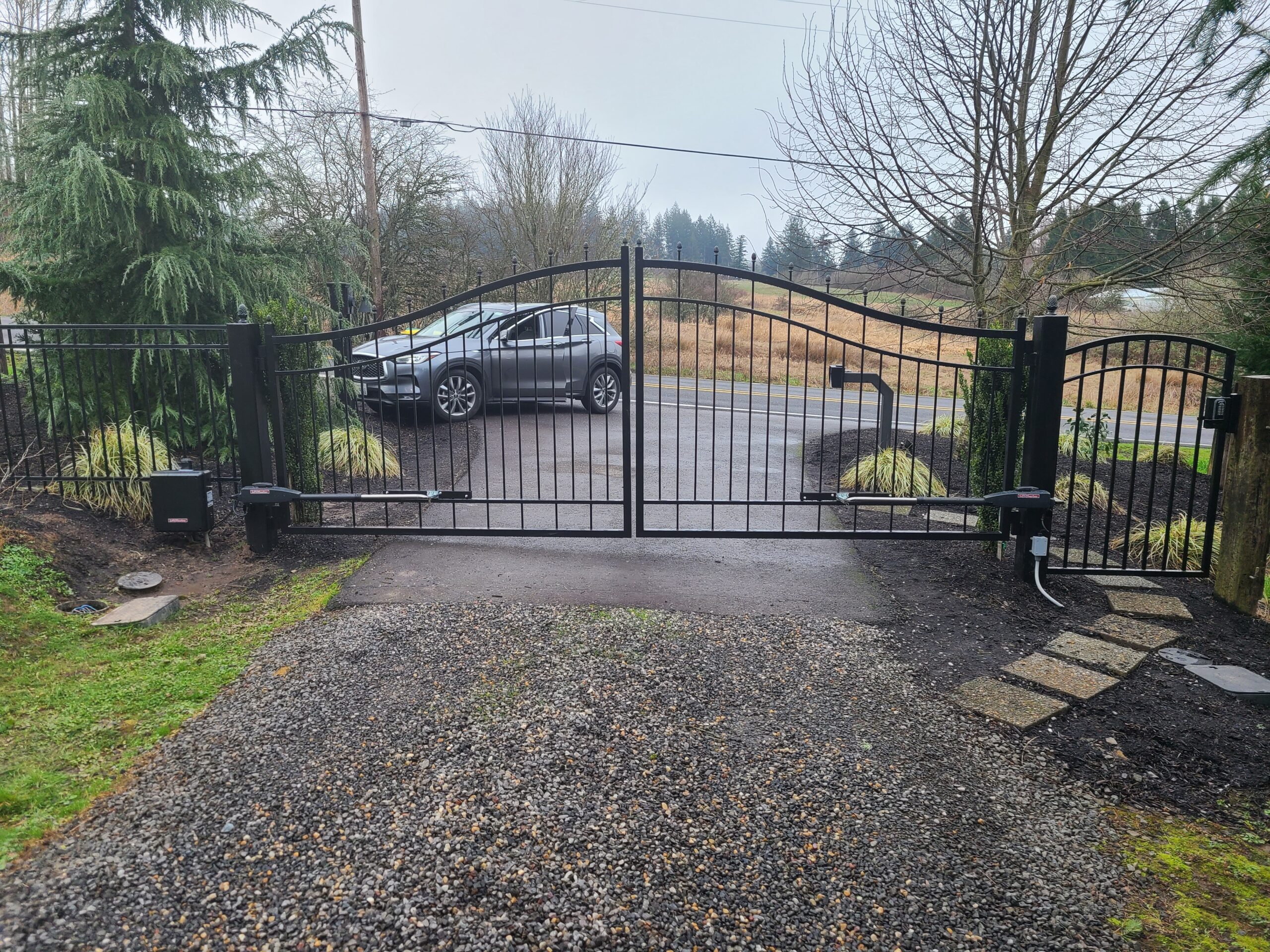
A swing gate can work on a gently sloped driveway, but the more the grade rises in the direction the gate swings, the more likely it is to bind, drag, or fail to open fully — and past a certain point, a sliding gate becomes the more reliable choice.
Why slope is a problem for swing gates
A swing gate moves through an arc, pivoting on its hinges. On flat ground, that arc clears the driveway surface evenly. On a sloped driveway, a gate swinging uphill has to clear rising ground throughout that arc, and once the incline gets much past a gentle grade, the bottom of the gate can start dragging or catching on the pavement before it reaches fully open. Pushed hard enough by an operator, a binding gate doesn’t just fail to open — it puts unusual stress on hinges, the operator arm, and the posts, which shortens the life of all three.
What usually still works
A mild, gradual slope — the kind where the change in elevation across the gate’s swing radius is minor — is usually fine for a well-installed swing gate, especially with hinges and an operator sized appropriately for the gate’s weight and the site conditions. Swinging downhill, away from the rise, also tends to be more forgiving than swinging uphill into a rising grade.
When to switch to a sliding gate instead
Once a driveway has a noticeable, sustained incline — enough that a swing gate’s arc would need to clear a meaningfully rising surface — a sliding gate becomes the more dependable option, because it travels parallel to the ground rather than arcing over it. A cantilever slide gate in particular (see our post comparing cantilever vs. track sliding gates) handles uneven or sloped terrain especially well, since it floats above the driveway surface on a counterbalance frame rather than following a ground-level track that would itself need to be level.
Getting an honest read on your driveway
Slope isn’t always obvious just by looking at a driveway — small elevation changes that aren’t noticeable when walking or driving can still be enough to cause a swing gate to bind once it’s automated and swinging repeatedly, day after day, under motor power. If your property has any visible grade change near where a gate would go, it’s worth having that measured as part of the site visit rather than assuming a swing gate will work simply because it “looks pretty flat.”
Properties throughout the hillier or more variable-grade areas of Galveston, Brazoria, and Chambers counties — as opposed to perfectly flat coastal lots — are exactly where this question comes up most, and it’s a legitimate reason a sliding gate sometimes gets recommended even when a homeowner initially pictured a swing gate.
Related Questions
Which direction is worse for a swing gate on a slope, uphill or downhill?
What’s the alternative if my driveway is too sloped for a swing gate?
Can I tell if my driveway is too sloped just by looking?
Ready for a real number for your property? Request a free on-site estimate from Mustang Fencing Services.