
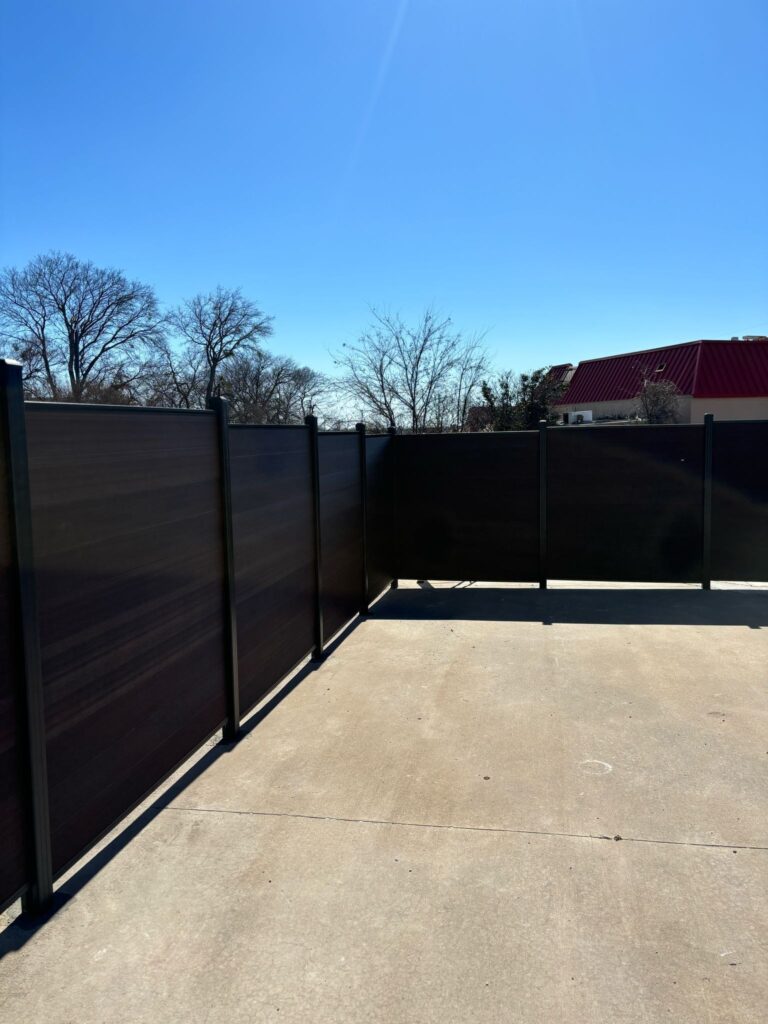
Straight answers from a local fence and gate contractor serving Galveston, Brazoria, and Chambers Counties.
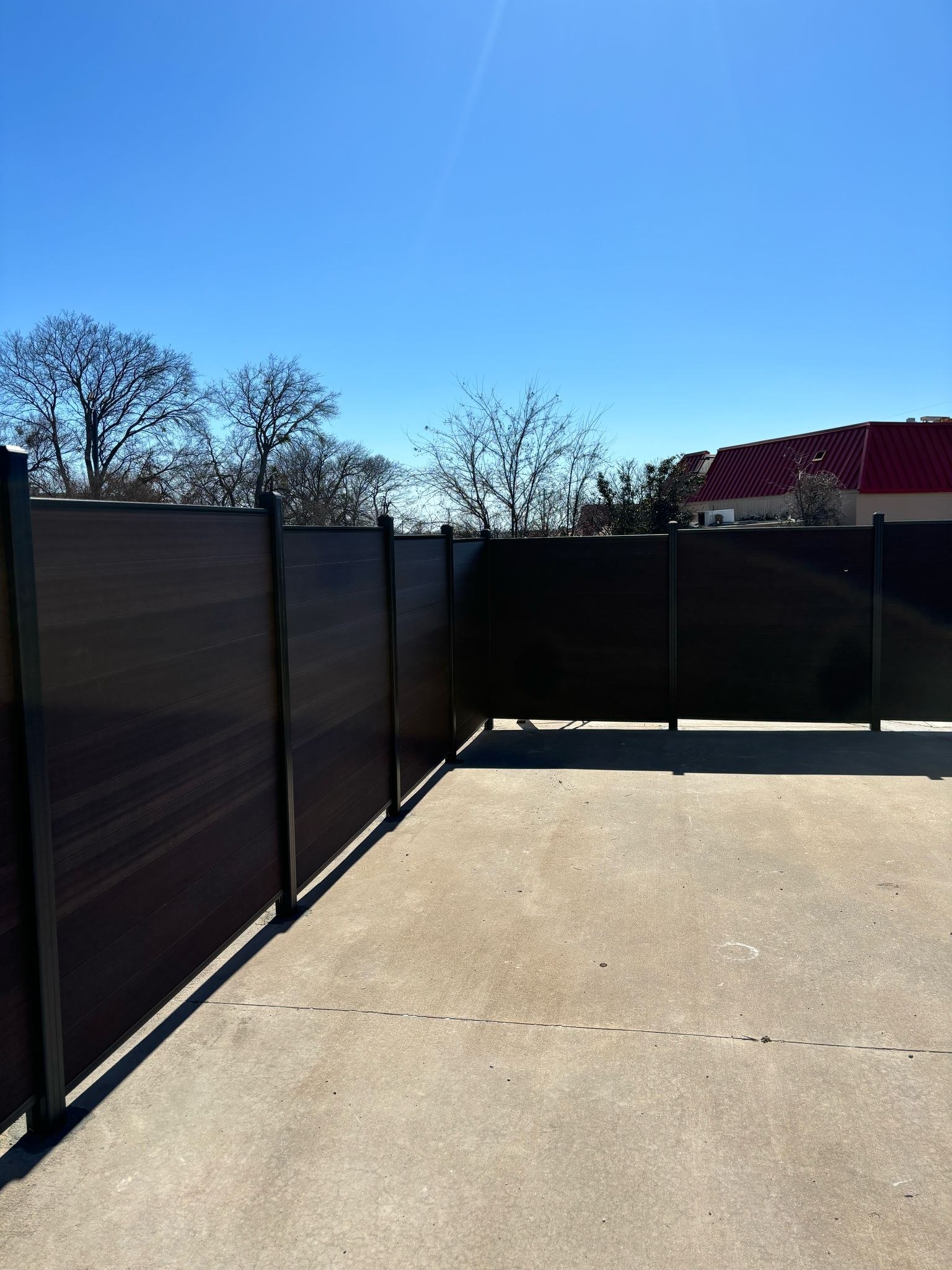
What’s actually in a composite fence board
Composite fencing is manufactured from a blend of recycled wood fibers (often sourced from sawdust, wood scraps, or reclaimed lumber) and recycled plastic polymers — frequently including materials that would otherwise end up as landfill waste, like plastic bags and packaging film. Manufacturers combine these components with bonding agents and preservatives, then extrude or mold the mixture into finished fence boards, rails, and posts. The result is a material engineered to look and feel more like real wood than vinyl does, while resisting the rot, insect damage, and warping that plague untreated lumber.
Why it costs more
Composite fencing materials commonly run noticeably higher per linear foot than vinyl — often a significant multiple of vinyl’s cost for a comparable style, depending on the specific product line. That premium reflects the more complex manufacturing process (blending and extruding two different material types rather than working with a single plastic resin) and the more realistic wood-look finish that composite delivers, which is generally considered the closest synthetic alternative to real wood’s appearance.
Is the extra cost actually worth it?
Whether that premium is worth paying comes down to what you’re optimizing for. If your top priority is the most convincing wood-like look without wood’s maintenance burden, and budget allows for the higher upfront cost, composite delivers on that specifically. If your priority is the lowest total cost of ownership and maximum moisture resistance — a bigger factor in Gulf Coast humidity — vinyl typically wins on both fronts, since it costs less to begin with and has no wood-fiber component to worry about with mold or moisture absorption.
It’s also worth knowing that composite fencing can fade somewhat with prolonged sun exposure, and if a board is ever damaged and needs replacing years down the road, matching the faded color of the surrounding boards exactly can be difficult — a maintenance wrinkle that’s worth factoring into the “is it worth it” calculation, particularly for a highly visible front-facing section of fence.
For most Galveston-area homeowners prioritizing budget and low-maintenance durability in a humid climate, vinyl tends to be the more straightforward choice. For those specifically drawn to composite’s natural wood aesthetic and willing to pay for it, it remains a solid, long-lasting alternative to real lumber. Composite is a standard part of Mustang Fencing’s product lineup — ask your consultant about the specific product line and current pricing when you request your free on-site estimate.
Related Questions
Does composite fencing look exactly like real wood?
Is composite fencing recyclable at the end of its life?
Does composite fencing require any maintenance at all?
Ready for a real number for your property? Request a free on-site estimate from Mustang Fencing Services.