
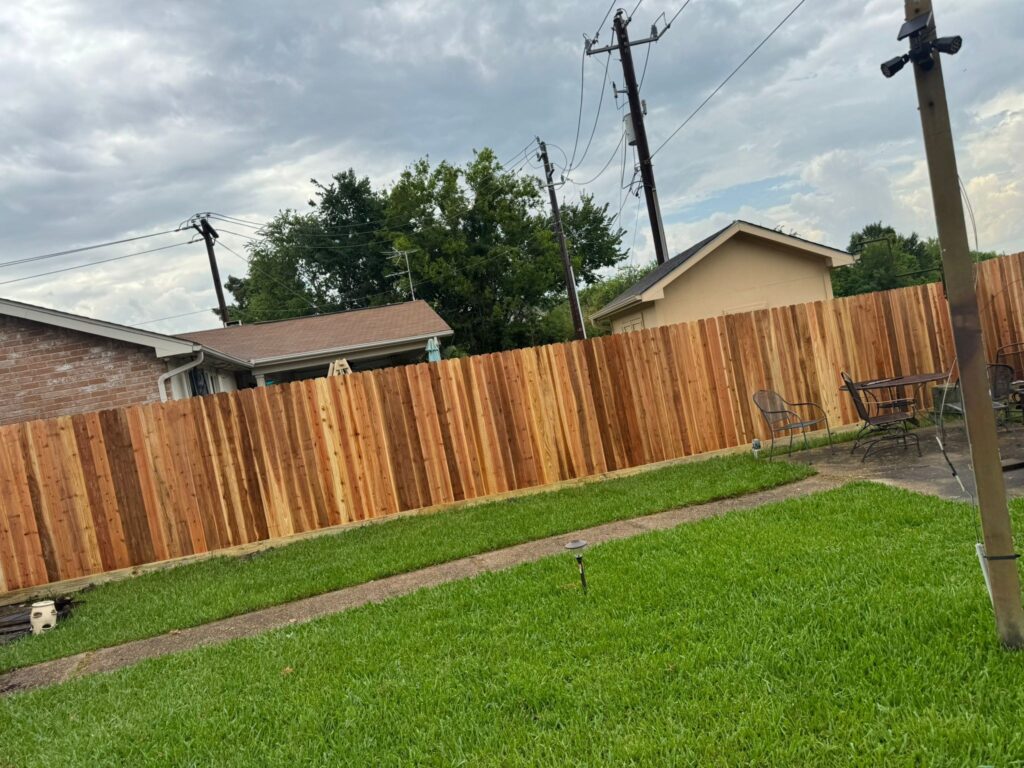
Straight answers from a local fence and gate contractor serving Galveston, Brazoria, and Chambers Counties.
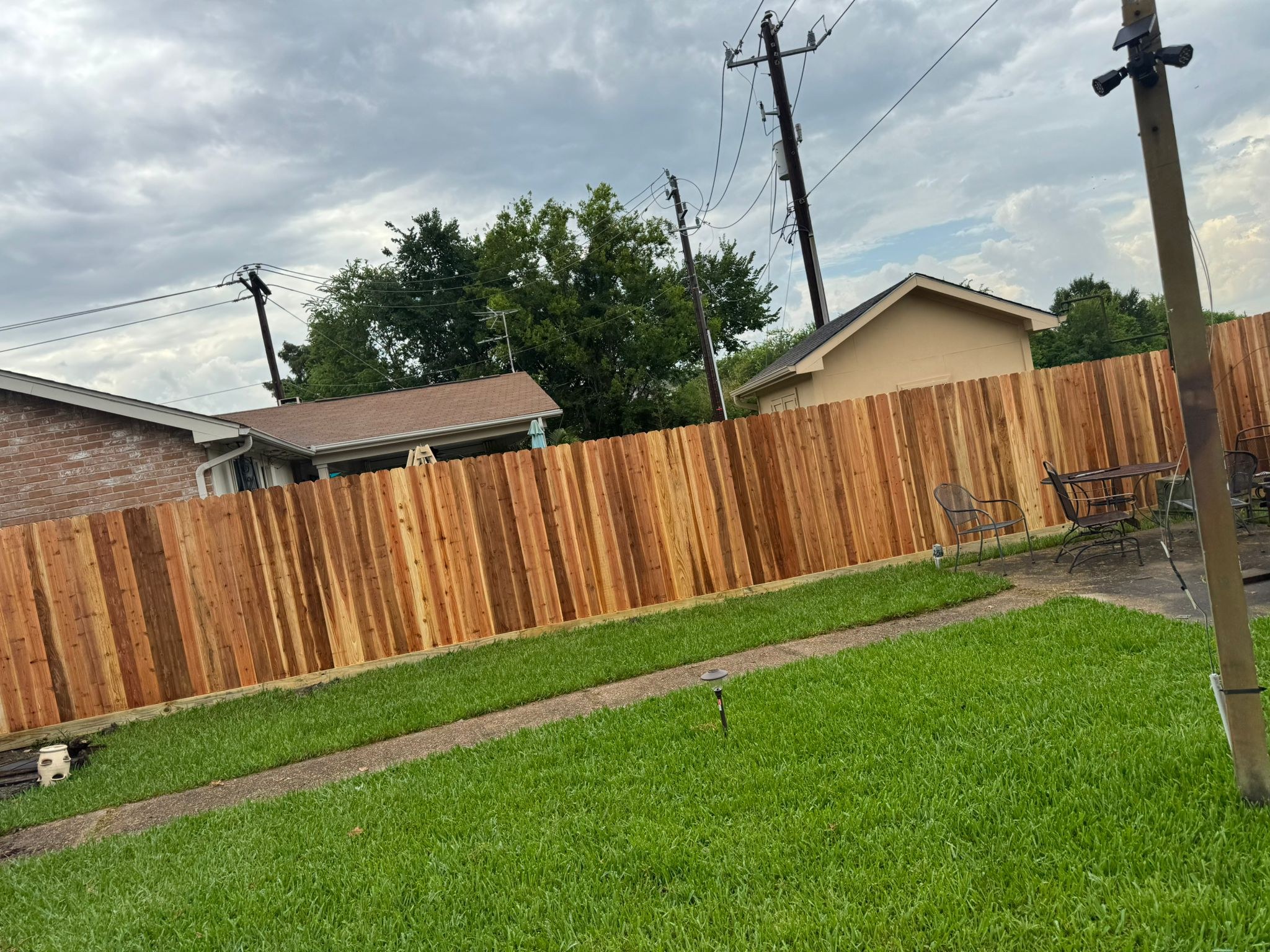
Redwood and cedar are the two premium wood fence options, and homeowners comparing them usually want to know if redwood’s higher price actually buys something cedar can’t match.
Why redwood costs more
Redwood lumber costs meaningfully more than cedar — largely a supply issue rather than a performance one, since redwood only grows commercially in a narrow band of the U.S. West Coast and has to be shipped everywhere else, including Texas. Cedar is more widely available, which keeps its price lower even though the two woods perform similarly in several respects.
Durability and lifespan
Both woods are naturally resistant to rot and insects without chemical treatment. Redwood is often cited as lasting 25+ years with minimal upkeep, while cedar’s range is typically quoted at 15-30 years depending on climate and maintenance — the ranges overlap enough that, in practice, a well-built and reasonably maintained fence of either species should give you two decades or more of service in this climate.
A key practical difference: finishing
Cedar takes stain and paint well, which matters if you want the option to change color down the road or match a house repaint. Redwood is denser and more resistant to absorbing finishes, so it’s typically left natural or sealed with a clear, penetrating product rather than tinted — a real consideration if you like the idea of customizing color later.
Is redwood worth it here
Because redwood has to travel a long distance to reach Gulf Coast job sites, freight adds to an already higher material cost, and the performance gap over cedar in a humid climate is minimal — both resist coastal moisture and insects well; neither has a decisive edge on wind performance, which comes down to construction (post depth, panel gaps) more than species. For most Galveston-area homeowners, cedar delivers comparable longevity and better finishing flexibility at a lower cost, which is why it’s the more common premium choice locally. Redwood remains a good option for homeowners who specifically want its tighter, straighter grain and don’t plan to stain the fence a different color later.
Related Questions
Does redwood fade less than cedar?
Is redwood harder to find for a Texas project?
Can redwood and cedar be mixed on one property?
Ready for a real number for your property? Request a free on-site estimate from Mustang Fencing Services.