
Straight answers from a local fence and gate contractor serving Galveston, Brazoria, and Chambers Counties.
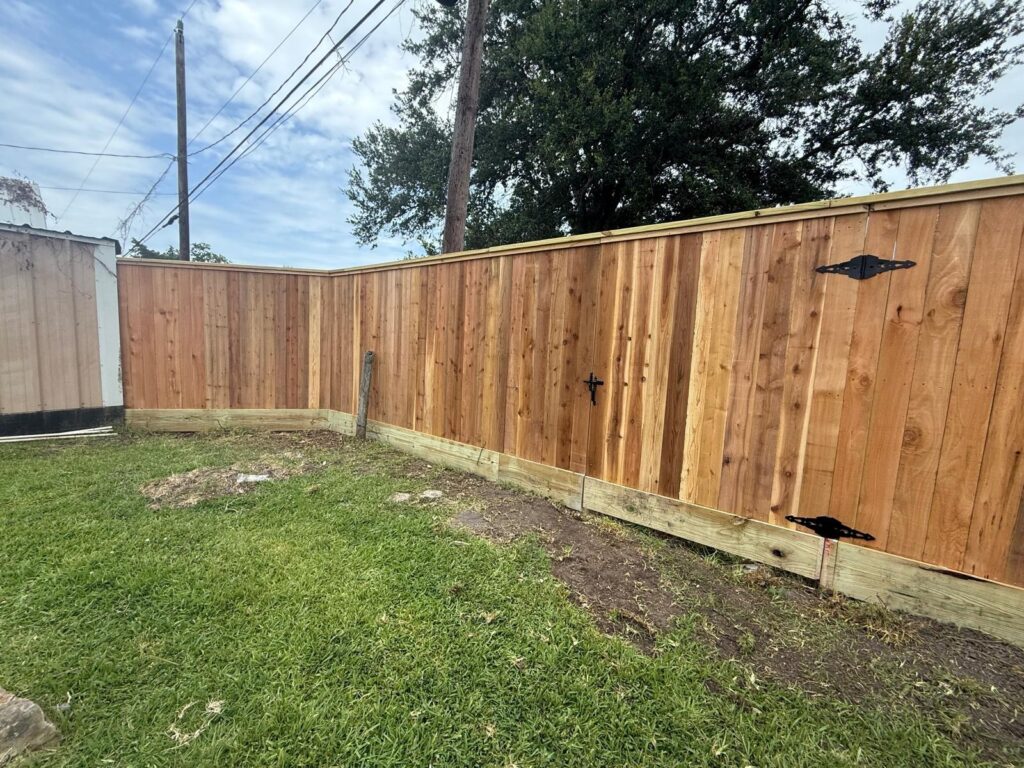
Both stain and paint protect a wood fence, but they do it in fundamentally different ways, and that difference matters more in a humid coastal climate than it might elsewhere.
How they protect wood differently
Stain penetrates into the wood fibers, protecting from the inside out while letting the wood breathe — moisture can still pass in and out, it’s just slowed and buffered by the stain. Paint instead forms a surface layer on top of the wood, which blocks moisture more completely at first but also traps any moisture that does get underneath it (through a crack or worn edge), often leading to peeling, bubbling, or cracking over time, especially in humid conditions where trapped moisture has nowhere to go.
Durability and maintenance comparison
Stain generally needs reapplication every 3 to 8 years, while paint typically needs it every 5 to 10 years, but the real difference is how each fails: stain wears down gradually and evenly, meaning a fence with fading stain still looks reasonably presentable, while paint tends to fail more abruptly — cracking, peeling, and chipping in a way that looks worse and requires scraping before recoating.
Application and upkeep
Staining is generally easier to apply (often with just a sprayer or brush) and easier to touch up in sections, since new stain blends more forgivingly with weathered stain than fresh paint does with an aging paint layer. Repainting typically requires more prep work — scraping and sanding failed paint — before a new coat goes on properly.
Why stain tends to be the better fit here
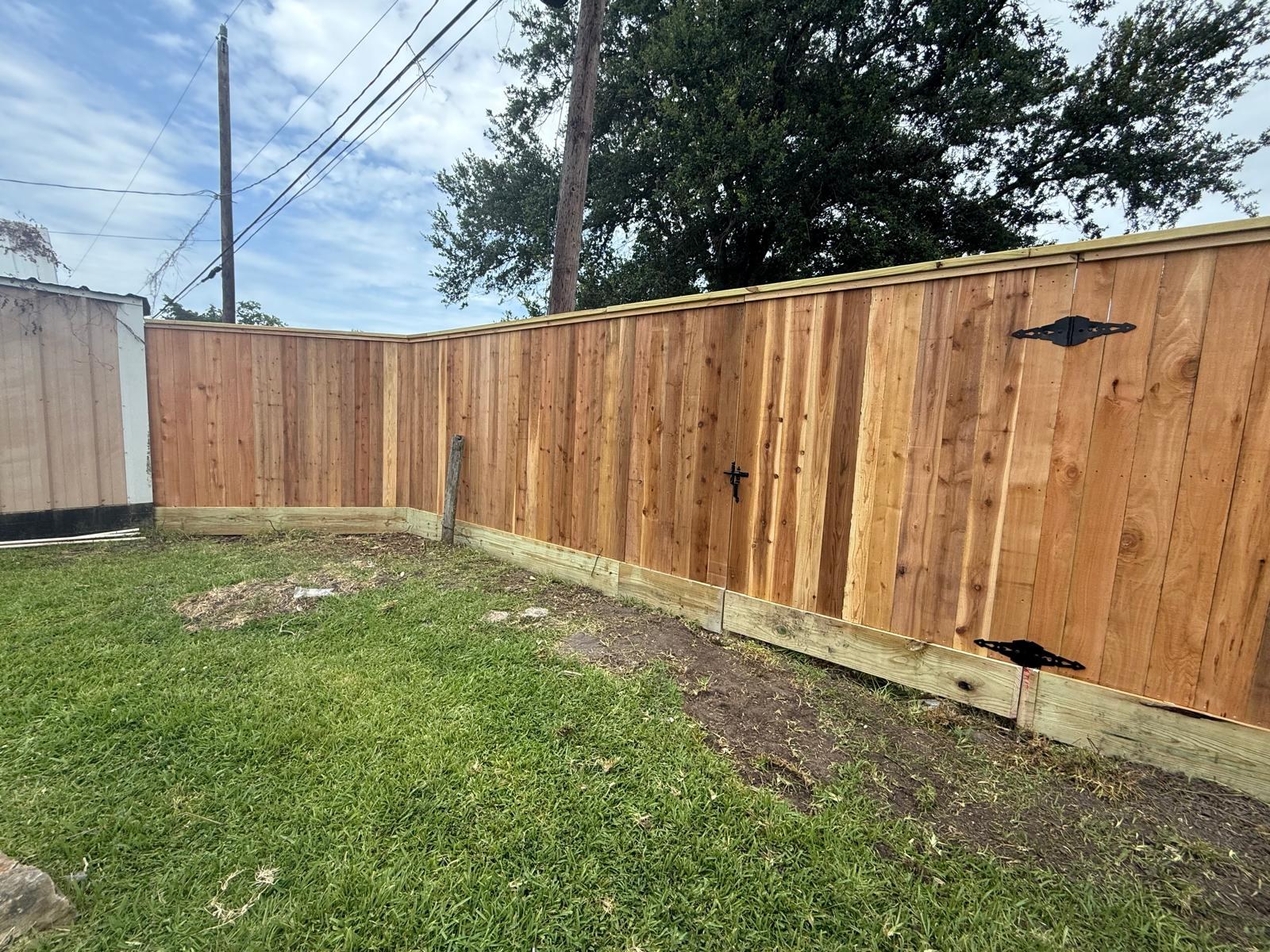
In Galveston County’s humidity, paint’s tendency to trap moisture underneath becomes a bigger liability, since trapped moisture accelerates the rot and mildew that already move faster in a humid coastal climate. Stain’s breathable protection is generally the safer long-term choice for wood fencing in this climate, particularly for cedar, which takes stain beautifully and doesn’t need paint’s opaque coverage to look good.
When paint still makes sense
If you specifically want a solid, uniform color — matching a specific house color, for instance, or achieving a crisp white picket-fence look — paint delivers that in a way translucent stain can’t. Just budget for more diligent maintenance and prompt attention to any cracking or peeling before it spreads.
Related Questions
Can I switch from paint to stain on an older fence?
Does stain come in solid colors like paint?
Which is better for a new cedar fence?
Ready for a real number for your property? Request a free on-site estimate from Mustang Fencing Services.