
Straight answers from a local fence and gate contractor serving Galveston, Brazoria, and Chambers Counties.
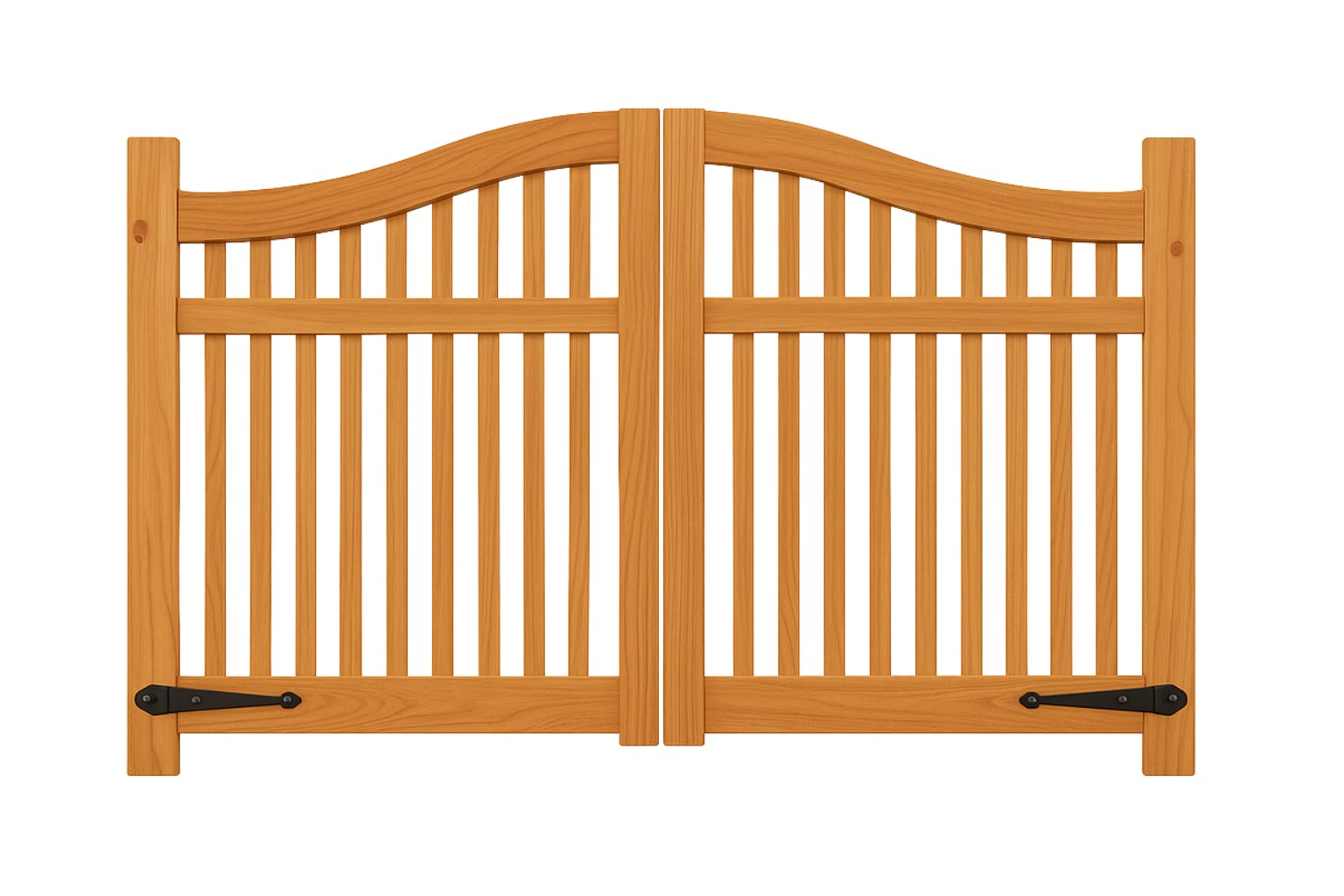
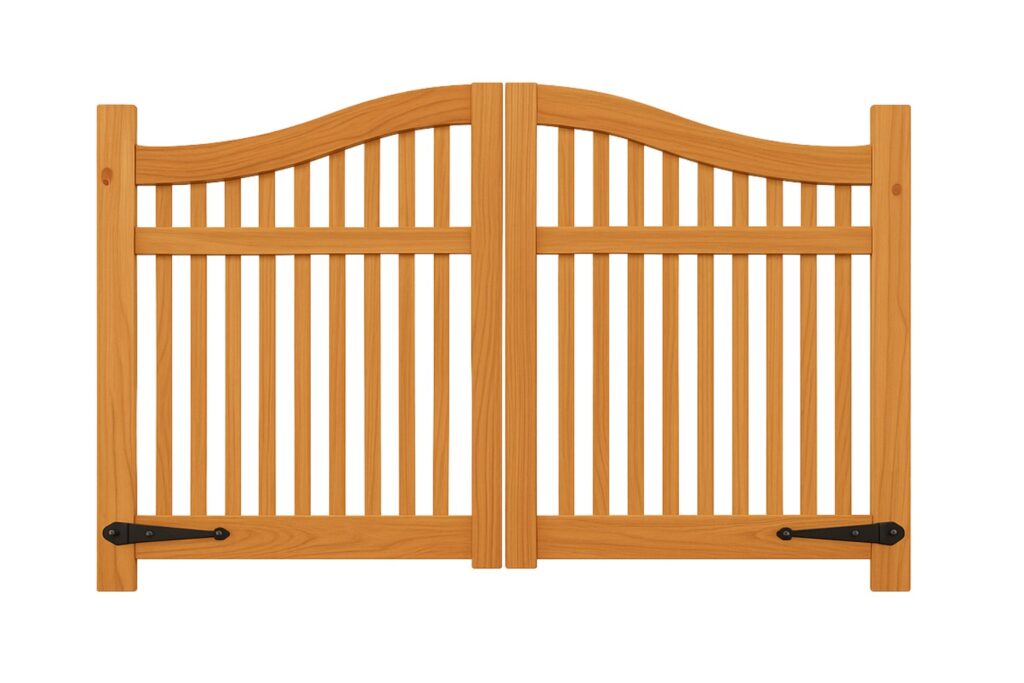
Most homeowners are surprised by how much wider a driveway gate needs to be than the driveway itself looks. As a rule of thumb, single driveway gates run 10 to 16 feet wide and 6 to 8 feet tall, which comfortably covers a single-lane driveway and a sedan, pickup, or smaller SUV passing straight through. Double (double-drive) gates, which use two panels that swing or slide open from the center, typically span 20 to 32 feet, though many residential double gates land in the 14-to-20-foot range when the driveway itself isn’t especially wide.
What Actually Determines the Right Width
The vehicle isn’t the only factor. A few things push the number up or down:
- Approach angle. A gate set on a straight, perpendicular driveway can be narrower than one where vehicles have to turn to enter, because turning vehicles need extra swept width so the rear bumper or a trailer doesn’t clip the gate post.
- Trailers and boats. If you tow a boat, livestock trailer, or RV, measure the trailer’s actual width (not just the tow vehicle) and add clearance on both sides — a 20 to 24-foot opening is common for boat trailers.
- Local and fire code minimums. Many jurisdictions require a minimum clear width — often 12 feet, sometimes 14 feet — so fire apparatus and ambulances can pass through, regardless of what you’d otherwise choose.
- Automation. Powered gates need a bit of extra clearance built into the opening for the operator arms or track hardware, which your installer accounts for in the finished opening size, not just the panel size.
Single vs. Double at the Same Total Width
If you land on, say, an 18-foot opening, you still have a choice: one 18-foot panel, or two 9-foot panels meeting in the middle. A single wide panel needs a heavier hinge post, more ground clearance for the swing arc, and a stronger gate frame to resist sagging over that unsupported span. A double gate splits the load in half per panel and is usually the more practical choice once you’re past roughly 14 to 16 feet of total width — which is also why almost all wide farm and ranch entrances use double gates rather than one giant single panel.
Because the right width depends on your vehicles, your driveway’s approach, and what your specific city or county requires, it’s worth having this measured on-site — and having your local jurisdiction’s fire-access minimums confirmed — rather than guessing from a tape measure alone.
Related Questions
Q: What’s the standard height for a driveway gate?
Q: Can a driveway gate be too wide for its posts?
Ready for a real number for your property? Request a free on-site estimate from Mustang Fencing Services.